 Get Listed

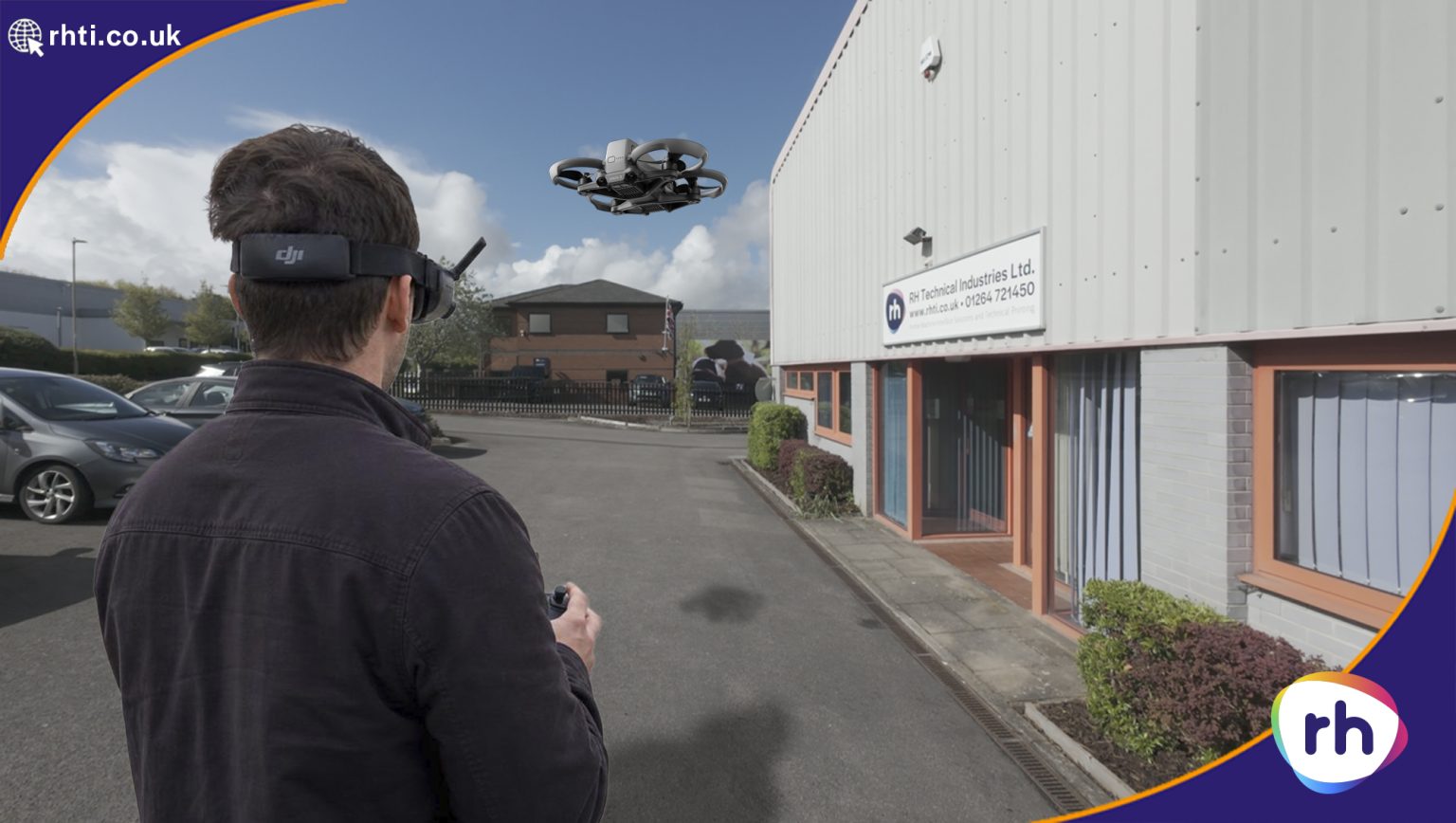
Manufacturing often happens behind closed doors, with only the finished product visible to customers. However, at RH Technical Industries, the entire process—from concept to completed component—takes place under one roof. A recent drone tour of the company’s UK manufacturing facility offers a unique look behind the scenes, showcasing how graphic overlays, membrane keypads, and industrial interfaces are designed, produced, and assembled with precision.
The tour highlights not only the technology involved, but also the importance of keeping every stage of production in-house to maintain quality, speed, and consistency.
Where Every Project Begins
The journey starts at the facility entrance, where engineering and customer service work side by side to support every project from the outset.
Within the engineering department, technical drawings, specifications, and interface designs are developed and refined. This is where ideas evolve into manufacturable solutions, whether for industrial machinery, medical equipment, or specialist electronic devices.
Alongside engineering, the administrative and customer support teams coordinate quotations, production schedules, and communication, ensuring each project moves smoothly from concept through to delivery.
The Screen Printing Department
Further into the facility lies the screen printing department, where durable industrial graphics begin to take shape.
Using specialist inks and high-performance materials, RH produces overlays and labels designed to withstand demanding environments, including exposure to chemicals, abrasion, UV light, and heavy use.
Supporting this process is a dedicated screen preparation room, where light-sensitive emulsions are used to create highly accurate printing screens. By handling screen preparation internally, the company maintains strict control over print quality, ensuring even intricate graphics and fine detail are reproduced consistently.
Creating Functional Interfaces
The secondary operations department transforms printed materials into fully functional user interfaces.
This is where membrane keypads and graphic overlays are shaped, embossed, and prepared for integration into finished products. Precision tooling and specialist presses create tactile button profiles, while die-cutting systems form complex shapes and openings tailored to individual product housings.
The result is not just a printed surface, but a functional interface designed for usability, durability, and long-term reliability.
Digital Printing and Precision Cutting
Alongside traditional screen printing, the facility also incorporates advanced digital printing and cutting technology.
Digital printing enables rapid prototyping, shorter production runs, and highly detailed graphics without the need for traditional screens. Combined with precision digital cutters, this technology allows RH to produce components quickly and accurately while maintaining high visual standards.
Having both screen and digital production capabilities under one roof gives the company flexibility to choose the most efficient manufacturing method for each project.
Material Storage and Supply Readiness
The drone tour also highlights the facility’s extensive stores area, where a wide range of polycarbonates, polyesters, adhesives, and specialist materials are held on-site.
Maintaining stock internally helps reduce lead times and ensures production can begin quickly without relying on external supply delays. This level of preparedness is particularly valuable for customers operating within demanding manufacturing schedules.
Final Assembly and Quality Control
The final stage of the process takes place in the assembly department, where all layers and components are brought together.
Here, technicians carefully align printed overlays, spacer layers, adhesives, and electronic circuits to create fully assembled membrane switches and interface panels. Precision is critical at this stage, as even minor alignment issues can affect tactile feel, lighting, or functionality.
By controlling assembly internally, RH ensures each finished product meets strict quality standards before leaving the facility.
The Advantage of Manufacturing Under One Roof
The drone tour ultimately demonstrates the advantages of an integrated manufacturing approach. Housing engineering, printing, tooling, assembly, and quality control within a single facility allows for better communication, faster turnaround times, and greater oversight throughout production.
This streamlined process helps ensure consistency while allowing teams to collaborate closely on both standard and highly specialised projects.
For customers, it provides reassurance that every stage of manufacturing is managed by one dedicated team with complete visibility over the project lifecycle.
A Modern Manufacturing Environment
As demand grows for high-performance interfaces across industrial, medical, and commercial sectors, facilities like RH Technical Industries continue to demonstrate the value of UK-based specialist manufacturing.
Combining traditional craftsmanship with modern digital technology, the company’s integrated approach supports the production of reliable, durable, and visually refined interface solutions built to perform in demanding environments.
For more information on Inside RH Technical Industries: A Drone Tour of a Modern UK Manufacturing Facility talk to RH Technical Industries Ltd