Why AI Loves Directories: Trust, Structure and Verification
- 16 Feb 2026
- Blog
AI is changing how businesses search for suppliers. Instead of scrolling through pages of results, buyers are increasingly using AI-powered tools to ask direct questions such as “reliable CNC machining suppliers in the UK” or “BRC-certified packaging companies near Manchester”. They want shortlists, comparisons and clear recommendations.
That shift has a practical implication for B2B suppliers: being “findable” now depends on more than having a website. AI systems draw from multiple sources to form their answers, and they favour information that is structured, consistent and credible.
This is where trade directories continue to play a crucial role. Far from becoming obsolete, reputable directories are well positioned for the AI search era because they provide exactly what AI needs: trust signals, clear categorisation and verifiable business information.

AI search prioritises clarity over cleverness
Traditional search relies heavily on keywords and page rankings. AI search still uses those inputs, but it also tries to interpret intent and return an answer that is immediately useful. That means ambiguity is the enemy.
If your online presence is vague or inconsistent, AI tools can struggle to understand what you actually do, who you serve and where you operate. Clear, well-structured directory listings reduce that ambiguity by presenting your services in plain terms, typically alongside categories, locations and core company details.
A strong listing supports the basics AI is looking for:
-
What you do (and what you do not do)
-
The sectors you serve
-
Your location and coverage area
-
Your certifications, capabilities and specialisms
-
How a buyer can contact you quickly
In short, directories help translate your business into a format that is easy for both humans and machines to interpret.
Structure is a major advantage in an AI-first world
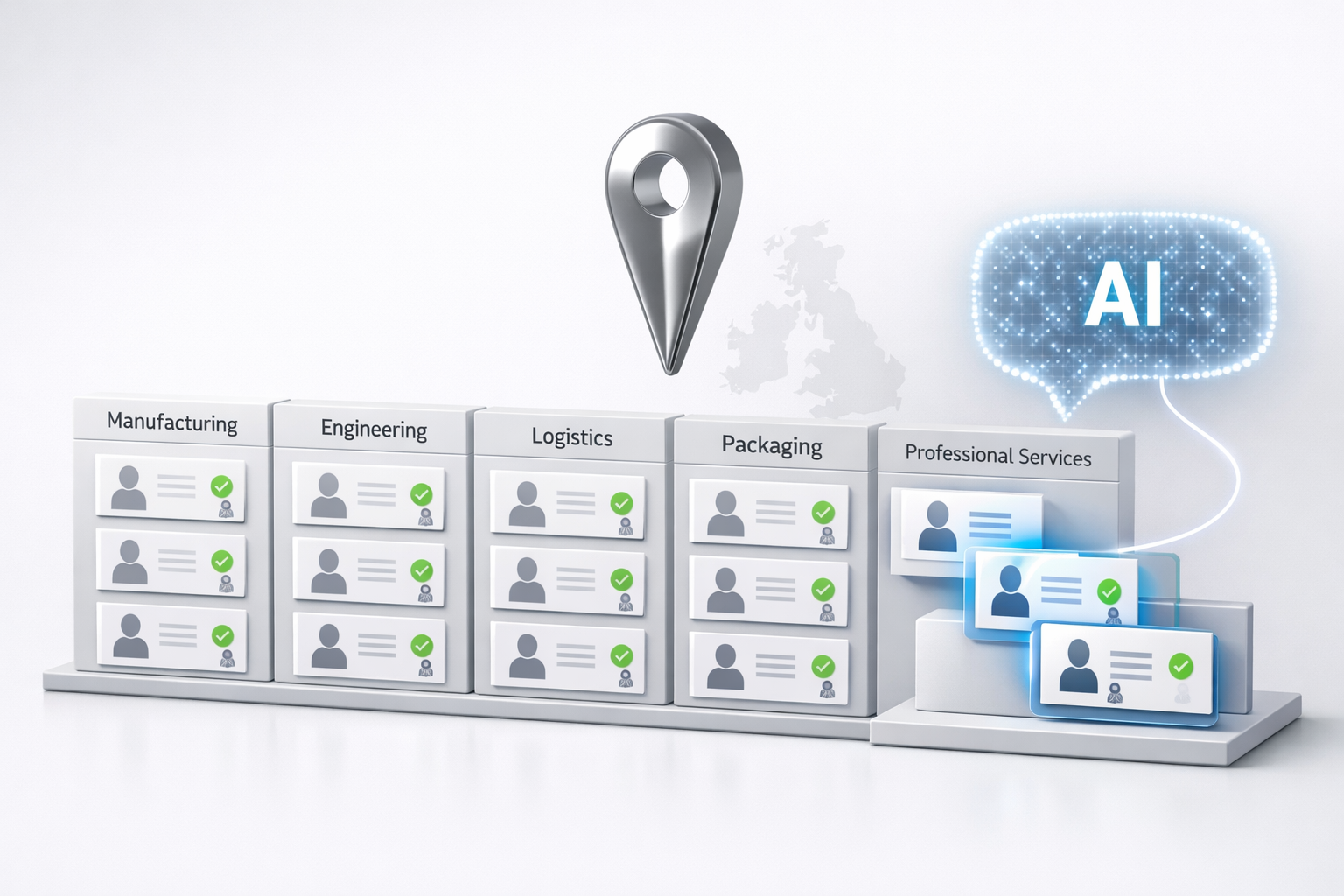
One of the reasons directories remain powerful is that they impose structure. Categories, subcategories and consistent listing formats make it easier to compare companies like-for-like.
AI systems benefit from that structure because it helps them group suppliers accurately. When information is presented in a consistent layout across many businesses, it becomes easier to extract reliable details and match suppliers to buyer requirements.
A directory listing also helps you align your business with how buyers actually search. Buyers rarely search for a company name. They search for a solution, a capability or a requirement. Categories and well-written service descriptions make it more likely your business appears when a buyer asks AI the kind of question that leads to a shortlist.
Trust and verification matter more than ever
AI tools do not just look for information. They look for information they can trust.
That trust is influenced by signals such as consistency, reputation and evidence. Reputable directories can strengthen your credibility because they sit within a wider trade ecosystem and are designed to connect buyers with suppliers. For many buyers, seeing a company listed in an established directory is a reassuring sign that the business is active, legitimate and relevant to their needs.
Verification can take several forms:
-
Accurate business details and trading information
-
Clear description of services and industries served
-
Certifications, accreditations and memberships where applicable
-
Evidence of longevity, track record or case studies (even in brief form)
-
A consistent footprint across the web
If AI search is about reducing friction for buyers, trust signals are what reduce risk. Directories help provide those signals in a familiar, standardised way.
Why being listed still influences shortlists
In B2B buying, the shortlist is everything. Buyers want to narrow the field quickly to a manageable number of credible suppliers before they start making calls, requesting quotes or arranging meetings.
Directories support shortlist-building in two ways.
First, they help buyers discover suppliers they may not already know. If a buyer is exploring a category for the first time, a directory provides an immediate view of the landscape.
Second, they help buyers compare suppliers efficiently. When key information is presented consistently, it is easier to evaluate options, spot the right fit and move forward.
That behaviour aligns closely with how AI-driven search works: identify the intent, find a small set of relevant candidates, then present the best options with supporting details. A strong directory listing increases your chances of being among those candidates.
Where Find the Needle fits in
Find the Needle is built around the principle that B2B sourcing should be simple, reliable and focused on genuine trade requirements. By categorising suppliers and presenting consistent company information, it helps buyers find relevant businesses faster and helps suppliers be discovered by the audiences that matter.
In the context of AI search, that structure and clarity become even more important. When your company information is easy to interpret and consistent with how buyers search, you are more likely to appear in discovery journeys that start with a question and end with a shortlist.
How to make your directory listing work harder
Simply being listed is a good start, but a well-optimised listing performs better for both buyers and search tools. A few practical improvements can make a noticeable difference:
Be specific about services
Avoid broad statements that could apply to any business. Instead of “high-quality engineering services”, clarify the exact capabilities, such as “precision CNC milling and turning for automotive and aerospace components”.
Use buyer language
Think about how a buyer would describe what they need. Include the common terms used in your industry rather than internal jargon.
Include coverage and capacity
If you serve the whole UK, say so. If you focus on a region, state it clearly. If you handle urgent lead times or high-volume production, include that detail.
Add credibility signals
Where appropriate, reference accreditations, standards, memberships or years of experience. Buyers look for reassurance, particularly in regulated or high-value categories.
Keep details up to date
Outdated contact details, old service descriptions or inconsistent information across platforms can undermine trust and reduce enquiries.
The takeaway
AI search is not replacing directories. If anything, it is making credible directories more important.
As AI-driven discovery becomes more common, suppliers need to ensure their business can be clearly understood, accurately categorised and trusted across the web. Directories provide the structure and legitimacy that helps achieve that, while also giving buyers a straightforward way to find and compare suppliers.
If you want your business to be easier to discover and more likely to make the shortlist, a strong directory presence remains one of the most practical steps you can take.