 Get Listed
What Is an ATEX Vacuum Cleaner?
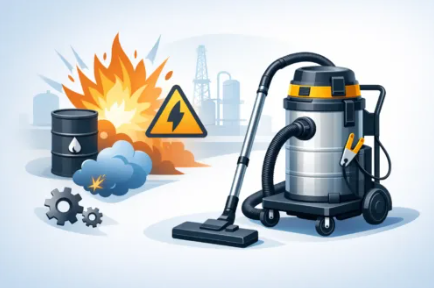
Fine dust, conductive powders, solvent residues and combustible debris do not give much warning before they become a serious risk. On sites where hazardous atmospheres can develop, the wrong cleaning equipment is not just inefficient – it can create an ignition source.
That is why the question what is an ATEX vacuum cleaner matters. An ATEX Vacuum Cleaner is an industrial vacuum designed and certified for use in potentially explosive atmospheres, or for the safe recovery of hazardous dusts and materials that could ignite if handled incorrectly. In practical terms, it is specialist equipment built to reduce the risk of sparks, static build-up and unsafe dust handling in areas where standard vacuums are not suitable.
What is an ATEX vacuum cleaner used for?
An ATEX vacuum cleaner is used in industrial environments where combustible dust, flammable vapours or explosive atmospheres may be present during normal operation or under fault conditions. That can include manufacturing plants, chemical processing, food production, metalworking, pharmaceutical facilities, woodworking and recycling operations.
In these settings, cleaning is not a routine housekeeping task. It is part of site safety, process control and compliance. Accumulated dust around machinery, overhead structures, production lines or floor areas can raise the risk of fire and explosion. A correctly specified ATEX vacuum allows that material to be removed safely rather than disturbed, dispersed or ignited.
This is also why industrial users should not confuse ATEX equipment with heavy-duty commercial cleaning machines. A machine may be powerful and durable, but if it is not built for hazardous zones or combustible dust recovery, it is the wrong tool for the job.
Understanding ATEX in simple terms
ATEX refers to European directives covering equipment and working environments where there is a risk of explosion. Although UK businesses now work within the post-Brexit regulatory framework, ATEX terminology is still widely used across industry because it remains the recognised standard for hazardous area equipment selection.
For a vacuum cleaner, ATEX compliance is about more than fitting a warning label or adding a few protective features. The machine must be engineered so that it does not become an ignition source. That includes controlling electrostatic discharge, limiting friction or impact risks, and using components suited to hazardous environments.
The specification depends on the type of hazard present. Some sites are concerned primarily with combustible dust. Others are managing gas or vapour risks. Some have a mixture of both. That is where zoning becomes important.
ATEX zones and why they matter
Hazardous areas are classified into zones based on how likely an explosive atmosphere is to occur. For dust, the common classifications are Zone 20, Zone 21 and Zone 22. For gases, they are Zone 0, Zone 1 and Zone 2.
The lower the zone number, the higher the level of risk and the stricter the equipment requirements. A vacuum suitable for one zone may not be suitable for another. That is why selecting an ATEX vacuum cleaner should always start with the site classification, the material being recovered and the way the machine will be used.
A maintenance team cleaning occasional dust build-up in a Zone 22 area may need a different solution from a production process recovering fine combustible powder continuously in Zone 21. Both may require ATEX equipment, but not the same machine.
How an ATEX vacuum cleaner differs from a standard industrial vacuum
From the outside, some ATEX vacuums may look similar to other industrial units. The critical differences are in the engineering.
An ATEX vacuum cleaner is typically built with conductive or anti-static components to prevent charge accumulation. It may include earthed construction, antistatic filters, protected motors, certified accessories and carefully selected materials to reduce the chance of sparks. The whole system matters, not just the main body of the machine. Hose assemblies, nozzles, filters and containers must also be suitable for the application.
Filtration is another major point. In many hazardous environments, it is not enough to collect dust – the machine must contain it effectively and prevent fine particles from re-entering the atmosphere. Depending on the application, that may involve high-efficiency filtration and safe dust disposal arrangements.
There is also a difference in duty. Consumer and light commercial vacuums are not designed for continuous industrial use, heavy particulate loads or abrasive material recovery. An ATEX vacuum cleaner is generally specified as part of a wider operational need: safer cleaning, reduced downtime and controlled waste or product recovery.
Where ATEX vacuum cleaners are commonly needed
The most obvious applications are sectors where combustible dust is generated as part of production. Food plants handling flour, sugar or starch are a common example. So are wood processing sites, where fine dust can accumulate rapidly and spread into difficult-to-reach areas.
Metalworking environments may also require ATEX-rated vacuum systems, particularly where fine aluminium, magnesium or other reactive metal dusts are present. Pharmaceutical and chemical facilities often need tightly controlled recovery of powders, active ingredients or residues, with safety and containment both playing a role.
Even in general manufacturing, the need can arise if dust is suspended during production, settles around machinery, or is produced during cutting, blending, filling or transfer operations. The risk is not always obvious until a proper assessment is carried out.
It depends on the material, not just the site
One of the most common misunderstandings is assuming that ATEX only applies to visibly dangerous environments. In reality, seemingly ordinary materials can become hazardous when they are dry, finely divided and airborne.
That means the decision is not simply about the building or the industry. It depends on particle size, concentration, ignition sensitivity, process conditions and zone classification. A site may only have one process line or one maintenance task that requires ATEX cleaning equipment, while the rest of the facility does not.
What to look for when choosing an ATEX vacuum cleaner
The first requirement is straightforward: the machine must be suitable for the classified zone and the material being collected. Anything less creates unnecessary risk. Beyond that, practical fit matters just as much.
Capacity should match the volume of material being recovered. If the unit is too small, operators spend too much time emptying it and productivity suffers. If it is oversized for the task, cost and manoeuvrability may become issues. Airflow, filtration level, container design and discharge method all affect day-to-day performance.
You also need to consider whether the vacuum is for occasional cleaning, continuous use alongside production, or integration into a centralised system. Portable machines are useful for flexible maintenance work. Fixed or centralised systems may be better for large sites with ongoing dust extraction and recovery needs.
Ease of maintenance is another practical point. Filters need to be inspected and replaced correctly. Waste needs to be discharged safely. Operators need clear procedures. The best ATEX vacuum is not just certified – it is appropriate for the way the site actually runs.
Why buying on specification alone can be risky
ATEX equipment selection is one area where shortcuts tend to cost more later. Choosing solely on price, motor power or container size can leave a site with a machine that is technically unsuitable, operationally awkward or overly complex for the task.
There is often a balance to strike between safety level, productivity and practicality. A higher-specification unit is not automatically the best answer if it does not align with the site classification or the cleaning process. Equally, trying to make a lower-grade machine cover a hazardous application is a false economy.
This is where engineering support matters. A specialist supplier will usually ask about the zone, the material, particle characteristics, the quantity to be collected, whether the product is dry or wet, and how often the machine will run. Those questions are not sales theatre. They are necessary to specify equipment correctly.
Compliance, safety and day-to-day operations
For operations managers and health and safety teams, an ATEX vacuum cleaner supports more than compliance paperwork. It helps create a controlled cleaning process in areas where sweeping, brushing or using unsuitable vacuums could spread dust or create ignition risk.
That has operational value. Better dust recovery can improve housekeeping standards, reduce contamination around equipment and help keep production areas serviceable. In some applications, recovered material can also be managed more efficiently as waste or reclaimed product.
Forvac Industrial works with businesses that need this kind of site-specific approach because the right answer is rarely off the shelf. Hazardous area cleaning equipment has to match the process, the environment and the way the facility operates under real conditions.
A practical way to think about it
If your site handles combustible dusts, fine powders, reactive debris or residues in classified hazardous zones, an ATEX vacuum cleaner is not a premium extra. It is a control measure. The real question is not whether an industrial vacuum looks tough enough, but whether it has been designed and certified to do the job safely.
A good starting point is always the material risk and zone classification. From there, the right machine becomes much easier to define – and far more likely to deliver safe, reliable performance where it counts.
For more information on What Is an ATEX Vacuum Cleaner? talk to Forvac Services Ltd