 Get Listed

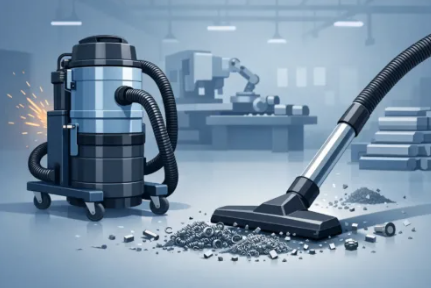
Metal swarf has a habit of turning a productive machining area into a maintenance problem very quickly. Fine chips collect around CNC machines, sharp offcuts build up in corners, coolant-contaminated waste clogs manual clean-up methods, and every delay in removing it adds risk. That is why choosing the right industrial vacuum cleaner for metal swarf is not a minor purchasing decision – it affects safety, uptime, housekeeping standards and the life of your equipment.
In most production environments, swarf is not one uniform material. Aluminium behaves differently from steel. Fine dust-like particles need different handling from long, curled shavings. Dry waste is one challenge, but swarf mixed with oils or coolant introduces another altogether. A machine that appears suitable on paper can become inefficient very quickly if it is not matched to the actual waste stream on site.
Why metal swarf needs specialist vacuum equipment
General-purpose cleaning equipment is rarely built for the demands of metalworking waste. Swarf is abrasive, often sharp, and in many settings surprisingly heavy. It can damage hoses, wear through weak collection containers and create repeated blockages if the vacuum is not designed for industrial recovery.
There is also the issue of containment. Loose swarf on the floor creates a slip and trip hazard, while settled metallic dust can affect machine performance and workplace cleanliness. Where coolant is involved, the problem extends beyond housekeeping. You may need to recover solid waste while separating liquids for reuse or disposal, and that calls for more than suction power alone.
A true industrial solution is designed around continuous or frequent use, stronger construction, suitable filtration, and collection methods that allow operators to empty recovered material without turning a cleaning task into a handling risk.
What to look for in an industrial vacuum cleaner for metal swarf
The right specification starts with the waste itself. Before comparing models, it helps to look at particle size, volume, whether liquids are present, how often cleaning takes place and where the waste is generated.
Dry swarf, wet swarf and mixed waste
If your process produces dry chips only, the focus is usually on durable collection, reliable filtration and safe disposal. If swarf is mixed with coolant or oil, the vacuum may need wet-and-dry capability, liquid shut-off protection and, in some cases, a system for separating solids from fluids.
This matters because a machine suited to dry aluminium chips may be completely wrong for recovering steel swarf from sumps or machine beds filled with coolant. In mixed applications, separation can improve both disposal efficiency and material recovery, while reducing the amount of consumable absorbents or manual intervention required.
Suction performance is not the whole story
Buyers often start by comparing motor power, but raw figures do not tell the full operational story. Airflow helps move lighter materials, while vacuum pressure becomes more important with heavier waste or longer hose runs. The design of the collection chamber, inlet, hose diameter and accessories all influence real-world performance.
For example, long stringy swarf can bridge inside narrow inlets, while heavier chips may require wider accessories and a stronger flow path. A machine that performs well in a short demonstration may behave differently when used all shift across several machines.
Build quality and wear resistance
Metal swarf is unforgiving. Weak bins, light-duty castors and standard hoses tend to show wear quickly in engineering environments. Industrial machines intended for this work should have reinforced construction, containers suited to heavy waste and components able to withstand frequent movement across workshop floors.
The cost difference between a lighter unit and a true industrial system often becomes clear after a few months of use. Fewer breakdowns, less unplanned maintenance and longer service life usually matter more than the initial saving on a lower-spec machine.
Filtration, safety and compliance
Filtration should always be considered in relation to the material being collected. Coarse swarf may seem straightforward, but machining areas often generate a mix of chips, fines and dust. If fine metallic particles are present, the filtration stage becomes critical for protecting both operators and the vacuum itself.
In some environments, the material or surrounding atmosphere may also raise explosion-risk questions. That is where ATEX-certified equipment may be required, depending on the process, zone classification and the nature of the dust. This is not an area for assumptions. The right approach is to assess the application properly and specify a machine or system that meets the site’s safety obligations.
A practical point often missed is filter maintenance. If a vacuum is difficult to clean or suffers repeated clogging, performance drops and operators lose confidence in using it. An effective industrial unit should maintain suction consistently and allow maintenance to be carried out without excessive downtime.
Emptying and handling recovered swarf
Collection is only half the job. The material still needs to be removed from the machine safely and efficiently.
For small volumes, a removable container may be enough. For heavier waste loads or more frequent cleaning, discharge systems such as tipping containers, lift-off bins or collection options compatible with forklifts can make a significant difference. This is especially true where steel swarf accumulates quickly and manual handling becomes impractical.
If coolant recovery is part of the process, the emptying method should support that too. Some applications benefit from systems that strain out solids before the fluid is returned or transferred for disposal. That can reduce waste costs and support cleaner machine maintenance routines.
Portable or centralised – what suits the site?
A portable industrial vacuum cleaner for metal swarf suits many workshops, especially where cleaning points change during the day or different machines need attention across a production area. Portable units are flexible, simpler to deploy and often the right answer for maintenance teams dealing with variable tasks.
That said, fixed or centralised systems can be the better long-term choice where swarf extraction is frequent, multiple workstations are involved or cleaning forms part of a continuous process. Centralised vacuum systems can reduce manual transport, support housekeeping standards across larger sites and provide a more integrated solution for high-throughput environments.
It depends on cleaning frequency, waste volume, operator workflow and available floor space. The right answer is usually the one that matches the site’s process rather than the one with the broadest specification sheet.
Common buying mistakes
One of the most common mistakes is choosing on price alone. A lower-cost machine may appear attractive, but if it cannot cope with abrasive waste, mixed liquids, or repeated use, the true cost shows up in downtime and replacement.
Another is underestimating the nature of the swarf. Fine metal dust, curled chips and oily residue all place different demands on the vacuum. Treating them as one simple waste stream often leads to poor performance.
There is also a tendency to buy around the current task rather than the full operation. If the requirement is likely to grow – more machines, longer cleaning cycles, heavier waste generation – it makes sense to account for that at the specification stage.
A better way to specify the right machine
The most effective starting point is not the catalogue. It is the application. Look at what material is being collected, where it sits, how often it must be removed, whether fluids are involved, what safety standards apply and how the recovered waste will be emptied.
From there, the machine can be matched to the job with more confidence. In practice, that may mean a compact portable unit for machine-side cleaning, a wet-and-dry vacuum with swarf and coolant separation, or a larger engineered system for continuous recovery across multiple machining centres.
This is where working with a specialist supplier matters. A company such as Forvac Industrial does not simply match a buyer to a generic model. The value is in identifying the most suitable configuration for the site, whether that means portable equipment, a fixed installation or a more bespoke approach shaped around production realities.
Long-term value comes from fit, not features
An industrial vacuum cleaner should earn its place on the shop floor. For metal swarf, that means more than collecting debris. It should help keep operators safe, reduce manual clean-up time, protect machinery, and stand up to the pace of an industrial environment without becoming another maintenance burden.
The best choice is rarely the machine with the longest feature list. It is the one built for the material, the workflow and the conditions it will actually face. Get that match right, and swarf removal becomes a controlled part of production rather than a recurring disruption.
When waste recovery is treated as part of operational efficiency rather than an afterthought, the benefits tend to show up quickly – cleaner work areas, safer access, less downtime and a process that is easier to manage day after day.
For more information on Choosing an industrial vacuum cleaner for metal swarf talk to Forvac Services Ltd