 Get Listed

Introduction to Spill Management in Ports and Freight Terminals
Spill management refers to the processes and strategies implemented to prevent, respond to, and mitigate the effects of spills, particularly those involving hazardous materials. In the context of UK ports and inland freight terminals, effective spill management is crucial to safeguarding the environment, protecting public health, and ensuring compliance with legal regulations.
The significance of spill management in the UK cannot be overstated. With the country’s extensive network of ports and freight terminals facilitating the movement of goods, the risk of spills—be it oil, chemicals, or other hazardous substances—remains a pressing concern. According to GOV.UK, businesses must implement appropriate measures to prevent pollution and manage spills effectively to avoid legal repercussions and environmental damage.
Types of spills covered under spill management strategies include oil spills, chemical spills, and other hazardous material spills. Each type presents unique challenges and requires tailored response plans. For instance, oil spills are governed by specific regulations, as detailed in the Oil Storage Regulations, which outline the expectations for businesses regarding oil spill prevention and response.
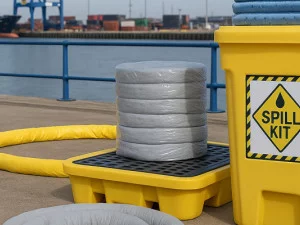
To mitigate the impact of spills, it is essential for ports and freight terminals to invest in reliable spill kits and absorbents, which are critical components of an effective spill response plan. These tools not only aid in immediate containment and clean-up efforts but also play a vital role in minimising long-term environmental consequences.
Types of Spills in Container Yards and Fuel Handling
In the bustling environment of ports and inland freight terminals, the risk of spills is a significant concern that can lead to environmental degradation and regulatory repercussions. Understanding the types of spills that can occur is crucial for effective spill management strategies.
Oil Spills
Oil spills are one of the most common incidents in both container yards and during fuel handling operations. They can arise from various sources, including leaks from storage tanks, fuel transfer operations, or damaged containers. The UK government regulations mandate that businesses adhere to strict guidelines to prevent oil spills, ensuring proper storage and handling practices are in place. Implementing spill response measures, such as having oil spill kits readily available, is essential for mitigating the impacts of an oil spill.
Chemical Spills
Chemical spills can occur due to the mishandling of hazardous materials or accidents during loading and unloading operations. These spills pose significant risks not only to the environment but also to the health and safety of workers. It is crucial for facilities to have comprehensive spill response plans that include the use of chemical spill kits and proper training for staff in spill response protocols. Regular risk assessments and adherence to pollution prevention guidelines can help prevent such incidents.
Hydraulic Leaks
Hydraulic systems are commonly used in the operations of heavy machinery and vehicles within ports and terminals. However, these systems are susceptible to leaks, which can lead to the release of hydraulic fluids into the environment. Such leaks may not only cause environmental harm but can also result in significant operational disruptions. Regular maintenance and monitoring of hydraulic systems are vital for early detection and prevention of leaks.
Wastewater Run-off
Another critical type of spill is wastewater run-off, which can occur during rain events or improper drainage management. This run-off may contain pollutants from the terminal operations, such as oils, chemicals, and other hazardous substances. Implementing effective drainage systems and treatment facilities is essential to manage wastewater and prevent contamination of surrounding areas. Adhering to pollution prevention practices can help mitigate the risks associated with wastewater run-off.
Preventive Measures for Spill Management
Effective spill management is critical for ports and inland freight terminals to ensure environmental safety and operational efficiency. By implementing preventive measures, facilities can significantly reduce the risk of spills occurring in the first place. Below are some practical strategies that can be adopted.
Regular Maintenance and Checks
One of the most effective ways to prevent spills is through regular maintenance and checks of all equipment involved in the handling and storage of hazardous materials. This includes inspecting tanks, pipelines, and valves for leaks and wear. Scheduled maintenance not only identifies potential issues before they become serious but also ensures that all systems are functioning correctly. Facilities should adhere to the guidelines provided by GOV.UK – Pollution prevention for businesses to establish a robust maintenance schedule.
Proper Training for Staff
Training is vital in spill prevention. All personnel involved in the handling of hazardous materials should receive comprehensive training on spill response and prevention techniques. This includes understanding the properties of the materials they are working with, as well as the specific procedures to follow in case of an emergency. For tailored training solutions, organisations can refer to Serpro’s training programs, which focus on spill response and management.
Use of Spill Containment Systems
Implementing spill containment systems is essential for minimising the impact of any potential spills. These systems can include bunds, spill trays, and absorbent materials that are strategically placed around areas where spills are likely to occur. For more information on effective containment solutions, visit Serpro’s spill containment resources. Additionally, facilities must comply with the oil storage regulations and safety guidelines, ensuring that all containment systems are properly designed and maintained.
Implementation of Best Practices
Adopting best practices is crucial for spill prevention. This includes developing and enforcing standard operating procedures for handling hazardous materials, ensuring proper storage techniques, and maintaining clear communication among staff members. Facilities should also stay updated with the latest regulations and recommendations for spill prevention, such as those found in GOV.UK – Storing oil at home or business, which provides detailed guidance on oil storage and bunding.
By integrating these preventive measures into daily operations, ports and inland freight terminals can significantly mitigate the risk of spills, protecting both the environment and their operational integrity.
Rapid-Response Planning for Spill Incidents
Having a rapid-response plan in place for spill incidents is crucial for ensuring the safety of personnel, protecting the environment, and minimising damage to port and terminal operations. A well-structured plan can significantly reduce response times and facilitate efficient management during spill events.
Components of a Rapid-Response Plan
A comprehensive rapid-response plan should include several key components:
- Identification of Spill Scenarios: Assess potential spill scenarios specific to the port or terminal operations, including types of materials handled and their environmental impacts.
- Response Procedures: Develop clear procedures for containment, clean-up, and reporting of spills. These procedures should be tailored to the specific materials and situations identified.
- Resource Inventory: Maintain an up-to-date inventory of spill response equipment and materials, such as emergency response kits, absorbent materials, and personal protective equipment.
Roles and Responsibilities
Assigning clear roles and responsibilities is essential for effective spill management. Key personnel should include:
- Incident Commander: The individual responsible for overall management of the spill response.
- Safety Officer: Ensures safety protocols are followed during the response.
- Environmental Officer: Monitors environmental impacts and coordinates with regulatory agencies.
- Response Team Members: Trained staff responsible for executing the spill response procedures.
Emergency Contact Information
Include a comprehensive list of emergency contacts in the rapid-response plan. This should feature:
- Internal contacts (e.g., management, safety officers)
- External contacts (e.g., local authorities, environmental agencies)
- Emergency services (e.g., fire department, police)
For guidance on pollution prevention practices, refer to the GOV.UK guidance.
Drills and Training Exercises
Regular drills and training exercises are vital for ensuring that staff are familiar with the rapid-response plan and can act quickly and effectively during a spill incident. Training should cover:
- Spill response procedures
- Use of spill response equipment
- Emergency communication protocols
For additional training resources, visit Serpro's spill training page.
Environmental Impact of Spills and Mitigation Strategies
Spills in ports and inland freight terminals can have devastating effects on local ecosystems. When hazardous substances, such as oil or chemicals, are released into the environment, they can contaminate water bodies, soil, and air, leading to immediate and long-term ecological damage. Aquatic life, including fish and plant species, can suffer from toxic exposure, affecting biodiversity and disrupting food chains.
Impact on Local Ecosystems
The immediate aftermath of a spill often leads to acute toxicity in local wildlife. For instance, oil spills can coat birds and marine mammals, impairing their ability to regulate body temperature and leading to death. Furthermore, the ingestion of contaminated food sources can impact reproductive success and lead to population declines. Pollution prevention is crucial in mitigating these impacts, as it helps preserve the delicate balance of our ecosystems.
Long-term Environmental Consequences
Beyond immediate effects, spills can have long-lasting environmental consequences. Contaminants can persist in the environment, leading to chronic exposure for wildlife and humans. Soil and water contamination can hinder agricultural productivity and affect drinking water supplies. The recovery of affected ecosystems can take years or even decades, highlighting the importance of effective spill management practices.
Mitigation Strategies and Technologies
To combat the risks associated with spills, various mitigation strategies and technologies are employed. Implementing robust spill response plans is essential for minimising damage. These plans typically include training personnel, conducting regular drills, and investing in spill response equipment such as booms and absorbents. Additionally, advancements in technology, such as real-time monitoring systems, can provide early warnings and facilitate rapid response efforts.
Legal Obligations and Compliance
In the UK, businesses are legally obligated to comply with regulations surrounding spill prevention and response. Under the Oil Storage Regulations, companies must implement measures to prevent spills from occurring and to respond effectively should a spill happen. Compliance not only safeguards the environment but also protects businesses from legal repercussions and financial liabilities.
In conclusion, understanding the environmental impact of spills and implementing effective mitigation strategies is vital for ports and inland freight terminals. By prioritising spill management, we can protect our ecosystems and ensure compliance with legal obligations.
Conclusion: The Path Forward for Spill Management
Effective spill management is not just a regulatory requirement but a crucial component of operational integrity within UK ports and inland freight terminals. The potential repercussions of spills can be devastating, affecting both the environment and the reputation of businesses. By implementing robust spill management strategies, facilities can minimise risks and ensure compliance with regulations outlined by GOV.UK.
As we move forward, it is imperative for businesses to take proactive measures in spill prevention and response. This includes investing in training, adopting best practices, and utilising resources available for effective spill management. We encourage all organisations to explore solutions such as those offered by SERPRO to enhance their spill response capabilities.
Moreover, ongoing education on oil storage regulations and adherence to safety protocols are critical for maintaining high standards in spill management. By fostering a culture of environmental responsibility, businesses can contribute to a safer and cleaner environment for all.
In conclusion, we call upon all stakeholders in the logistics and transport sectors to prioritise spill management. Together, we can pave the way for a more sustainable future. For further inquiries or support, please contact us.
For more information on Effective Spill Management Strategies for Ports & Inland Freight Terminals talk to SERPRO Ltd