

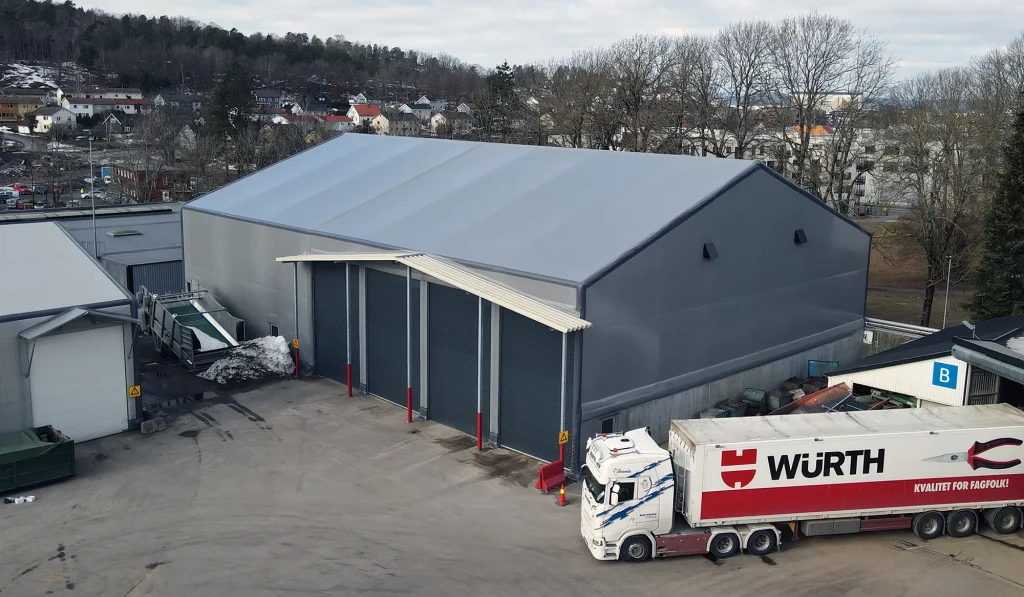
When investing in a new facility—whether it’s a hangar, warehouse, or workshop—business rates are a key cost consideration. But how are these rates applied to temporary or semi-permanent buildings like ours?
Some providers suggest their structures are exempt from business rates due to being freestanding or portable. Rubb buildings are engineered for performance. Not freestanding, not disposable, and designed to meet long-term operational needs.
So, how does this affect their rateability?
Are Rubb buildings rateable?
In many cases, yes. Business rates in the UK apply to most buildings used for commercial purposes, regardless of whether they’re permanent or temporary. That said, rateability is ultimately assessed by the Valuation Office Agency (VOA), based on how the building is used, how long it’s in place, and how it’s constructed.
Rubb buildings are:
- Anchored to foundations or groundworks
- Fully engineered to meet wind and snow load requirements
- Designed for durability, with many in service for decades
Because of this, they are generally considered rateable structures—but there can still be significant advantages when compared with traditional buildings.
A Rubb building may still attract lower rates
Although Rubb buildings are not freestanding, they are still relocatable and designed for efficient installation and demounting. These features may reduce their assessed rateable value compared to a conventional building of similar size, particularly if:
- The structure is in use for a defined, temporary period
- It is not connected to all permanent services (e.g. electricity, water, drainage)
- The use is for a non-commercial or seasonal activity
- The building’s presence does not materially enhance the land’s long-term value
In practice, many Rubb buildings have received reduced business rate assessments compared to traditional steel or brick-built alternatives, typically due to their demountable nature and the intended temporary or semi-permanent usage outlined at the planning stage.
The VOA may take these factors into account when determining business rates, leading to lower rateable values and reduced ongoing costs for the client.