
Electric motors are critical assets across industrial and commercial operations, yet they are often only given attention once they fail. When a motor breaks down unexpectedly, the immediate focus is usually on getting it running again as quickly as possible. However, the decision to repair or replace a motor should never be rushed, as the true cost of motor downtime extends far beyond the price of the motor itself.
Motor downtime can halt production lines, disrupt water and wastewater operations, delay critical processes, and place additional strain on backup systems. In many cases, the financial impact of lost output, emergency callouts, and overtime labour far outweighs the cost of a planned repair. This is why understanding when a motor can be economically repaired, and when replacement is the better option, is essential.
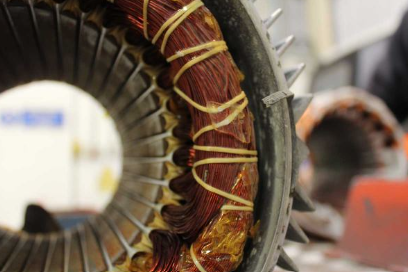
Motor rewinding is often the most cost-effective solution, particularly for medium to large motors or specialist equipment. A professionally rewound motor can be restored to its original performance specifications, with improved insulation systems that enhance reliability and efficiency. Compared to replacement, rewinding typically costs significantly less and avoids long lead times associated with sourcing new motors, especially where bespoke shaft sizes, mountings, or ratings are involved.
A replacement may be necessary when a motor has suffered catastrophic mechanical damage, severe core losses, or repeated failures due to unsuitable application or environmental conditions. In these situations, upgrading to a more efficient or correctly specified motor may provide better long-term value. However, replacement is rarely the most economical first option, particularly when a motor is otherwise structurally sound.
At Gibbons Engineering Group, our dedicated rewinds and repairs workshop is equipped to assess motors quickly and accurately. Through comprehensive testing and inspection, we identify whether a rewind, repair, or replacement will deliver the best return on investment. Our engineers focus not only on restoring function, but on reducing the likelihood of future failures by addressing root causes such as bearing wear, insulation breakdown, overheating, or misalignment.
By choosing repair or rewinding over unnecessary replacement, businesses benefit from reduced capital expenditure, shorter motor downtime, and improved asset lifespan. With free estimates and a collection service available within 50 miles of our workshop, Gibbons Engineering Group makes proactive motor maintenance both practical and cost-effective.
Making informed decisions about motor repair versus replacement isn’t just good engineering practice; it’s a smart financial strategy that protects productivity and long-term operational performance.