 Get Listed

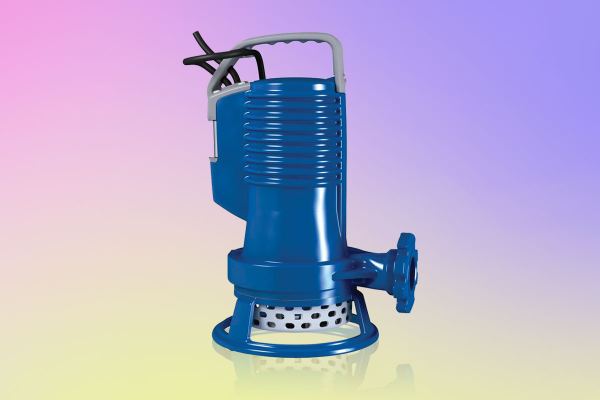
Submersible pumps play a vital role in moving liquids efficiently in a wide range of industries. Designed to operate while fully submerged in the fluid they are pumping, these robust machines are trusted in applications from wastewater management to agricultural irrigation. But how do they work, and why are they the preferred choice in so many environments?
How Submersible Pumps Work
The defining feature of a submersible pump is that its motor and pump are enclosed in a waterproof casing, allowing it to function entirely underwater. The pump uses a hermetically sealed motor, which is protected from the liquid by mechanical seals to prevent ingress and damage.
When activated, the impeller inside the pump rotates, creating a pressure difference that draws liquid into the pump through an inlet. The liquid is then pushed through the discharge pipe or hose to its intended destination.
Unlike surface pumps, submersible pumps rely on their submerged position to create suction without the need for priming. The surrounding liquid also helps to cool the motor, increasing efficiency and prolonging the pump’s lifespan.
Advantages of Submersible Pumps
-
Efficient operation: Being submerged eliminates many of the energy losses associated with suction lift.
-
Quiet performance: Noise is significantly reduced, as the pump is underwater.
-
Self-cooling: The liquid keeps the motor cool during operation.
-
Space-saving: Installation requires minimal above-ground footprint.
Applications of Submersible Pumps
Thanks to their versatility, submersible pumps are used in many sectors, including:
-
Wastewater and Sewage Treatment
Submersible pumps are widely used in sewage lift stations, pumping wastewater from lower to higher elevations for treatment. They can handle solids, sludge, and debris effectively. -
Flood Control and Drainage
In emergencies such as basement flooding or construction site dewatering, submersible pumps quickly remove large volumes of water. -
Industrial and Commercial Processes
Factories often use submersible pumps to move process water, chemicals, and slurries safely and efficiently. -
Agriculture and Irrigation
Farmers rely on submersible pumps for drawing water from wells, rivers, or reservoirs to irrigate crops. -
Mining and Construction
Heavy-duty submersible pumps are used to remove water from deep shafts, tunnels, and excavation sites.
Submersible pumps combine reliability, efficiency, and adaptability, making them indispensable in sectors ranging from wastewater management to agriculture. Understanding how they work and their varied applications can help businesses choose the right pumping solution for their needs.
For more information on How Submersible Pumps Work and Where They’re Used talk to Gibbons Engineering Group Ltd