 Get Listed


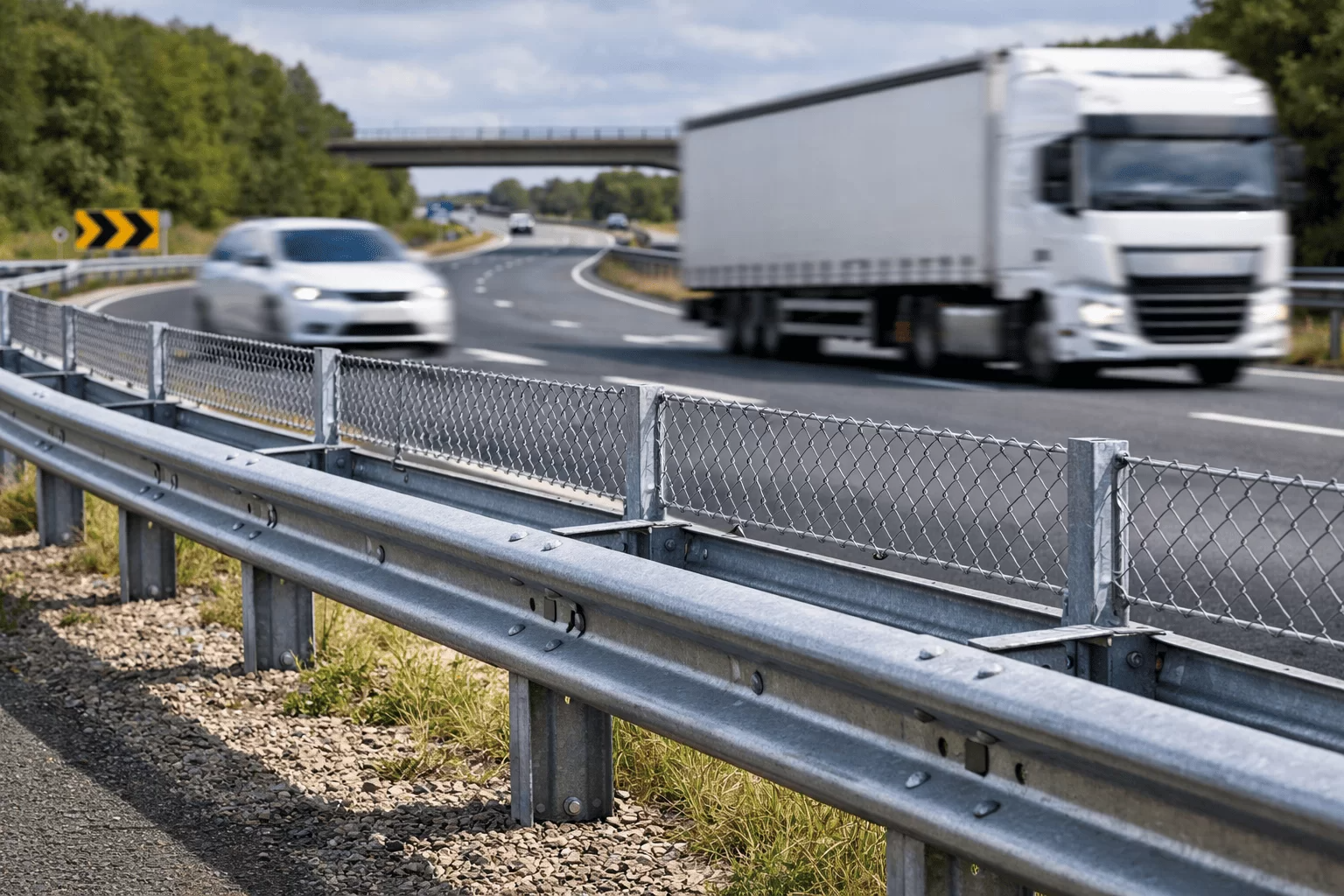
Road safety isn’t just about signs, speed limits or painted lines. One of the most important defences is the physical protection built into the road itself. That’s where crash barrier fencing systems come in.
Crash barriers are a familiar sight on motorways, bridges and busy routes, yet few people consider what they actually do. This guide explains how they protect people, limit the consequences of collisions, and safeguard drivers and pedestrians alike.
What are crash barrier fencing systems?
Crash barrier fencing systems are engineered vehicle restraint systems designed to control what happens when a vehicle leaves its lane. Rather than allowing a vehicle to cross into oncoming traffic, strike a fixed object or enter a pedestrian area, the barrier absorbs impact energy and redirects the vehicle to a safer path. The result is fewer secondary collisions, reduced injury severity and fewer fatalities. These systems are integral to modern highway safety and are used on highways, bridges, junctions and other high-risk locations.
How crash barriers reduce the severity of accidents
Barriers don’t stop incidents from occurring; they reduce how serious they become. On impact, a well-designed barrier:
-
Absorbs and spreads the energy
-
Slows the vehicle in a controlled manner
-
Guides it away from hazards
-
Lowers the risk of rollovers and head-on collisions
Impact absorption: the lifesaving principle
Modern barriers are engineered to flex, deform or deflect rather than bring a vehicle to an abrupt halt. This controlled movement reduces the forces transmitted to occupants. Energy-absorbing designs are especially valuable on high-speed roads, bridge approaches, central reservations and areas with limited run-off space—turning potentially fatal crashes into survivable events.
Redirecting vehicles away from danger
Barriers also provide post-impact guidance, preventing vehicles from:
-
Crossing into opposing traffic
-
Leaving elevated road sections
-
Hitting fixed roadside hazards
-
Entering pedestrian zones
This guidance is vital on both urban routes and fast-moving motorways.
Types of road crash barriers and fencing
Different environments demand different solutions. Common options include:
-
Steel beam barriers for general roadside protection
-
Cable systems that flex to absorb energy
-
Concrete barriers for high-speed or high-impact zones
-
Pedestrian and vehicle safety fencing for urban areas
Selection depends on speed limits, traffic volume, available space and specific local risks. In many schemes, barriers are integrated with pedestrian protection, perimeter fencing and controlled access points.
Why standards and compliance matter
Barriers only perform as intended when correctly designed, installed and maintained. UK standards ensure:
-
Predictable performance under impact
-
Durable, suitable materials
-
Installations matched to real-world conditions
Compliance isn’t a tick-box exercise; it’s the assurance that when something goes wrong, the system behaves exactly as it should.
Part of a wider safety strategy
Crash barriers are one element of a broader protection plan. In industrial settings, they are often combined with perimeter guarding, modular fencing and mesh partitioning to control movement and reduce risk. The same principles apply in warehouses and logistics hubs, where systems such as anti-collapse mesh, mezzanine edge protection and machine guarding help to keep people and plant safely separated.
Long-term value
Well-designed crash barrier systems:
-
Lower injury and repair costs
-
Reduce road closure times after incidents
-
Protect roadside infrastructure
-
Boost user confidence and network reliability
In short, they make roads safer, more predictable and easier to manage.
Billington Safety Systems: our approach
At Billington Safety Systems, safety is practical, reliable and designed for real-world use. We design and deliver protective solutions that support road safety and integrate seamlessly with surrounding environments. From roadside safety fencing to partitioning systems, storage cages and gantry platforms, our focus is on reducing risk without unnecessary complexity.
Planning a project involving road safety, pedestrian protection or controlled access? Talk to us for expert, site-specific advice and the right solution for your needs.
For more information on How Do Crash Barrier Fencing Systems Improve Road Safety? talk to Billington Safety Systems Ltd