 Get Listed

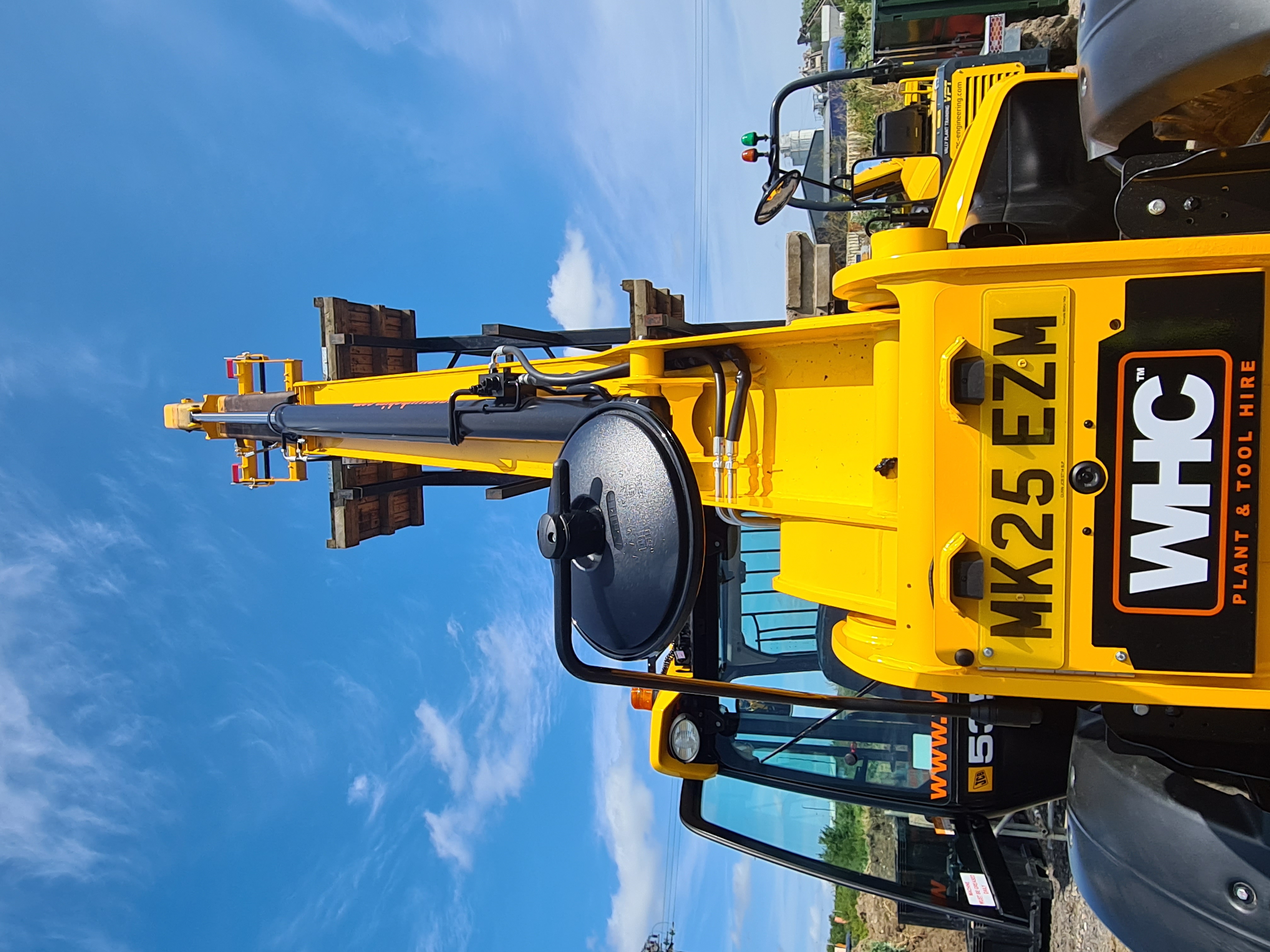
Feeling overwhelmed by the options for becoming a certified telehandler operator? From deciphering the difference between NPORS and CPCS to worrying about the practical test, the path to getting your ticket can seem complex. It’s a common challenge, but one that shouldn’t stand between you and a successful, high-demand career. That's why we’ve created this ultimate guide to telescopic handler training. As a trusted, family-run training provider, we are here to demystify the entire process for you with clear, expert advice.
This guide is your complete roadmap. We will walk you through everything you need to know, from choosing the correct NPORS telehandler course and understanding the prerequisites to preparing confidently for your theory and practical assessments. By the end, you will have a clear, step-by-step plan to achieve an accredited qualification, operate machinery safely, and unlock your full earning potential in the construction and agricultural sectors. Let's get you certified and on-site with confidence.
What is a Telescopic Handler and Why is Professional Training Essential?
A telescopic handler is one of the most versatile and indispensable pieces of machinery in modern construction and agriculture. Often known by other names such as a teleporter, loadall, or boom lift, this powerful machine combines the capabilities of a forklift with the reach of a crane. Its primary function is to lift, move, and place heavy materials with precision across varied terrain. For a more detailed look at its design and applications, you can read about What is a Telescopic Handler? on Wikipedia. However, its power and versatility come with significant risks. Operating a telehandler without accredited, professional training is not only extremely dangerous but also unlawful in the United Kingdom, putting operators, colleagues, and the public at severe risk.
The Role of a Telehandler Operator on a Modern Site
In any environment—from bustling building sites and sprawling farms to organised warehouses—the operator ensures that the workflow is smooth and materials are exactly where they need to be, when they need to be there.
Legal & Safety Requirements: Understanding HSE Regulations
In the UK, the Health and Safety Executive (HSE) enforces strict regulations for all plant machinery. It is an employer's legal duty to ensure that anyone they ask to operate equipment has received adequate instruction and telehandler training . The key legislation includes:
-
The Health and Safety at Work Act 1974 (HASAWA): The foundational act requiring employers to ensure the health, safety, and welfare of all employees.
-
PUWER 98 (Provision and Use of Work Equipment Regulations): This mandates that equipment is suitable for its intended use, properly maintained, and only used by competent, trained individuals.
-
LOLER 98 (Lifting Operations and Lifting Equipment Regulations): This applies specifically to all lifting operations, requiring them to be properly planned by a competent person, supervised, and carried out safely.
Completing a professional telescopic handler training course is the only way to meet these legal duties and ensure full compliance.
Career Benefits of a Formal Telehandler Qualification
Investing in a formal NPORS qualification is a direct investment in your career. It demonstrates a professional commitment to safety and competence that employers value highly. The tangible benefits include:
-
Increased Job Opportunities: Most major construction sites will not permit an operator on-site without a valid, accredited ticket like an NPORS card.
-
Higher Earning Potential: Certified operators are skilled professionals who can command better wages and take on more responsible roles.
-
Clear Career Progression: An NPORS ticket provides a clear pathway, allowing you to progress from a Trained Operator (Red Card) to a Competent Operator (Blue Card).
-
Proof of Competence: A formal qualification is undeniable proof that you have the skills to operate machinery safely and efficiently.
Choosing Your Certification: NPORS vs. CPCS Explained
When starting your telescopic handler training, the first major decision is choosing the right certification scheme. In the UK, the two most respected and widely recognised bodies are the National Plant Operators Registration Scheme (NPORS) and the Construction Plant Competence Scheme (CPCS). Both pathways follow a similar progression: you'll first earn a Red 'Trained Operator' card after passing your initial tests. To upgrade to a Blue 'Competent Operator' card, you must complete a relevant Telehandler NVQ , proving your on-the-job skill and competence.
The NPORS Scheme: Flexibility and Employer Focus
NPORS is renowned for its flexibility and cost-effectiveness, making it an excellent choice for operators and employers alike. A key advantage is the option for an NPORS card featuring the CSCS logo, granting access to major construction sites across the UK. For those in sectors like agriculture or warehousing, a traditional NPORS card remains a robust proof of competence. As a trusted, family-run NPORS training provider, Vally Plant Training delivers expert, accredited telehandler courses tailored to your specific needs.
The CPCS Scheme: The Industry Benchmark
The Construction Plant Competence Scheme (CPCS) is often seen as the industry benchmark, having been the long-established standard for plant operations. Its pathway from the Red Trained Operator card to the Blue Competent Operator card is highly structured, and its testing standards are known for their rigour. Because of its long-standing reputation, the CPCS ticket is frequently specified as a mandatory requirement by many major national construction contractors.
Which Ticket is Right for You? A Head-to-Head Comparison
Both schemes are excellent, but one may be a better fit for your career goals and budget. Here’s a quick comparison:
| Feature | NPORS | CPCS |
|---|---|---|
| Site Acceptance | Widely accepted, especially with the CSCS logo. | The long-established industry standard, often required by name. |
| Cost | Generally more cost-effective for training and renewals. | Typically higher initial training and renewal costs. |
| Flexibility | Highly flexible, with options for on-site training and testing. | More rigid, structured pathway and testing process. |
| Renewal Process | Simpler renewal process based on operator experience or refresher tests. | Requires logbook hours and a renewal test. |
The best choice often depends on your specific circumstances. We always advise checking with your current or potential employer to see if they have a preferred scheme. Ultimately, quality training from a professional provider is the most important factor for safety and compliance. Unsure which path to take? Contact our expert team to discuss your best option.
Your Telescopic Handler Training Journey: What to Expect
Embarking on your NPORS accredited telehandler course is a structured journey designed to build both your skill and confidence. From the moment you book with us, our expert instructors guide you through a balanced curriculum of essential theory and extensive hands-on practical operation. Our goal is to ensure every candidate feels supported, prepared, and ready to operate a telescopic handler safely and efficiently on any site. This professional telescopic handler training is your direct path to becoming a certified, competent operator.
Course Durations: Novice vs. Experienced Operators
We understand that every operator's needs are different, which is why our courses are tailored to your specific experience level. Novice operators benefit from a comprehensive 3-5 day course, providing the foundational knowledge and practical hours needed to build competence from the ground up. For seasoned operators requiring formal certification, the 1-2 day Experienced Worker Test (EWT) is designed to assess and validate your existing skills efficiently. We also provide refresher courses for renewing your NPORS telehandler ticket and can deliver training directly on your site for business clients.
Inside the Classroom: Theory and Safety Briefings
Before you get in the cab, you'll master the theory that underpins safe and compliant operation. Our classroom sessions are engaging, interactive, and crucial for your success. Key topics include:
-
Health & Safety legislation (including LOLER and PUWER regulations).
-
Operator roles, responsibilities, and best practices.
-
Understanding machine stability and the causes of instability.
-
How to correctly interpret load charts, range diagrams, and machine specifications.
-
Conducting thorough pre-use checks and identifying routine maintenance needs.
This knowledge prepares you for the NPORS theory test and ensures you understand the 'why' behind every action you take with the machine.
Practical Training: Getting Hands-On with the Machine
This is where theory meets practice. Under the watchful eye of our accredited instructors, you will get hands-on experience in a safe and controlled environment. Your practical telescopic handler training will cover a sequence of essential skills, including initial familiarisation with the machine's controls and functions, manoeuvring in both open and confined spaces, and the safe lifting, carrying, and precise placement of various loads at different heights and reaches. The telehandler course concludes by teaching you the correct shutdown and securing procedures, ensuring the machine is left safe at all times.
Understanding Telehandler Categories (NPORS N138 / CPCS A17)
Not all telehandlers are created equal, and your certification will reflect that. Both NPORS and CPCS use a category system to classify different types of machines. For NPORS, the main code is N138, while for CPCS it is A17. It is critically important to understand that your operator ticket is only valid for the specific category of machine you complete your training and assessment on. Choosing the right category from the outset is essential for your career and ensures you are qualified for the jobs you intend to do.
Making the wrong choice can mean investing time and money in a ticket that isn’t suitable for your work environment. Our expert team can provide guidance to ensure you book the correct telescopic handler training course for your specific needs.
Industrial Telescopic Handler (N138 / A17A)
Often referred to as the "compact" or "warehouse" model, the A17A is designed for operation on hard, level surfaces. With its smaller chassis and solid tyres, it’s perfectly suited for tasks within factories, warehouses, and material yards where space is tight and the ground is predictable. However, its capabilities are limited when faced with mud, slopes, or uneven terrain, making it unsuitable for most construction or agricultural sites.
Rough Terrain Telescopic Handler (N138 / A17C)
This is the most common and versatile category, and the one most people associate with a telehandler. Built to handle challenging site conditions, the A17C is the workhorse of the construction and agricultural sectors. Key features typically include:
-
Large, deep-tread tyres for superior grip.
-
Four-wheel drive and four-wheel steering for excellent manoeuvrability.
-
Outriggers or stabilisers for safe lifting at height and reach.
This is the standard ticket required for operating on virtually all UK construction sites.
Telescopic Handler - 360 Slew (N138 / A17E)
The A17E is a highly specialised and advanced machine that combines the reach of a telehandler with the functionality of a crane. Its key feature is a rotating turret that allows the cab and boom to slew a full 360 degrees, just like a mobile crane. This makes it invaluable on large, complex projects for lifting and placing materials with precision over a wide area. Operating this machine requires a separate, more advanced telehandler training course than the standard N138.
Finally, remember that while your telehandler training covers the machine itself, you also need to be competent with any attachments you use, such as buckets, jibs, or man-baskets (MEWPs). Employers have a duty to ensure operators have received adequate familiarisation for each attachment used. Visit our Telehandler Attachment Training page.
Ready to get certified on the right machine? Contact Vally Plant Training today to discuss your telescopic handler training requirements with our expert team.
How to Book Your Course and Start Your Career
You've learned the what, why, and how of becoming a certified telehandler operator. Now it's time to take action. This final section provides a clear, step-by-step guide to booking your course, preparing for success, and advancing your career in the construction or agricultural sector. Let's get you started on the path to becoming a skilled, safe, and accredited operator.
Why Booking Direct is Smart, Safe, and Cost-Effective
When booking your telescopic handler training, always train direct with an accredited NPORS provider, not a broker. Brokers often act as impersonal middlemen, adding hidden fees and creating communication barriers. By booking directly with a trusted, family-run business like Vally Plant Training, you receive expert advice from the people who will actually conduct your training. We guarantee clear communication, transparent pricing, and a personal commitment to your success. Plus, with our Price Match Promise , you can be confident you're getting the best value without compromising on quality.
Preparing for Your Telehandler Training Course
To ensure a smooth and successful training day, please complete the following steps before you arrive. Proper preparation is key to getting the most from your telehandler course and achieving your NPORS telehandler ticket .
-
Pass your HSE Test: You must have passed the CITB Health, Safety and Environment (HS&E) test for Operatives within the last two years. This is a mandatory prerequisite for any NPORS course.
-
Wear Appropriate PPE: Please arrive in suitable work clothing and bring your own steel toe-capped boots. Other essential PPE will be provided on the day.
-
Bring Valid Photo ID: A valid form of photo identification, such as a UK driving licence or passport, is required for registration and identity verification.
Next Steps: Upgrading to a Blue 'Competent Operator' Card
Upon successfully completing your course, you will be issued an NPORS Trained Operator Card (Red Card), which is valid for two years. This card demonstrates your foundational skills but is the first step on your journey. To become a fully qualified operator, you must upgrade to the Blue 'Competent Operator' Card.
This involves completing a relevant NVQ (National Vocational Qualification) in Plant Operations within that two-year period. An NVQ is not another classroom course; it's a practical, on-site assessment where one of our accredited assessors observes you working in a real-world environment. As a fully approved NVQ assessment centre, we can guide you seamlessly through this entire process. Find out more about our Plant Operator NVQs.
Ready to unlock your career potential? Contact our expert team today to discuss your telescopic handler training needs and book your course with confidence. Train Smart. Train Safe. Train with Vally Plant Training.
Your Path to Becoming a Certified Telehandler Operator
You now have a comprehensive understanding of what it takes to operate a telehandler safely and effectively. From recognising the critical need for professional certification to navigating the NPORS qualification path, you are equipped with the knowledge to make an informed decision for your career. Investing in accredited telescopic handler training is not just about getting a ticket; it’s about building a foundation of safety, skill, and confidence that will serve you on every job site.
When you're ready to turn knowledge into action, choosing the right training partner is essential. At Vally Plant Training, we are a trusted, family-run NPORS training provider, not an impersonal broker. This means you book direct, benefit from our Price Match Promise, and never face hidden fees. Our expert instructors bring invaluable real-world site experience to every course, ensuring you learn the practical skills that employers demand.
Your career as a skilled operator is waiting. Take the next step with a team that is committed to your success. Book your NPORS Telescopic Handler course directly with us today! Train smart, train safe, and start building your future.
Frequently Asked Questions About Telescopic Handler Training
How much does a telescopic handler training course cost?
The cost of a telescopic handler course depends on your level of experience. A course for a complete novice will be longer and cost more than a refresher course for an experienced operator, with prices typically ranging from £500 to over £1000. At Vally Plant Training, we provide transparent quotes with no hidden broker fees. We recommend contacting our team directly for a precise price tailored to your needs, which is always backed by our Price Match Promise.
How long does a telehandler ticket or licence last?
An NPORS Trained Operator Card (Red Card), issued after you first qualify, is valid for two years. This card demonstrates you have been trained but are still gaining experience. To upgrade, you must complete the relevant Telehandler NVQ or SVQ. Once achieved, you can apply for the NPORS Competent Operator Card (Blue Card), which is valid for five years. To maintain certification, you must pass a renewal test before the Blue Card expires, ensuring your skills remain current.
Do I need a UK driving licence to operate a telehandler?
You do not need a UK driving licence to operate a telehandler on a private site, such as a construction site or farm, as this is not a public highway. However, if you intend to drive the machine on public roads between sites, you must hold a full UK driving licence for the appropriate vehicle category. The telehandler must also be fully road-legal, with the correct tax and insurance, to be used on public roads.
What happens if I fail my NPORS telehandler test?
Failing a test is not the end of your certification journey. Our professional instructors will provide clear and constructive feedback, highlighting the specific areas that require improvement. We are committed to your success and will work with you to arrange any necessary further training before scheduling a re-test. Our primary goal is to ensure every operator we train is safe, competent, and confident in their abilities, and we provide the support needed to reach that standard.
Can I get funding for my telescopic handler training?
Yes, several funding options may be available. CITB-registered employers can often claim grants to cover a significant portion of the cost of accredited telescopic handler training for their employees. Individuals may also be eligible for support through government schemes or local employment initiatives. We advise speaking with your employer about sponsorship or contacting your local Jobcentre Plus to explore potential funding routes. We can provide the necessary documentation to support your application.
Is an NPORS telehandler ticket accepted on all UK construction sites?
An NPORS operator card is one of the UK's leading certifications and is widely accepted across the construction and agricultural sectors. To ensure access to major sites, it is essential to get the NPORS card that carries the CSCS logo. This demonstrates compliance with industry-wide standards. While a few specific sites may have their own preferences, an NPORS/CSCS card provides near-universal access for operators throughout the UK, confirming your skills have been tested to a high, accredited standard.
For more information on Telescopic Handler Training: The Ultimate Guide to Getting Your NPORS Ticket talk to Vally Plant Training