 Get Listed

Considering a career as a Slinger Signaller but feeling lost in a maze of acronyms like NPORS and CPCS? If you're unsure about the legal requirements, worried about the cost of Slinger Signaller Training , or simply don't know what the job involves day-to-day, you are not alone. Securing your accredited slinger signaller ticket is the most important step towards a responsible and rewarding role on site, and we are here to make that path clear and straightforward.
As a trusted, family-run training provider, we've designed this ultimate guide to give you the confidence to succeed. We will walk you through everything, from selecting the right high-quality slingers course to fully understanding your vital duties in ensuring crane operations are safe and compliant. By the end, you'll have a clear roadmap to gaining an industry-recognised qualification, boosting your earning potential, and working safely alongside crane operators. Let's unlock your career potential together.
What is a Slinger Signaller and Why is a Ticket Essential?
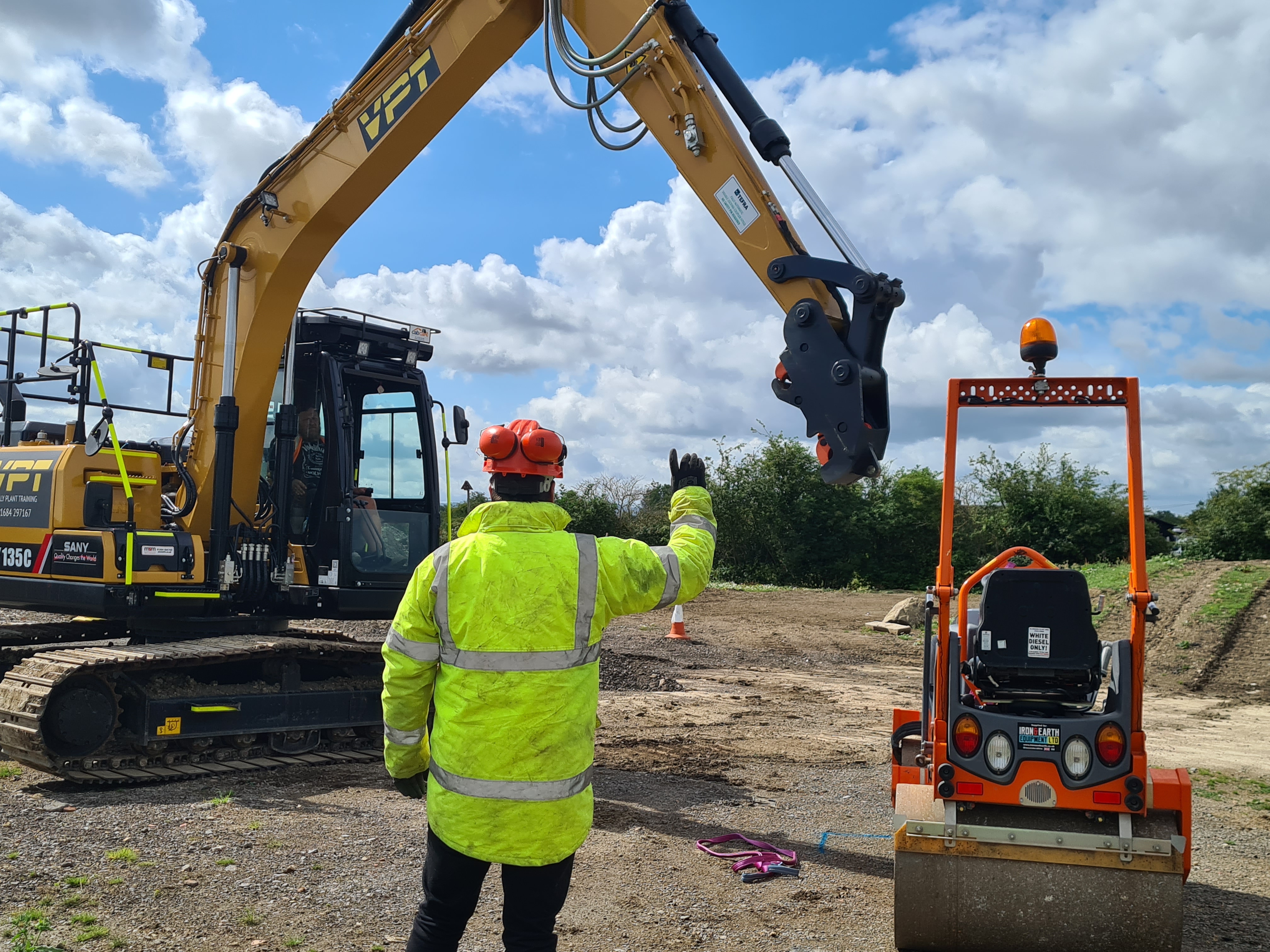
On any construction site involving lifting operations, the slinger signaller is one of the most critical safety roles. They are the crane operator's eyes and ears on the ground, responsible for the safe attachment of loads and for guiding the crane operator using a precise system of hand signals. With the operator often having a restricted or blind view from the cab, the slinger signaller ensures that every lift is executed without endangering personnel or property. The fundamental role of a Slinger Signaller is to manage risk, making them an indispensable part of the site team.
This is where the slinger signaller ticket becomes essential. It is not just a piece of paper; it is the formal, accredited proof that you have been professionally trained and assessed as competent to perform these high-risk duties. For employers, this certification is a non-negotiable requirement, demonstrating compliance with UK safety regulations and a commitment to maintaining a safe working environment for everyone.
The Slinger Signaller's Core Responsibilities
A certified slinger signaller is trained to be meticulous and safety-conscious in every action. Their primary duties are clearly defined and must be followed without exception to ensure site safety and operational efficiency. These include:
-
Attaching and Detaching Loads: Correctly using slinging techniques to ensure the load is balanced, secure, and safely attached to the lifting equipment.
-
Directing Crane Movements: Using the standardised system of hand signals (as specified in BS 7121) to communicate clearly and effectively with the crane operator.
-
Selecting Lifting Accessories: Choosing the correct lifting tackle, such as slings, chains, and shackles, that are appropriate for the load's weight, shape, and centre of gravity.
-
Conducting Pre-Use Checks: Thoroughly inspecting all lifting accessories for any signs of wear, damage, or defects before every single use.
Legal Requirements: LOLER and Health & Safety at Work Act
In the UK, lifting operations are governed by strict legislation. The Lifting Operations and Lifting Equipment Regulations 1998 (LOLER) legally require that all lifting operations are properly planned by a competent person, appropriately supervised, and carried out in a safe manner. LOLER explicitly states that all personnel involved in lifting must be competent for their role. A formal qualification, like an NPORS Slinger Signaller Ticket , is the primary way to prove this competence. This responsibility falls under the employer's broader duty of care as mandated by the Health & Safety at Work etc. Act 1974.
Benefits of Getting Your Slinger Signaller Ticket
Achieving your accredited certification is a direct investment in your career, safety, and future potential. The advantages are clear and significant:
-
Enhanced Employability: A valid slinger signaller ticket is a mandatory requirement on virtually all major UK construction and industrial sites.
-
Increased Earning Potential: Qualified and competent operatives are in high demand and can command better pay rates and access to more specialised roles.
-
Confidence in Your Role: Professional training provides you with the knowledge and skills to perform your duties safely and confidently, reducing the risk of accidents.
-
Career Progression: This qualification is the perfect foundation for advancing to other key lifting roles, such as Lift Supervisor or Appointed Person.
Choosing Your Ticket: NPORS vs. CPCS Explained
When you decide to get your slinger signaller ticket, you'll encounter two main accrediting bodies in the UK: NPORS and CPCS. It's crucial to understand that both are highly respected, recognised by the Health and Safety Executive (HSE), and accepted on the vast majority of UK construction sites. The right choice often depends on your specific career path and employer requirements.
However, the most important decision you'll make is choosing who provides your slinger signaller training. Always train directly with a trusted, accredited provider like Vally Plant Training. This ensures you receive high-quality, expert instruction without the hidden fees and complications often associated with brokers.
The NPORS Scheme (National Plant Operators Registration Scheme)
NPORS is known for its modern and flexible approach to plant operator training. It offers a direct route to gaining an NPORS/CSCS card, which is essential for working on major construction sites. A key advantage of NPORS is that training can often be tailored to your company's specific equipment and site procedures, ensuring the skills you learn are immediately applicable. It is an excellent, widely accepted route to gaining your slinger signaller ticket.
The CPCS Scheme (Construction Plant Competence Scheme)
CPCS is the other major, long-established scheme in the UK. For many years, it was considered the industry default and remains widely recognised across the entire construction sector. The CPCS testing process is known for being very rigid and standardised, meaning the assessment is identical no matter where you take it. You will often see CPCS specified as a requirement on very large, national infrastructure projects.
Which Scheme is Right for You? A Head-to-Head Comparison
For most operators, both schemes provide a robust and respected qualification. Your competence as a slinger signaller is ultimately measured by your ability to work safely and efficiently, in line with standards like the HSE LOLER Regulations, which both qualifications prepare you for.
Here’s a quick comparison:
-
Recognition: Both NPORS and CPCS are widely recognised across the UK construction industry.
-
Flexibility: NPORS offers greater flexibility, with the option to tailor training content to specific site needs. CPCS follows a rigid, standardised testing structure.
-
Cost: NPORS courses are often more cost-effective, providing excellent value without compromising on quality or safety standards.
Ultimately, while both are excellent choices, we find NPORS offers a fantastic combination of flexibility, industry recognition, and value. It delivers the high standards required for a successful career, empowering you with the skills you need to excel.
View our accredited NPORS Slinger Signaller courses .
How to Get Your NPORS Slinger Signaller Ticket: Step-by-Step
Starting your journey to become a certified slinger signaller is a clear and structured process. At Vally Plant Training, we guide you every step of the way. This guide outlines the straightforward path for a novice operator. While experienced workers can take a shorter assessment-only route, this step-by-step process is designed for those new to the role, ensuring you gain the skills and confidence needed to operate safely and effectively on site.
Following this accredited pathway ensures you receive the high-quality slinger signaller training required to earn your slinger signaller ticket and advance your career.
Step 1: Check Pre-Course Requirements
Before you can begin your practical slinger training, there is one crucial prerequisite. You must have successfully passed the CITB Health, Safety & Environment (HS&E) test for Operatives. This test is a mandatory foundation for almost all major card schemes in the UK construction industry, proving you have a solid understanding of basic site safety.
-
Validity: Your HS&E test pass certificate must be dated within the last 2 years.
-
Experience: For the novice course, no prior slinging or signalling experience is necessary. We teach you everything from the ground up.
Step 2: The Training & Testing Day(s)
Once your HS&E test is confirmed, you can book your slinger signaller training. A typical NPORS Novice course lasts 2 to 3 days, depending on the number of candidates. This intensive period is designed to build your competence and confidence through a balanced mix of learning methods. You will spend time in the classroom covering essential theory and regulations, followed by extensive hands-on training in a realistic environment. All practical sessions are conducted under the close supervision of our expert, accredited instructors, with an unwavering focus on safe working practices at all times.
Step 3: Passing the Theory & Practical Tests
At the end of your slinger signaller training, you will undertake a two-part assessment to prove your competence. To earn your NPORS slingers card, you must pass both sections:
1. **Theory Test:** This consists of verbal questions asked by the NPORS examiner from an approved question bank. It confirms your understanding of safety principles, responsibilities, and communication protocols.

2. **Practical Test:** You will be required to apply your skills in a real-world scenario. This involves assessing a load, selecting the correct lifting gear, attaching it securely, and directing a crane operator using a combination of standard hand signals and radio communications.
Upon successful completion, you will be awarded the NPORS Trained Operator Card (Red Card), your first official step as a qualified slinger signaller.
Inside the Slinger Signaller Course: What You Will Learn
Earning your slinger signaller ticket requires more than just learning a few hand signals. Our accredited NPORS N402 slinger signaller course is a comprehensive programme designed to build deep theoretical knowledge and practical competence. We ensure every candidate is fully prepared not just for the assessment, but for the real-world responsibilities of a safe and efficient lifting operation. The course is expertly structured, balancing classroom-based learning with essential hands-on training.
Our expert instructors will guide you through every module, ensuring you have the confidence and skills to succeed. Here’s a detailed breakdown of what you can expect to master.
Core Theoretical Knowledge
A safe lift begins with a solid understanding of the rules and responsibilities that govern it. This part of the course establishes the non-negotiable principles of site safety and operational planning. You will gain a thorough understanding of:
-
Key Legislation: The legal duties under the Health and Safety at Work Act 1974 (HASAWA), LOLER (Lifting Operations and Lifting Equipment Regulations), and PUWER (Provision and Use of Work Equipment Regulations).
-
Roles and Responsibilities: A clear definition of the duties of the slinger signaller, crane operator, lift supervisor, and other personnel involved in a lifting operation.
-
Interpreting Lift Plans: How to read and understand method statements, risk assessments, and lift plans, including calculating load weights and determining the centre of gravity.
-
Crane Appreciation: Understanding crane types, their capabilities, limitations, and stability requirements, as well as identifying and mitigating proximity hazards like power lines or unstable ground.
Essential Practical Skills
This is where theory is put into action. Under the watchful eye of our certified instructors, you will develop the hands-on skills required to manage loads safely and effectively. This practical slinger signaller training is the cornerstone of your journey to earning a slinger signaller ticket and covers:
-
Clear Communication: Establishing and maintaining clear communication with the crane operator using approved hand signals (to BS 7121 standards) and two-way radio protocols.
-
Inspecting Lifting Accessories: Conducting pre-use checks on a variety of lifting accessories, including slings, shackles, chains, and eyebolts, to identify defects and ensure they are fit for purpose.
-
Slinging and Load Management: Correctly attaching various types of loads, ensuring they are secure, balanced, and protected from damage before and during the lift.
-
Guiding and Placing Loads: Safely guiding loads through a designated path, navigating obstacles, and accurately placing them at their destination, including out-of-sight and blind lifts.
At Vally Plant Training, we are committed to providing high-quality, dependable slinger signaller training that prepares you for a successful career. Train Smart. Train Safe.
Your Qualification Path: From Red Card to Blue and Beyond
Earning your initial qualification is a fantastic achievement, but it’s the first step on a structured career path designed to ensure the highest standards of safety and skill. In the construction industry, the term 'ticket' almost always refers to the official card you carry as proof of your certification, such as your NPORS card. This progression from a newly trained operator to a fully competent professional demonstrates your commitment to your role and is highly valued by employers across the UK.
The NPORS Trained Operator Card (Red Card)
Upon successfully passing your initial theory and practical slinger signaller assessments, you will be issued an NPORS Trained Operator Card, commonly known as the 'Red Card'. This card is valid for two years and signifies that you have received the foundational training required for the role. It proves to employers that you are qualified but are still in the process of gaining the essential on-site experience needed to become a fully proficient operator.
Upgrading to the Competent Operator Card (Blue Card)
The goal for every professional is to upgrade to the NPORS Competent Operator Card , or 'Blue Card'. This is the industry gold standard. To achieve this, you must complete a relevant SQA or NVQ (National Vocational Qualification) for your role. This isn't another classroom test; it's a practical, on-site assessment where an assessor observes you performing your daily tasks safely and efficiently. The Blue Card is valid for five years and marks you as a trusted, experienced, and fully competent professional.
Renewing Your Ticket and Staying Certified
Maintaining your professional status means keeping your qualification up to date. The Blue NPORS Competent Operator card must be renewed every five years. The renewal process typically involves completing a refresher course or a renewal test, ensuring your knowledge of health and safety regulations remains current. Letting your slinger signaller ticket expire can prevent you from working on site, so it's vital to manage your renewal in good time. Ready to take the next step in your career? Ask us about NVQs to upgrade your Red Card.
Your Next Step to Becoming a Certified Slinger Signaller
This guide has walked you through everything you need to know about becoming a certified slinger signaller. From understanding the vital importance of this role for site safety to navigating the choice between NPORS and CPCS, you now have a clear roadmap. Achieving your slinger signaller ticket isn't just about compliance; it's a powerful step towards advancing your career, opening doors to more responsibility and higher earning potential on any construction site.
When you’re ready to turn knowledge into action, choosing the right training partner is crucial. At Vally Plant Training, we are not a broker; we are a fully accredited, family-run NPORS training provider you can trust. Training directly with our experts means you get hands-on, high-quality instruction designed to build your skills and confidence for a successful, long-term career.
Take control of your future and become an indispensable asset on site. Book your accredited NPORS Slinger Signaller course direct with us today! We look forward to helping you train smart and train safe.
Frequently Asked Questions About the Slinger Signaller Ticket
How much does a slinger signaller ticket cost?
The cost of a slinger signaller course typically ranges from £300 to £1200 + VAT. The final price depends on your experience level, the slinger signaller course duration, and the location of the training centre. Novice slinger courses are more comprehensive and cost more than shorter assessments for experienced workers. To ensure transparent pricing without hidden fees, we always recommend booking direct with an NPORS Approved accredited training provider . This guarantees you receive the best possible value for your investment.
How long does a slinger signaller ticket last?
An NPORS Slinger Signaller card is valid for five years. For those requiring site access via the CSCS logo, you will first earn a two-year Trained Operator (Red) card. This can be upgraded to a five-year Competent Operator (Blue) card upon completion of the relevant NVQ. Staying certified is crucial for site compliance and safety, so it is essential to track your expiry date and arrange for renewal or re-assessment in a timely manner.
Do I need a CSCS card before I can do the slinger signaller course?
You do not need a full CSCS card to attend the course itself. However, to be issued with an NPORS/CSCS affiliated card, you must have passed the CITB Health, Safety and Environment (HS&E) test for Operatives within the last two years. This is a non-negotiable requirement for gaining access to most major construction sites across the UK. We advise ensuring your HS&E test is up to date before booking your training.
Can you get a slinger signaller ticket online?
No, it is not possible to obtain a fully accredited slinger signaller ticket entirely online. The role carries significant safety responsibilities that demand hands-on skills and a rigorous practical assessment. While some providers may offer online theory modules, the full qualification must be completed in person under the supervision of an expert instructor. This ensures you are competent and can perform your duties safely and effectively in a real-world environment, protecting yourself and your colleagues.
What are the different categories of slinger signaller?
The main NPORS category is N402 Slinger Signaller , which comprehensively covers all standard duties. This includes establishing load weight and centre of gravity, selecting correct lifting accessories, and directing crane movements using a variety of communication methods. While N402 is the most common ticket, other specialised endorsements exist for specific machinery, such as slinging for excavators or lorry loaders. Our expert team can advise on the exact category you need for your job role.
What is the average salary for a slinger signaller in the UK?
In the UK, a qualified slinger signaller can expect to earn an average salary between £30,000 and £42,000 per year. Earnings can be higher depending on factors like your location, the complexity of the projects, overtime opportunities, and your level of experience. Securing a slinger signaller qualification is a proven path to a stable and well-paid career in the construction industry, offering excellent potential for professional growth and increased earning power.
For more information on Slinger Signaller Ticket: Your Ultimate Guide to Getting Qualified talk to Vally Plant Training