 Get Listed

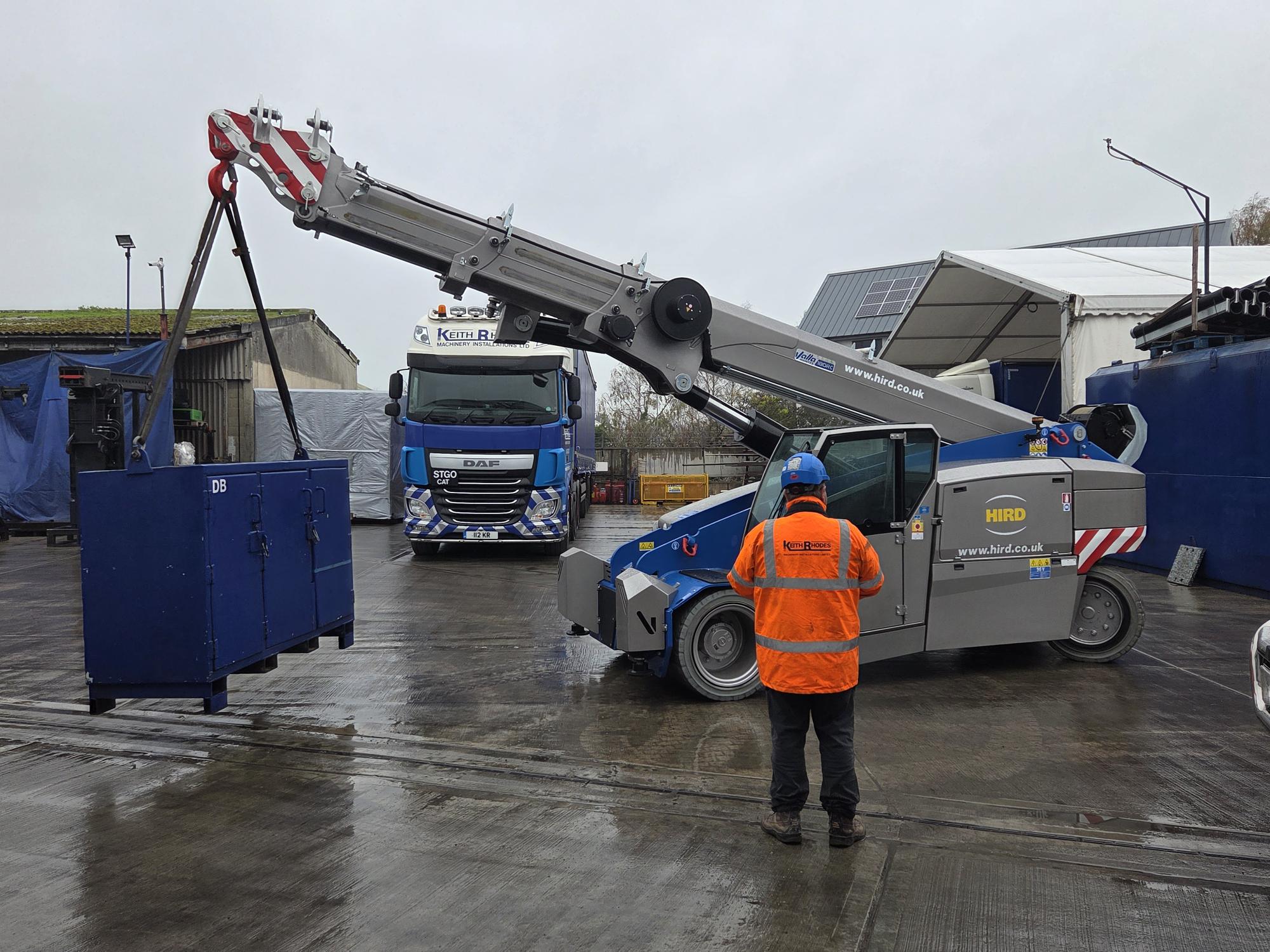
Are you looking to advance your construction career but find the roles within a lifting team confusing? Perhaps you're unsure of the exact difference between a Lift Supervisor and an Appointed Person, or you're wondering how an NPORS qualification can open doors to better job opportunities. These are common questions, and getting clear answers is the first step towards securing a more senior, safety-critical role. This is where professional Lift supervisor training becomes essential—it’s the accredited pathway to becoming a key figure on any site, commanding respect and a higher salary.
In this ultimate guide, we cut through the noise. We will break down the crucial responsibilities of a Lift Supervisor, explain exactly what the training involves, and detail the steps to gain your trusted NPORS qualification. As a leading, family-run training provider, we're here to give you the clear, expert advice you need to book with confidence and unlock your career potential. Get ready to understand your path to becoming a certified, in-demand professional who ensures every lift is a safe lift.
What is a Lift Supervisor and Why is the Role Critical on Site?
On any site where lifting operations take place, the Lift or Crane Supervisor is the competent professional responsible for directing and supervising the work on the ground. They are the crucial link between the lift plan and its safe, successful execution. Their presence is not just good practice; it is a fundamental requirement for ensuring the safety of all personnel and for maintaining legal compliance.
Every lifting operation in the UK is governed by strict safety standards. The Lift Supervisor's role is defined by their legal responsibilities under regulations like the Lifting Operations and Lifting Equipment Regulations 1998 (LOLER) and the BS 7121 Code of Practice for the safe use of cranes. These regulations mandate that all lifts are properly planned, supervised, and carried out safely by competent people, making the supervisor an indispensable part of the process.
The Lifting Team: Supervisor vs. Appointed Person vs. Slinger Signaller
A safe lift depends on clear roles and expert teamwork. The Lift Supervisor is a key part of a specialised team, and understanding their position within this hierarchy is vital:
-
The Appointed Person (AP): The master planner. This individual has overall control of the lift and is responsible for creating the detailed risk assessment and method statement (the "safe system of work") before any work begins.
-
The Lift Supervisor: The on-site manager. Their job is to implement the Appointed Person's plan, ensuring every step is followed precisely and safely on the day.
-
The Slinger Signaller: The Supervisor's eyes and ears. This operative is responsible for correctly attaching and detaching loads and for relaying clear, standardised signals to the crane operator. You can book your Slinger Signaller Training with Vally Plant Training.
Core Responsibilities of a Lift Supervisor
A certified Lift Supervisor holds significant responsibility for the active phase of the lifting operation. Proper Crane Supervisor Training equips them to confidently manage these core duties:
-
Briefing the Team: Before the lift begins, they must communicate the method statement and safety procedures to the entire lifting team, including the crane operator and slinger signallers.
-
Constant Supervision: They must be present and maintain supervision throughout the entire lifting operation, from the moment the load is attached until it is safely landed.
-
Enforcing the Plan: Their primary duty is to ensure the lift is conducted exactly as detailed in the Appointed Person's plan, with no unauthorised deviations.
-
Authority to Stop: The Supervisor has the authority and responsibility to halt the operation immediately if they observe any change in conditions or any practice that could compromise safety.
Your Path to Certification: Lift Supervisor Course Requirements
Becoming a certified Lift Supervisor is a significant step in your construction career, reflecting a high level of responsibility and trust on site. To ensure every candidate is prepared for this critical role, our accredited lift or crane supervisor training programme has clear entry requirements and a comprehensive syllabus. This structured path ensures you build the necessary knowledge on a solid foundation of practical experience and safety awareness.
Pre-Course Entry Requirements
Before you can begin your training, there are a few essential prerequisites to meet. These standards ensure all delegates have the foundational knowledge and communication skills necessary to succeed. Candidates must have:
-
A valid pass in the CITB Health, Safety & Environment (HS&E) test for Supervisors, taken within the last two years.
-
A good understanding of spoken and written English to fully comprehend course materials and communicate effectively on site.
-
While not mandatory, previous experience as a Slinger Signaller is highly recommended. This hands-on experience provides an invaluable practical context for the supervisory skills you will learn.
What You'll Learn: A Breakdown of the Course Syllabus
Our expert-led course is designed to equip you with the theoretical knowledge and practical skills to oversee lifting operations safely and efficiently. The syllabus is meticulously structured to cover every aspect of the role, ensuring you are fully prepared for your assessment and on-site duties. Key topics include:
-
Legislation and Regulations: A deep dive into your legal responsibilities, focusing on core UK legislation such as the Health and Safety at Work Act 1974, PUWER, and the Lifting Operations and Lifting Equipment Regulations (LOLER). Understanding these is non-negotiable for site compliance.
-
Crane Appreciation: Learning to identify different crane types, understand their capabilities, and recognise their operational limitations.
-
Lift Planning and Documentation: Gaining proficiency in reading and accurately interpreting lift plans and method statements to ensure every lift is executed as planned.
-
On-Site Management: Mastering the skills to conduct effective risk assessments, deliver clear toolbox talks, and manage the lifting team with confidence.
The Assessment: Theory and Practical Tests
To achieve certification, you must demonstrate your competence through a two-part assessment. This final stage confirms you have absorbed the course material and can apply it in a real-world context. The assessment consists of:
-
Theory Test: A multiple-choice examination designed to test your understanding of safety protocols, legislative requirements, and the responsibilities of a Lift Supervisor.
-
Practical Test: A simulated on-site lifting scenario where you will be assessed on your ability to supervise a lifting team, conduct safety checks, and respond to changing conditions.
Upon successful completion of both parts, you will be awarded an NPORS Trained Operator card, a trusted credential that validates your skills and unlocks your career potential.
NPORS vs. CPCS: Choosing the Right Lift Supervisor Accreditation
When you decide to undertake lift supervisor training, one of the first questions you'll face is which accreditation to pursue. In the UK, the two leading and most respected schemes are the Construction Plant Competence Scheme (CPCS) and the National Plant Operators Registration Scheme (NPORS). Both qualifications prove your competence and commitment to safety, but they have distinct differences in their approach, structure, and flexibility.
Understanding these differences is key to choosing the certification that best fits your career goals and your employer's needs. Making an informed choice ensures your investment in training delivers maximum value and site accessibility.
Understanding the CPCS Scheme (A62 Crane Supervisor)
Often considered the long-standing industry standard, the CPCS scheme is managed by the Construction Industry Training Board (CITB). It follows a very structured, two-stage progression: candidates first earn a Red Trained Operator card, which is valid for two years. To upgrade to a Blue Competent Operator card, you must complete the relevant NVQ. While widely recognised, this rigid pathway can sometimes be more expensive and offer less flexibility for employers who need tailored training solutions.
The Advantages of the NPORS Scheme (N405 Lift Supervisor)
The National Plant Operators Registration Scheme (NPORS) has grown to become a trusted and powerful alternative, known for its modern, flexible approach. It provides a robust framework for proving operator competence while offering significant advantages for both individuals and businesses.
-
Unmatched Flexibility: NPORS training can be delivered at your workplace using your own equipment, making it highly relevant to your day-to-day operations.
-
Guaranteed Site Access: The scheme offers both a traditional NPORS card and an NPORS card featuring the CSCS logo. This ensures your qualification is accepted on the vast majority of UK construction sites, including those managed by Major Contractors Group members.
-
Cost-Effective Competence: NPORS courses often provide a more direct and affordable route to achieving the same high standard of certification, without compromising on safety or quality.
Which Card is Right for You?
For most individuals and companies, the NPORS scheme offers an exceptional combination of value, flexibility, and industry-wide recognition. Its focus on tailoring training to specific workplace needs makes it a practical and efficient choice. While it's always smart to check specific site requirements for long-term projects, an NPORS card is your key to unlocking opportunities across the country. As a trusted, family-run provider, Vally Plant Training are experts in delivering high-quality NPORS courses designed for your success.
Ready to advance your career with a nationally recognised qualification? Book your NPORS Lift Supervisor course with a trusted provider.
What to Expect During Your Lift Supervisor Training
Embarking on your Lift supervisor training is a structured and engaging process designed to build your competence and confidence from the ground up. A typical course for novices lasts between three to five days, providing a comprehensive blend of classroom theory and essential hands-on practice. Throughout the programme, you will be guided by expert instructors in a supportive learning environment, ensuring you can ask questions and develop your skills at a comfortable pace. The course is meticulously structured to culminate in your final assessment, setting you up for success.
Day 1-2: Classroom Theory and Foundations
The initial days are dedicated to building a solid theoretical foundation. This isn't just about reading from a book; our instructors lead interactive sessions covering all critical knowledge areas. You will gain a deep understanding of your legal duties and the standards that govern safe lifting operations.
-
Mastering relevant legislation, including LOLER 1998 and the BS 7121 code of practice.
-
Participating in group exercises to interpret complex lift plans and technical information.
-
Learning robust methods for identifying hazards, assessing risks, and implementing safe systems of work.
Day 3-4: Practical Application and Scenarios
With the theory in place, you will move to a practical training area to apply your knowledge in real-world scenarios. This hands-on phase is crucial for developing the practical skills needed to manage a lifting team effectively and safely. You'll work with real lifting equipment under the watchful eye of your instructor.
-
Practicing how to deliver clear and concise toolbox talks and team briefings.
-
Conducting pre-lift checks and ensuring correct communication protocols are followed.
-
Responding to simulated problems, such as changing weather or unexpected site hazards, to test your decision-making.
Final Day: Assessment and Certification
The final day is dedicated to assessing the knowledge and skills you have acquired. This is your opportunity to demonstrate your competence and earn your NPORS certification. The assessment is conducted in two distinct parts under formal exam conditions.
-
A written theory test to confirm your understanding of health, safety, and lifting principles.
-
A one-on-one practical assessment where an examiner will observe you supervising a lift operation.
Upon successful completion, you will receive constructive feedback from the examiner and clear guidance on the next steps for receiving your official NPORS operator card. Our expert team is here to guide you every step of the way. To learn more, view our accredited NPORS courses today.
Career Progression After Your Lift Supervisor Course
Completing your accredited lift supervisor training is a significant achievement that immediately enhances your career prospects and earning potential. This qualification is not just a certificate; it is a gateway to greater responsibility, higher pay, and a structured career path within the construction and industrial sectors. With this ticket, you become an essential, in-demand asset on any site where lifting operations take place.
Job Opportunities and Salary
Once qualified, you will find yourself in high demand. Major construction projects across the UK mandate the presence of a certified Lift Supervisor to ensure safety and compliance, opening up a wide range of job opportunities. This specialisation often commands higher day rates compared to general plant operator roles. A qualified Lift Supervisor in the UK can typically expect to earn a salary between £35,000 and £50,000 per year, with rates varying based on experience, location, and project complexity.
The Next Step: Becoming an Appointed Person (A61)
For those with ambition, the Lift Supervisor role is a crucial stepping stone towards becoming an Appointed Person for Lifting Operations (NPORS N401 / CPCS A61). This is the highest-level qualification in the field. While the Supervisor oversees the lift on the day, the Appointed Person is responsible for the entire lift plan from start to finish—including risk assessments, method statements, and crane selection. This advanced role requires significant experience as a supervisor and further expert-level training.
Maintaining Your NPORS Card
Your professional development is an ongoing process, and keeping your qualifications current is vital for compliance and career growth. The NPORS progression path is designed to ensure you remain a competent and safe professional.
-
Trained Operator (Red) Card: Upon successful completion of your course, you receive a Red card, which is valid for 2 years. This demonstrates you have the required foundational knowledge and skill.
-
Competent Operator (Blue) Card: To progress, you must complete a relevant NVQ in the workplace. This assessment proves your competence in a real-world environment. The resulting Blue card is valid for 5 years and is renewable.
Upgrading to a Blue card is essential for long-term employment and demonstrates your commitment to the highest industry standards. Ask us about NVQ assessments to upgrade your card. Lift supervisor NVQ
Your Path to Becoming an Essential Site Leader
Becoming a certified Lift Supervisor is a significant step in your construction career, transforming you into an essential leader responsible for on-site safety and efficiency. As we've covered, understanding the path to certification and choosing the right accreditation is crucial. This qualification, achieved through professional lift supervisor training, doesn't just meet compliance; it unlocks new career opportunities and greater responsibility on site.
When you're ready to take that next step, choosing the right provider is vital. At Vally Plant Training, we are a fully accredited NPORS Training Centre—not a broker. This means you train directly with a family-run business committed to your success, with no hidden fees. Our expert instructors bring years of real-world site experience to every course, ensuring you receive the highest quality, dependable instruction.
Train Smart, Train Safe. Book Your NPORS Lift Supervisor Course Directly!
Invest in your future today and become the competent, confident leader every construction site needs.
Frequently Asked Questions About Lift Supervisor Training
How long does a Lift Supervisor certificate last?
An NPORS Lift Supervisor card is valid for five years from the date of your successful assessment. To maintain your qualification and ensure your knowledge of lifting regulations remains current, you must complete a renewal assessment before the card expires. This process is vital for upholding safety standards and demonstrating ongoing competence on site.
Do I need to be a Slinger Signaller before I can become a Lift Supervisor?
Yes, holding a valid Slinger Signaller qualification is a mandatory prerequisite. Before you can effectively supervise lifting operations, you must have proven experience and understanding of the roles you will be managing. This foundational knowledge is essential for creating safe lift plans and communicating clearly with the on-site team, ensuring every operation is conducted safely and efficiently.
Is Crane Supervisor training eligible for a CITB grant?
Absolutely. As a CITB Approved Training Organisation (ATO), our accredited Lift Supervisor courses are eligible for grant funding. If your company is registered with the CITB and is up to date with its levy payments, you can claim back a significant portion of the Lift Supervisor Training cost. This makes investing in high-quality, compliant training for your team more accessible and cost-effective.
What is the difference between a Crane Supervisor and a Lift Supervisor?
While the terms are often used interchangeably, "Lift Supervisor" is the correct and more comprehensive title under modern UK standards like BS 7121. A Crane Supervisor's role is specific to cranes, whereas a Lift Supervisor is qualified to plan and oversee safe lifting operations involving any type of lifting equipment, ensuring a broader scope of safety and compliance across all site activities.
Can I complete any part of the Lift Supervisor training online?
Due to the safety-critical nature of this role, the vast majority of accredited Lift supervisor training and the final technical assessment must be completed in person. This hands-on approach is essential for demonstrating practical competence and ensuring you are fully prepared for real-world site responsibilities. While some providers may offer introductory theory online, the core training requires face-to-face expert instruction.
How much does a Lift Supervisor training course typically cost?
The cost for a full Lift Supervisor training course in the UK typically ranges from £1000 to £1,400, depending on factors like your prior experience and the training location. At Vally Plant Training, we provide clear, upfront pricing with our Price Match Promise. We always recommend you book direct with a trusted provider and not a broker to avoid hidden fees and get the best possible value for the Lift Supervisor Training.
For more information on Lift Supervisor Training: Your Ultimate Guide to Getting Certified talk to Vally Plant Training