 Get Listed


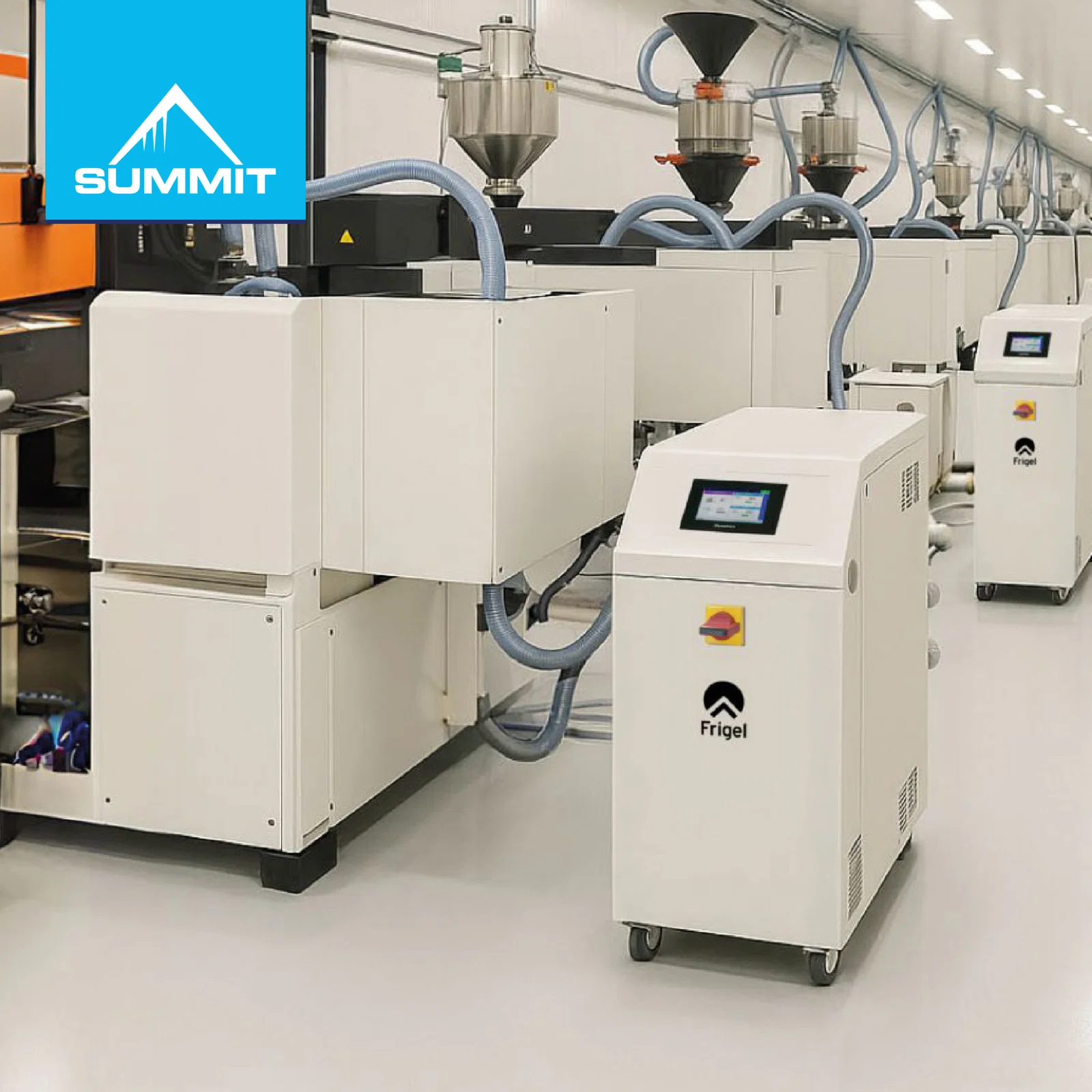
Reducing cooling time in injection moulding is one of the most effective — and often overlooked — ways to increase throughput, lower cost per part and improve profitability, without major capital investment.
Discussions in injection moulding often focus on faster machines, new tooling or material performance. Yet on many jobs, it’s the cooling phase that quietly dominates the cycle, typically accounting for 40–80% of total production time. In short, cooling is where a significant amount of time and cost is tied up.
Every second saved during cooling reduces overall cycle time. That means more parts per hour from the same press, the same mould and the same team — with no extra floor space or labour required, just better use of what’s already in place. When margins are tight and energy prices remain unpredictable, any uplift in productivity is a real advantage.
On many shop floors, cooling parameters are set conservatively. If a job is running and quality is acceptable, there’s an understandable reluctance to push further. Temperature control units are often set to safe values even when they’re not fully optimised. Over time, water temperatures drift, flow rates are restricted by pipework or scaling, and small inefficiencies become “how we’ve always done it”. The process works, but it could be better.
Cooling performance isn’t simply about lowering water temperature. Effective heat removal depends on stable flow, sufficient turbulence and well-balanced circuits within the mould. If flow is limited or uneven, hot spots remain. The mould takes longer to reach a safe demoulding temperature, and the machine waits. Multiply that by thousands of cycles each week and the cost becomes significant.
There’s also a quality factor. Inconsistent cooling can cause subtle defects, dimensional variation or deformation during ejection. These issues don’t always show up immediately in scrap figures, but they can drive rework, add inspection time and, in the worst case, lead to customer complaints. Stable, controlled cooling helps protect both output and reputation.
Recent advances in mould temperature control have moved the conversation away from fixed setpoints and towards dynamic cycle optimisation. Rather than holding a constant water temperature throughout the cycle, more intelligent systems adjust flow and temperature in step with the process. Higher-intensity cooling is delivered during the critical phase, then eased back as the mould naturally reheats. The focus shifts from “What temperature are we running?” to “What’s the shortest stable cycle we can achieve?”
Trials across injection and blow moulding applications show that meaningful cycle-time reductions are achievable when cooling is properly optimised. In technical moulding environments, where dimensional stability and part quality are critical, even greater gains have been recorded. The key point isn’t the headline percentage — it’s that many processes still have untapped potential.
Shorter cycles bring wider benefits too. Machines spend less time clamped and under load, reducing energy consumption per part. More consistent demoulding temperatures mean fewer surprises at take-out or during assembly. Over a year, these incremental improvements add up to a measurable reduction in cost per part and a clear improvement in overall profitability.
For processors looking to improve margins without major capital spend, cooling deserves closer attention. It may not be the most visible part of the cycle, but it is often the most influential — and solutions such as Frigel’s Dynamico Mould Profit Booster, available to the UK and Ireland plastics industry through Summit Systems, are helping turn cooling from a fixed constraint into a measurable performance advantage.
For more information on Stop Managing Temperature. Start Controlling Cycle Time talk to Summit Process Cooling