 Get Listed

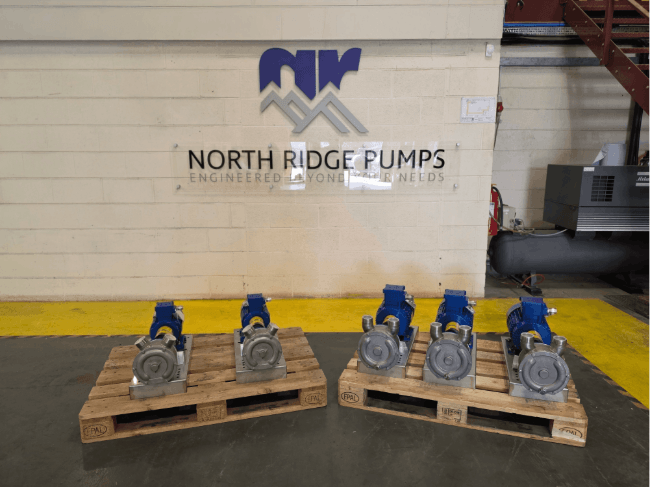
Five mixing-tank feed pumps were required by a manufacturer of cement and bitumen-based products. North Ridge Pumps selected side-channel units for transferring vegetable oil and white spirit from storage vessels to mixing tanks ranging from 2,000 to 25,000 litres. The project combined different fluid-handling duties with a hazardous-area requirement for the two white-spirit pumps.
Three pumps were intended for vegetable oil transfer and two for white spirit. The solvent duty required equipment specified for ATEX Zone 1. North Ridge's case study explains why application requirements, gas handling and suction conditions influenced the selection alongside efficiency.
Understanding the fluids and production process
Vegetable oils have several roles in cement and concrete manufacture. Used as a thin mould-release layer, they can help hardened material separate from formwork. Selected oils or derivatives can also be used within formulations concerned with workability, water repellence or curing. The precise formulation and intended use remain process-specific.
White spirit has a different role in bitumen-based products. The source identifies its use as a solvent or thinner for paints and primers, as well as in surface preparation and cleaning. Bitumen is the petroleum-derived binder; asphalt combines that binder with aggregates. The transfer arrangement therefore needed to suit the actual solvent and oil duties rather than treat all construction-related liquids alike.
Why side-channel technology was selected
Side-channel pumps combine characteristics associated with centrifugal, liquid-ring and multistage designs. North Ridge highlights their ability to deliver relatively low flows at higher pressures and to handle entrained gas within the liquid stream.
Gas handling can be important when liquids have low boiling points, contain air pockets or are drawn from vessels with varying levels. A pump that loses performance or becomes air-locked under those conditions may be unsuitable even if its nominal efficiency looks attractive.
The company identifies self-priming capability as another relevant feature. This can reduce the need for repeated manual priming within a correctly designed installation. It does not remove the need to follow the operating limits and commissioning instructions for the selected pump.
Balancing efficiency and reliability
North Ridge notes that side-channel pumps may be less efficient than centrifugal alternatives at some duties. Its selection process considers more than one performance measure: volatile fluids, entrained gas and difficult suction conditions can make reliable handling the more important factor.
The same approach applies to low-flow, high-pressure transfer and vessel-emptying duties. The company discusses applications involving chemicals, alcohols, refrigerants and other challenging fluids, with the specific pump construction chosen to match each process. Sealless options may be relevant in other applications, but the configuration used here was selected for this client's requirements.
The specified pump arrangement
North Ridge selected five NRGRADPE ATEX horizontal, close-coupled side-channel pumps. The case study describes an ATEX-rated motor combined with a high-pressure side-channel liquid-ring design. Pump bodies, impellers and inlet/outlet components were specified in cast AISI 316 stainless steel.
The close-coupled arrangement connects the motor directly to the pump head, giving a compact footprint and avoiding the separate shaft-alignment task associated with a long-coupled set. Material compatibility and hazardous-area suitability remain part of the complete specification, particularly for the white-spirit duty.
The company lists gas-handling capability of up to 50% entrained gas or vapour and self-priming suction lift up to six metres for the described design. These are stated design capabilities rather than guaranteed performance at every fluid, temperature or installation condition; the applicable limits need to be confirmed for the selected model.
Specification around the application
North Ridge's approach is to consider different pump technologies before selecting the arrangement. For this project, the combination of low-viscosity solvent handling, gas tolerance, compact construction and pressure capability supported the side-channel choice.
The case study illustrates why a pump should be assessed against the fluid and the installation as well as its catalogue duty point. North Ridge can discuss the required flow, pressure, suction conditions, materials and hazardous-area classification with customers planning similar transfer systems.
Source: North Ridge Pumps
For more information on Mixing Tank Feed Pumps For Cement Manufacture & Tank Cleaning talk to North Ridge Pumps Ltd