 Get Listed

Borehole Pump Commissioning Guide
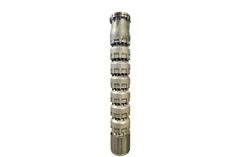
A submersible borehole pump may operate many metres below the water level, making inspection and retrieval more difficult than for a surface-mounted unit. North Ridge Pumps' commissioning guide sets out the checks needed before installation, during lowering and at initial operation, with particular attention to handling, electrical testing and the dynamic water level.
The guide should be used alongside the instructions for the specific pump and motor. Installation settings, tightening torques and starting arrangements depend on the equipment supplied; commissioning needs suitably qualified personnel and appropriate lifting and electrical procedures.
Storage, delivery and handling
North Ridge recommends keeping the pump packaged until installation and avoiding bending, impacts or unsupported storage that could affect shaft alignment. Pump and motor may arrive separately because of the overall length, so both parts should be checked against the order before assembly begins.
Its guide gives a storage temperature range of -10°C to +50°C, away from direct sunlight. Support and orientation should follow the supplied instructions, with the pump positioned so that its own weight does not cause misalignment.
Electrical and mechanical checks
Pre-installation checks include motor insulation resistance, winding resistance and free shaft rotation. The guide describes separating the pump and motor where necessary to check the motor independently, and inspecting coupling movement and axial play as part of the mechanical assessment.
These checks can reveal damage or binding before the assembly is lowered into the well. Test methods and acceptable values should be taken from the motor and pump documentation, with electrical testing carried out by authorised personnel.
Confirming position and submergence
The maximum outside diameter of the complete assembly must be checked against the well, including restrictions along the lowering route. The guide discusses vertical and permitted horizontal installation, with downward inclination excluded for the equipment described.
The important water level is the dynamic level while pumping, rather than only the static level at rest. North Ridge specifies that the intake must remain submerged and describes a minimum one-metre safety margin in its example. The actual installation must maintain the submergence and motor-cooling conditions required by its manufacturer.
The guide also discusses check-valve arrangements for systems feeding a pressurised distribution network. It describes a supplementary valve position within ten metres of the minimum water level for the arrangement covered, intended to reduce hydraulic shock. This needs to be assessed within the complete delivery-pipe and pressure-system design.
Assembling the pump and motor
The shafts should be aligned without forcing the coupling together. Flange fasteners are tightened diagonally to the specified torque. North Ridge's table gives 26Nm for M8 fasteners on a four-inch motor, 82Nm for M12 on a six-inch motor and 200Nm for M16 on eight- and ten-inch motors. These values belong to the equipment described and should not replace the instructions supplied with another assembly.
Before connections are made, the electrical supply must be disconnected and confirmed de-energised. Nameplate voltage and frequency, earthing and the protective arrangements need checking by an authorised electrician.
For three-phase motors, the guide describes confirming rotation by comparing delivered head under the same valve conditions after an appropriately isolated phase change. The pump must be fully submerged before starting, and any alteration to wiring must follow the electrician's safe isolation procedure.
Lowering and securing cables
The lifting arrangement must support the combined load of the pump and water-filled delivery pipe. North Ridge specifies suitable rated hoisting equipment, with the assembly kept aligned to the well. The power cable must never carry the pump's weight.
The guide describes securing the cable along the supporting rope or delivery pipe at three-metre intervals, with extra restraint around flanged joints. Plastic pipe can elongate under load, so suitable slack is needed to prevent the cable or support rope being pulled tight.
Starting and establishing a baseline
North Ridge's example starts with the gate valve approximately one-third closed, after rotation and submergence are confirmed. The opening procedure must suit the well, pump and water quality. The guide also gives a soft-start example of 40–45% starting voltage with a three-second ramp, subject to the requirements of the actual motor and starter.
Dry-run protection is particularly important where the pump's delivery could exceed the well's sustainable yield. A falling water level can expose the intake and remove the cooling and lubrication the assembly needs.
Useful instruments include an insulation tester, multimeter, clamp meter, delivery-pressure gauge and flowmeter. Commissioning records should cover voltage and current per phase, insulation resistance before and after immersion, delivered head, and static and dynamic water levels. These readings provide a reference for future fault-finding and maintenance.
Source: North Ridge Pumps
For more information on Borehole Pump Commissioning Guide talk to North Ridge Pumps Ltd