 Get Listed

Commissioning Guide: Centrifugal Pumps
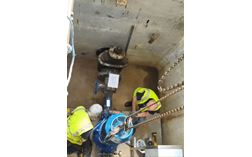
Commissioning takes a centrifugal pump from installed equipment to a system whose operation has been checked against its intended duty. North Ridge Pumps' guide explains the sequence from delivery inspection and alignment through to priming, initial running and measured performance checks.
The purpose is to identify installation or operating problems before they lead to damaged seals, bearings or other components. A successful factory test does not confirm that site pipework, electrical connections, suction conditions and operating settings are correct.
Inspect the equipment and installation
The pump, motor and accessories should match the order and be checked for transit damage. The guide then addresses the foundation, grouting, levelling and shaft alignment. A poorly aligned pump and motor can place unnecessary loads on bearings and seals.
Pipework needs independent support so that its weight or misalignment is not imposed on the pump casing. The coupling and mounting arrangement should be inspected within the manufacturer's tolerances, with guards and other protective features fitted before normal operation.
Check electrical supply, rotation and lubrication
Voltage, phase and frequency must match the motor nameplate. Rotation should be confirmed using the procedure appropriate to the pump and coupling arrangement before the unit is put under load. Electrical work and any isolation or uncoupling must be undertaken by suitably qualified personnel.
Bearing housings require the specified lubricant at the correct level. The guide also covers seal systems: flushing arrangements need venting and an adequate supply of the correct liquid, while barrier-fluid systems require a compatible fluid and suitable operating conditions.
For cartridge mechanical seals, setting clips must be dealt with in accordance with the installation instructions. Packed glands require an appropriate adjustment rather than simply being tightened as far as possible.
Prime and vent before starting
The casing and suction pipework must be filled and vented as required for the installation. Trapped air can prevent a pump building pressure and can expose seals to damaging conditions. Suction valves, vent points and any separate priming equipment need to be set correctly.
North Ridge stresses checking suction conditions across the expected operating range. Available Net Positive Suction Head must be assessed against the pump's requirement with an appropriate margin, taking account of liquid properties and the installation. Intake geometry and submergence also matter because vortexing can draw air into an otherwise apparently adequate suction arrangement.
Treat the first run as an observation period
The discharge valve should be placed in the starting position specified for the pump and system. Many centrifugal installations use a partially closed discharge valve during starting, but the correct procedure depends on the actual equipment and duty.
After starting, operators should look for unusual noise, unstable pressure, vibration or temperature changes. A gravel-like sound may indicate cavitation and warrants investigation. Pressure shocks can indicate trapped air or hydraulic transients; repeated hammering should not be accepted as normal operation.
Bearing temperature and vibration need monitoring beyond the first few seconds. Packed seals should be checked against the expected leakage for the arrangement fitted, and the pump should not be left operating through abnormal conditions in the hope that they will clear themselves.
Measure performance rather than estimate it
Useful commissioning equipment includes calibrated suction and discharge gauges, a flowmeter and the correct pump curve. Alignment tools can range from basic checks to a laser system, depending on the equipment and tolerances.
A tachometer establishes speed, particularly where a variable-frequency drive or belt drive is used. A vibration meter, sound-level meter, infrared thermometer and thermal camera can help identify unusual behaviour and establish baseline readings.
Measured flow, head and speed should be compared with the pump's rated performance and the agreed acceptance criteria. A curve comparison needs the correct operating conditions and tolerance basis, rather than treating every difference as either acceptable or a fault.
Record the handover information
North Ridge recommends keeping commissioning readings as a reference for later maintenance and troubleshooting. Electrical measurements, flow, pressure, speed, temperature, vibration and noise observations can all help distinguish a later change from the original operating condition.
The guide's emphasis is on a structured, documented sequence. Inspection, priming, close observation and measured verification work together to establish whether the installed pump is ready for its intended service. North Ridge can provide application support where the duty, suction arrangement or performance results need further assessment.
Source: North Ridge Pumps
For more information on Commissioning Guide: Centrifugal Pumps talk to North Ridge Pumps Ltd