 Get Listed

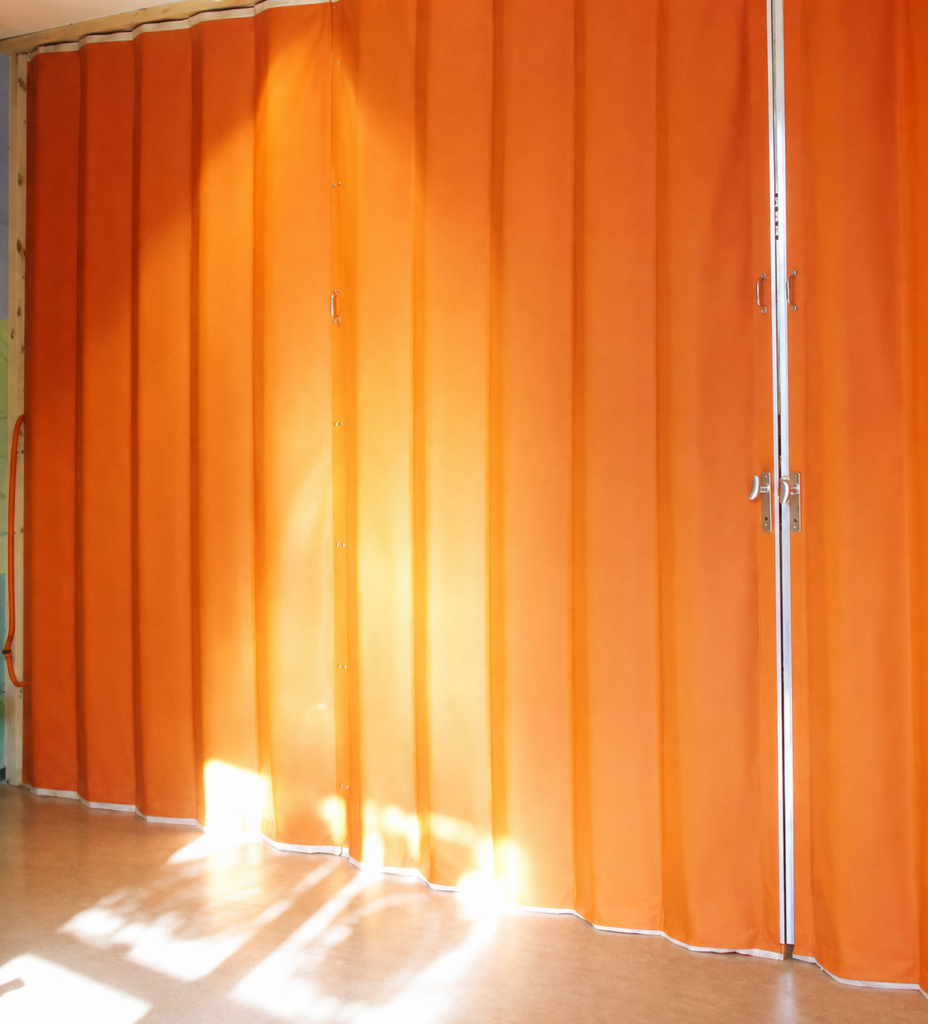
Monowa is providing guidance for schools and colleges on the safe operation and management of movable walls, folding partitions and sliding folding partition systems used to create flexible education spaces.
Schools increasingly need spaces that can adapt to different class sizes, examinations, assemblies, dining, sport and after-school activities. Movable walls provide a practical way to divide or open these areas when required, but their regular movement also means correct operation and maintenance are important.
For Monowa, school movable wall safety involves four key areas: selecting the appropriate system, professional installation, trained operation and routine servicing.
Why Movable Wall Safety Matters in Schools
Unlike conventional walls, movable partitions are designed to move, stack and close repeatedly.
A school hall, for example, might be divided for examinations, opened for lunch and then reconfigured for clubs, meetings or evening activities. This places ongoing demands on panels, tracks, seals, locking mechanisms and pass doors.
Good day-to-day management can help schools protect these components while maintaining clear access around the partition and its stacking area.
A correctly operating movable wall should move steadily, close securely and stack in its intended position. If staff notice that a partition has become difficult to move, unusually noisy or no longer closes correctly, it should be inspected rather than forced.
Who Should Operate School Movable Walls?
Monowa recommends that movable walls and folding partitions are operated only by trained and authorised members of staff.
Pupils should not open, close, push or pull the partitions and should be kept away from the immediate area while panels are being moved or stacked.
Staff responsible for operating a system should understand how it opens and closes, where the panels should stack, how locking mechanisms work and how any integrated pass doors should be used.
They should also know when to stop operating the wall and report a potential fault.
This is particularly important in busy school environments where furniture, sports equipment, examination desks and pupils may all be present in the surrounding space.
Creating a Safe Operating Area
Before moving a partition, staff should ensure that its complete operating path and stacking area are clear.
This includes checking that:
- Pupils are supervised away from the partition
- Tables, chairs and other equipment are clear
- The stacking area is unobstructed
- Floor tracks, where fitted, are clear of debris
- Pass doors are correctly closed
- Nobody is standing between panels
- The wall can move without excessive force
For floor-mounted partitions, keeping the track free from debris and loose objects is particularly important.
With top-hung systems, any unusual noises, visible movement or apparent damage around the head track should be reported and investigated.
Simple Pre-Use Checks for School Staff
Routine checks by staff do not replace professional servicing, but they can help identify obvious problems before a partition is operated.
Staff can check that panels move smoothly, handles and locks remain secure, pass doors operate correctly and panels stack as expected.
They should also look for visible damage and pay attention to any scraping, catching, rattling or other changes in operation.
If a movable wall suddenly requires considerably more effort to move, it should not simply be forced into position. Continuing to use a damaged or misaligned system can potentially worsen the problem and affect its long-term reliability.
Maintaining Acoustic Performance
Many schools use acoustic movable walls to create separate areas for teaching, examinations, assemblies and simultaneous activities.
Effective sound separation depends on more than the acoustic rating originally specified. Panels must remain correctly aligned and seals need to engage properly when the wall is closed.
Worn seals or incorrectly meeting panels can increase sound transfer between adjoining spaces, potentially affecting concentration, speech privacy and the practical use of divided rooms.
Routine inspection and servicing can therefore help maintain acoustic integrity alongside the mechanical operation of the partition.
Choosing the Right Movable Wall for an Education Environment
Monowa works primarily with three systems for education projects: MonoWall, MonoFold and MonoWave.
The appropriate system depends on factors including opening size, required acoustic performance, available structural support, room layout and how frequently the partition will be operated.
MonoWall – Movable Wall Systems
MonoWall is Monowa's high-performance movable wall system and is typically specified for larger openings such as school halls, sports facilities and multi-use learning areas.
The system consists of individual panels that form a secure room division when closed before stacking away when the full space is required.
MonoWall is a top-hung system, meaning the weight is supported at head level rather than through a floor track. Suitable structural support, such as steelwork or a concrete slab, is therefore required above.
During the site survey, factors including structural support, ceiling construction and proposed stacking arrangements can be assessed to determine an appropriate installation.
The absence of a floor track can also be beneficial in busy education spaces where accessibility, floor finishes and unrestricted movement around the room are important considerations.
MonoFold – Sliding Folding Partitions
MonoFold is Monowa's sliding folding partition system and is commonly used for classrooms and smaller teaching areas.
Its hinged panels move along a track and fold together to one or both sides of the opening. Depending on the room layout, MonoFold can be configured as a single-parting or bi-parting system.
A pass door can also be incorporated to allow everyday access between spaces without opening the complete partition.
MonoFold systems are generally floor-mounted, with the weight supported at the base. This means the same structural support at head level required by a top-hung operable wall is not necessary, making MonoFold suitable for buildings where such support is unavailable.
MonoWave – Vinyl Concertina Partitions
MonoWave provides a lightweight vinyl concertina partition for education environments requiring straightforward and flexible space separation.
It is generally suited to applications where the acoustic requirements are lower than those associated with MonoWall or MonoFold.
The different characteristics of the three systems allow Monowa to recommend a solution based on how the school intends to use the space rather than taking a one-size-fits-all approach.
Professional Installation and Safe Handover
Planning a new school movable wall begins with an appropriate site survey.
Opening dimensions, ceiling structure, floor condition, available load capacity, stacking arrangements and surrounding space can all influence the system specification.
Monowa works with operational schools and colleges and can coordinate installation around term dates, INSET days, school holidays and other quieter periods where possible.
Following installation, an effective handover is also important. Relevant staff should understand how the partition is intended to move, close and stack, together with the safe operating area and procedure for reporting potential faults.
Planned Servicing and Maintenance
Safe operation also depends on the condition of the system throughout its working life.
Monowa recommends a full service every 12 months, depending on usage, with more frequent monitoring potentially appropriate for heavily used partitions in halls, dining areas, sports facilities and classrooms.
A professional movable wall service can include checks of:
- Tracks, carriers and running gear
- Rollers and panel alignment
- Acoustic and floor seals
- Hinges and pivot points
- Pass doors
- Locks, handles and operating mechanisms
- Stacking areas
- General condition and operation
Planned maintenance can help schools identify wear before it develops into a disruptive fault and provides an opportunity to schedule remedial work around the academic timetable.
What Should Schools Do if a Fault Develops?
If a movable wall starts catching, scraping, rattling, becoming misaligned or requiring excessive force to operate, staff should not continue forcing the system.
Where there is a potential safety concern, use should stop and pupils should be kept away from the partition until it can be inspected.
The same approach should be taken where a pass door fails to close correctly, seals stop engaging, a panel becomes visibly damaged or the partition no longer provides the expected room separation.
Supporting Safe and Flexible Learning Spaces
When appropriately specified, installed, operated and maintained, movable walls can provide schools with a highly adaptable way to make better use of available space.
Monowa works with schools and colleges throughout the UK, supplying, installing, servicing and maintaining MonoWall movable walls, MonoFold sliding folding partitions and MonoWave vinyl concertina systems.
By combining appropriate system selection with staff training and planned maintenance, schools can retain the flexibility of movable partitions while supporting safe, reliable operation throughout the academic year.
Frequently Asked Questions
Are movable walls safe for schools?
Movable walls can be safely used in schools when they are correctly specified and installed, operated by trained staff and routinely maintained. Pupils should not operate the system and should be kept clear while panels are moving.
What is a safe operating area around a movable wall?
The panel path, stacking area and surrounding space should be clear of pupils, furniture and equipment before the partition is moved. Nobody should stand between moving panels.
How often should schools maintain movable walls?
Monowa recommends a full service every 12 months, depending on usage. Systems subjected to particularly frequent operation may require closer monitoring.
What are folding acoustic partitions?
Folding acoustic partitions are movable systems designed to divide a larger room while also reducing sound transfer between the resulting spaces. Their effectiveness depends on the system specification as well as correct alignment, closure and seal condition.
What should staff do if a movable wall becomes difficult to move?
The partition should not be forced. If its operation has changed or there is a potential safety concern, staff should stop using it, keep pupils clear and arrange for the system to be professionally inspected.
For more information on How Schools Can Safely Manage Movable Walls and Folding Partitions talk to Monowa Operable Wall Systems Ltd