 Get Listed


Anti climb paint is a highly effective intruder and climber deterrent. In our latest blog post we provide a complete guide covering where and how it should be safely used.
Anti climb paint is one of the simplest and most effective physical security measures available today. By creating an extremely slippery surface that is almost impossible to grip, it prevents intruders from scaling walls, fences, pipes, and other structures without the need for expensive anti-climb fencing or complex security systems.
However, while anti climb paint is highly effective, it isn`t suitable for every situation. There are important legal, environmental, and practical restrictions on where it can be used. Using it incorrectly can reduce its effectiveness and in some cases, create unnecessary risks.
This guide explains exactly what anti climb paint is, what it`s used for, why it`s such a popular anti climb solution and most importantly, where anti climb paint should not be used.
.webp)
What Is Anti Climb Paint?
Anti climb paint (sometimes called anti-vandal paint, anti-intruder paint or simply non-drying security paint) is a specially formulated paint-like coating formulated to remain permanently slippery. Unlike conventional paint, it never fully dries. It remains slippery, making it extremely difficult for anyone attempting to climb over a treated surface.
Rather than relying on spikes, barbed wire, or other physical deterrents, anti climb paint simply removes the grip a climber needs. When someone attempts to climb a treated surface, their hands and feet slide away, making climbing extremely difficult.
Anti climb paint also contains a pigment, meaning anyone who comes into contact with the coating will be visibly marked. This can assist in identifying trespassers after an attempted intrusion.
What Is Anti Climb Paint Used For?
Anti climb paint is used to deter unauthorised access to buildings, infrastructure, and secure sites. It is commonly applied to surfaces that provide easy climbing routes, including:
- Metal pipework
- Drainpipes
- Boundary walls
- Perimeter fencing
- Window ledges
- Roof access points
- Gates
- Utility structures
- Telecommunications infrastructure.
Its primary purpose is to prevent opportunistic climbing before it happens. Instead of reacting to an intruder once they`re on the property, the presence of anti climb paint discourages the attempt altogether.
For many organisations and properties, anti-climb paint is an inexpensive way to strengthen physical security without altering the appearance of a building or requiring ongoing maintenance.
Why Anti Climb Paint Is a Convenient Anti Climb Solution
One of the biggest advantages of anti climb paint is its simplicity.
Unlike CCTV systems, alarms, or electric security measures, anti climb paint requires no power supply, ongoing monitoring, or specialist maintenance. Once correctly applied, it continues providing a long-lasting physical deterrent with minimal upkeep.
Benefits include:
- Highly cost-effective, compared with many other perimeter security measures.
- Suitable for both commercial and domestic properties.
- Doesn`t alter the structure of a building.
- Highly effective at preventing opportunistic climbing.
- Can be applied to a wide variety of metal, masonry, and timber surfaces.
- Works continuously, day and night.
- Helps deter intruders before they gain access.
Because of these advantages, anti climb paint is widely used alongside CCTV, security lighting, fencing, and access control systems as part of a layered security strategy.
Where Not to Use Anti Climb Paint
Although anti climb paint is extremely effective, there are several important restrictions governing where it should be used.
Ignoring these guidelines could make the coating unsuitable or create unnecessary hazards.
1. Do Not Apply Below 2.4 Metres
Perhaps the most important restriction is height.
Anti climb paint should not be applied to surfaces below around 2.4 metres (approximately 8 feet) from ground level. This height restriction should be confirmed with local authorities as there may be regional, specific differences.
The purpose of this restriction is to minimise the possibility of accidental contact by members of the public. Because anti climb paint remains slippery and can transfer onto clothing and skin, it could inconvenience pedestrians or legitimate visitors if applied to surfaces below this height.
Although the paint is not intended to cause injury, removing it from clothing and skin can be difficult, making proper application essential.
Examples of unsuitable applications include:
- Low boundary walls
- Gates frequently used by pedestrians
- Low-level fencing
- Areas accessible to children.
Always ensure the treated surface begins above the recommended height.
2. Avoid Areas Where Animals May Come Into Contact
Anti climb paint should never be applied where it could come into contact with animals or aquatic environments.
Avoid using anti climb paint on:
- Livestock fencing
- Animal enclosures
- Wildlife habitats
- River-side walls
- Canal infrastructure
- Pond surrounds
- Areas where runoff could enter watercourses.
While anti climb paint is formulated to be harmless, if it gets onto the coats of animals they are likely to ingest the material when they clean themselves. Selecting an appropriate location helps minimise environmental risks while ensuring the paint is only acting as a deterrent to human climbers.

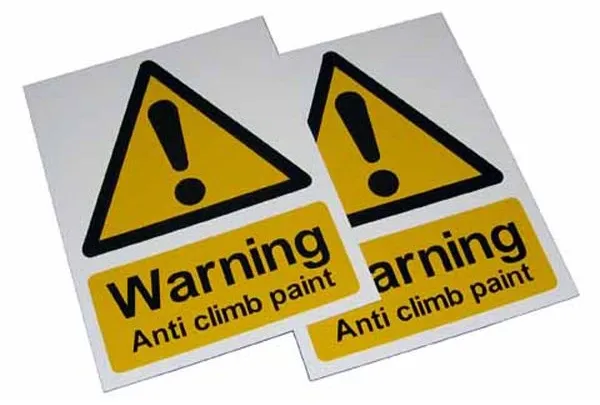
3. Never Use Without Warning Signs
Appropriate, prominently displayed warning signage is an essential part of any anti climb paint installation.
Clear warning notices should be positioned so that anyone approaching the treated area is aware that anti climb paint has been applied.
Warning signs help:
- Warn legitimate visitors.
- Reduce accidental contact.
- Demonstrate responsible use of the product.
- Increase the deterrent effect before someone attempts to climb.
Without suitable signage, people may unknowingly come into contact with the coating which could result in legal action.
4. Avoid High Temperature Locations
Anti climb paint is designed to remain soft and slippery. However, it should not be applied to surfaces that regularly exceed 35°C.
As temperatures increase, the coating becomes progressively softer and more fluid. On surfaces exposed to prolonged, intense heat, excessive softening may reduce performance and increase the likelihood of the paint transferring beyond the intended area.
Examples include:
- Dark metal surfaces exposed to continuous direct sunlight
- Industrial machinery
- Boiler housings
- High-temperature pipework
- Equipment generating sustained heat.
Where elevated temperatures are expected, alternative anti-climb measures should be considered.
5. Always Handle and Store Safely
When using anti climb paint it is important to be aware of guidance regarding hazards and storage.
While anti climb paint is safe to use, precautions should be taken to avoid skin contact, eye contact, ingestion and inhalation. Safety glasses and gloves should be worn when using the paint and it should only be applied in well ventilated areas.
The paint material should always be stored in the original container which should remain closed while being kept in a cool, well ventilated location.
Where Can Anti Climb Paint Be Used Effectively?
When installed correctly, anti climb paint has been successfully used across a wide range of environments, often to overcome persistent problems with climbers and rooftop thieves.
Churches, Heritage Sites and Public Buildings
Historic buildings often present exposed drainpipes and architectural features that provide easy climbing routes.
Applying anti climb paint to external pipework helps prevent intruders gaining access to roofs without affecting the appearance of listed buildings.
Perimeter Walls and Security Fencing
Many industrial facilities, government sites, schools, and secure compounds use anti climb paint along the tops of boundary walls and fences.
This creates an additional physical barrier that discourages climbing without requiring major structural changes or complex, expensive installation.
Utility and Telecommunications Infrastructure
Utility providers frequently protect electricity substations, telecom masts, communications infrastructure, and other critical assets using anti climb paint.
By removing secure handholds, the coating helps deter unauthorised access while protecting valuable equipment.
Commercial Properties
Warehouses, factories, retail premises, and office buildings often have exposed pipework or routes that potentially provide easy access to rooftops.
Anti climb paint is commonly applied to these vulnerable climbing points to discourage trespassers and reduce the risk of burglary or vandalism.
Domestic Properties
Homeowners also use anti climb paint to improve property security.
Typical applications include:
- Drainpipes
- Rear extension roofs
- Garage roofs
- Window ledges
- Boundary walls
- Rear access routes.
When installed correctly and above the recommended height, anti climb paint provides an effective deterrent against opportunistic burglars seeking easy access to upper windows or roofs.
Best Practice for Using Anti Climb Paint
For maximum effectiveness:
- Apply only to surfaces above 2.4 metres.
- Always install clearly visible warning signs.
- Avoid locations where animals or wildlife could come into contact with the coating.
- Do not apply where surface temperatures are likely to exceed 35°C.
- Ensure appropriate protective clothing, gloves and eye protection are worn during application.
- Only use anti climb paint in well ventilated areas.
- Inspect periodically and reapply where necessary to maintain coverage.
Used correctly, anti climb paint is a low-maintenance, highly effective security measure that complements CCTV, lighting, fencing, and other physical security solutions.
Anti Climb Paint - Frequently Asked Questions
Is anti climb paint illegal?
No. Anti climb paint is legal when used responsibly and in accordance with the manufacturer`s guidance. It should be installed above 2.4 metres, accompanied by warning signs, and used in suitable locations.
Does anti climb paint ever dry?
No. Anti climb paint is specifically formulated to remain permanently slippery, preventing climbers from obtaining a secure grip.
Can anti climb paint be used on residential properties?
Yes. Many homeowners apply anti climb paint to drainpipes, boundary walls, and other climbing routes, provided it is installed correctly and above the recommended height.
Does anti climb paint wash off in the rain?
No. Quality anti climb paints are designed for long-term outdoor use and remain effective in typical weather conditions.
Is anti climb paint environmentally safe?
It should only be used where it cannot come into contact with animals or aquatic environments. Careful placement helps avoid unintended environmental impacts.
How long does anti climb paint last?
When applied correctly, anti climb paint can be expected to provide effective anti climb protection for at least 3 years. However, its lifespan depends on exposure to extreme weather and the frequency of attempted climbs. Additional coats can be applied if the paint has worn down or rubbed off.
How thick should an anti climb paint application be?
Ideally, anti climb paint should be applied evenly to a thickness of about 3 to 4mm.
Final Thoughts on Using Anti Climb Paint
Anti climb paint remains one of the most cost-effective and reliable ways to deter unauthorised climbing. It provides continuous protection without requiring electricity, monitoring, or complex maintenance, making it an excellent addition to a wider physical security strategy.
However, effectiveness depends on correct application. It should never be used below 2.4 metres, where animals or aquatic life may be affected, without prominent warning signs, or on surfaces that regularly exceed 35°C.
By understanding where not to use anti climb paint, property owners can ensure they achieve the greatest security benefit while using the product responsibly and safely.
If you have any questions about anti climb paint, or other security needs, remember we are here to help. Give us a call on 01273 092034 and we’ll provide you with free, expert advice.
For more information on Where Not to Use Anti Climb Paint: Complete Guide talk to Insight Security