 Get Listed


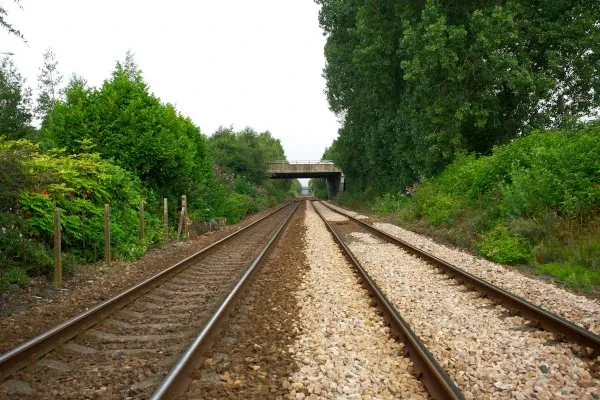
Explore railway perimeter security, trackside fencing and anti-climb solutions. Discover how infrastructure owners can reduce trespass, theft and vandalism.
Railway and transport infrastructure security presents a complex and increasingly costly challenge for UK infrastructure owners and operators. Trespass, vandalism, cable theft and unauthorised access can threaten safety, damage critical assets and cause significant disruption to passenger and freight services.
The scale of the problem is illustrated by the latest figures from Network Rail. During 2025/26, cable theft and other vandalism/obstruction incidents that caused delays resulted in more than 3,300 hours of disruption and £10.85 million in Schedule 8 delay costs. Cable theft alone accounted for more than 2,100 hours of delay and almost £6.8 million in delay costs.
The problem is not confined to isolated incidents. On the East Coast route alone, 751 trespass incidents caused 100,755 minutes of delay during 2025/26, while cable theft, vandalism and obstruction added further disruption.
At the same time, ORR`s (Office of Rail and Road) latest rail safety statistics recorded 22 fatalities involving trespassers in Great Britain during 2024/25, including 17 on the mainline, together with 85 severe trespasser injuries.
These figures demonstrate why railway perimeter security should be regarded as more than a fencing or maintenance issue.
A secure trackside boundary is an important part of protecting people, infrastructure, operational performance and the resilience of the wider transport network.
What is railway perimeter security?
Railway perimeter security is the combination of physical, electronic and operational measures used to prevent or detect unauthorised access to railway land and critical infrastructure.
It can include:
- Security fencing
- Trackside boundary fencing
- Anti-climb systems
- Secure gates and access points
- High-security locks and fixings
- CCTV
- Intrusion detection
- Sensors and alarms
- Remote monitoring
- Security patrols
- Lighting where appropriate
- Vegetation and boundary maintenance
- Intelligence-led security interventions.
For infrastructure operators, the objective is not simply to build a fence around the railway.
It is to create a resilient perimeter that makes unauthorised access more difficult, detects attempts to breach the boundary and supports an effective response when incidents occur.
Network Rail describes its fencing as both a means of marking the railway boundary and a deterrent against trespass and vandalism. Its fencing is inspected regularly, with the type of boundary depending partly on the adjacent land use and level of risk.
The growing cost of railway crime
The latest Network Rail figures provide a useful indication of the operational and financial consequences of railway crime.
During 2025/26, Network Rail recorded:
| Type of incident | Delay-causing incidents | Passenger delay | Schedule 8 delay cost |
|---|---|---|---|
| Cable theft | 111 | 128,252 minutes (2,138 hours) |
£6.80 million |
| Vandalism & obstruction | 961 | 72,323 minutes (1,205 hours) |
£4.05 million |
| Combined | 1,072 | 200,575 minutes (3,343 hours) |
£10.85 million |
* Schedule 8 is a performance regime in the United Kingdom`s railway industry that provides a financial compensation and incentive mechanism for unplanned service disruptions.
These figures relate specifically to delay-causing incidents and therefore do not represent every incident of cable theft, vandalism or obstruction.
Network Rail reports that cable theft alone caused 84% more delay than the previous year, while associated Schedule 8 delay costs more than doubled, increasing by 103% to almost £6.8 million.
The consequences can extend considerably beyond the direct cost of repairing damaged infrastructure.
When a cable is stolen, for example, damage to signalling mechanisms or overhead electrical systems can prevent the railway from operating normally. Britain`s railway is deliberately designed to fail safely when critical systems are compromised, meaning trains may be stopped until the fault can be located and repaired.
The resulting disruption can affect:
- Passenger journeys
- Freight services
- Railway employees
- Businesses
- Supply chains
- Emergency response teams
- Infrastructure maintenance programmes.
Network Rail points out that the wider economic cost can be greater still, particularly when freight delays and the consequences for passengers are taken into account.
Railway trespass: a safety and security problem
Trespass is one of the most persistent challenges facing railway operators.
ORR`s Rail Safety 2024–25 statistics recorded:
- 22 trespass fatalities across Great Britain`s rail networks
- 17 mainline trespass fatalities
- 4 London Underground trespass fatalities
- 1 non-mainline trespass fatality
- 85 severe injuries to trespassers, the highest number recorded since the start of the relevant time series.
These figures demonstrate the potentially catastrophic consequences of unauthorised access to railway infrastructure.
The danger is not restricted to being struck by a train. Railway environments can contain live electrical equipment, moving rolling stock, steep embankments, bridges, tunnels and other hazards that may not be obvious to someone entering the railway from outside.
But trespass also creates a significant operational security problem.
When people enter the railway without authorisation, trains may need to be slowed or stopped while the incident is investigated and the railway is confirmed to be safe.
Network Rail describes trespass and vandalism as major causes of delay, with incidents potentially creating knock-on disruption across the wider network.
Crime with Consequences: the railway industry`s new campaign
The scale of the problem has prompted a renewed industry-wide response.
In September 2026, Network Rail, British Transport Police and rail industry partners launched the "Crime with Consequences" campaign, supported by Network Rail East Coast and LNER.
The campaign aims to make potential offenders aware that railway crime can have serious legal consequences, including substantial fines and, for some offences, imprisonment. It forms part of the wider rail industry`s efforts to reduce trespass and railway crime alongside the existing No Second Chances safety programme.
The campaign also emphasises an important point for infrastructure security:
Railway crime is not victimless.
Network Rail says that trespass, cable theft, vandalism and obstruction affect passengers, freight, railway staff and local communities, as well as creating considerable costs for the industry.
The timing of the campaign is significant. Network Rail`s latest figures show that cable theft, vandalism and obstruction alone caused more than 3,300 hours of delay during 2025/26, with more than £10 million in Schedule 8 delay costs.
The industry response combines enforcement with technology and physical security.
Network Rail and BTP are using measures including:
- Smart CCTV
- Sensors
- Drones
- Concealed tracking technology
- Improved evidence gathering
- Proactive security patrols
- Enhanced fencing at known trespass hotspots.
This is an important illustration of the modern approach to railway perimeter security: physical security, detection, intelligence and enforcement need to work together.
The East Coast Main Line: more than 2,000 hours of disruption
The East Coast route provides a particularly useful example of the operational consequences of railway crime.
During 2025/26, Network Rail recorded:
- 751 trespass incidents, causing 100,755 minutes of delay
- 14 cable theft incidents, causing 18,266 minutes of delay
- 48 vandalism and obstruction incidents, causing 3,270 minutes of delay.
Together, these delay-causing incidents generated more than 122,000 minutes of disruption, over 2,000 hours, equivalent to almost 85 days.
Network Rail and its partners are responding with additional proactive security patrols and enhanced fencing at trespass hotspots, alongside drones, sensors, smart CCTV and improved evidence gathering.
This is precisely the type of risk-based approach that can be applied to other transport infrastructure.
Rather than attempting to give every metre of railway boundary exactly the same level of protection, operators can identify known hotspots and vulnerable locations and then introduce additional layers of physical and electronic security.

Why trackside fencing is so important
Trackside fencing is the first physical boundary between the railway and the surrounding environment.
Network Rail states that its fencing:
marks the boundary of its land and acts as a deterrent to trespass and vandalism.
However, a perimeter is only effective if it remains suitable for its intended purpose.
Potential vulnerabilities include:
Damaged fencing
Impact, corrosion, weather, vandalism and repeated attempts to gain access can compromise the integrity of a fence.
Gaps in the boundary
A gap may be created by damage, maintenance activity, erosion, vegetation or changes in ground conditions.
Easily climbed fencing
A fence can be structurally intact but still present a relatively easy climbing route.
Gates and access points
Maintenance gates and other access points can become weak points within an otherwise secure perimeter.
Adjacent structures
Walls, bridges, trees, equipment cabinets and other structures may provide climbing aids or allow an otherwise secure fence to be bypassed.
Poorly maintained vegetation
Vegetation can conceal damage and create additional climbing opportunities.
Known trespass hotspots
Repeated incidents at the same location are a strong indication that the existing combination of deterrence, detection and physical security needs reassessment.
A real-world example: the consequences of a failed railway boundary
The importance of effective boundary management is demonstrated by an ORR prosecution following an incident at Musselburgh, East Lothian.
In August 2016, a 13-year-old boy entered railway infrastructure through a gap in the boundary and climbed onto a tank wagon that had stopped at a signal. He came into close proximity to a 25,000-volt overhead line, suffering serious electrical burns.
ORR`s investigation found that the boundary measures were incomplete, substandard and poorly maintained, with adjacent structures also compromising the boundary. Investigators found evidence of previous trespass and graffiti at the location.
Network Rail pleaded guilty and was fined £135,000.
The case demonstrates why railway perimeter security cannot simply be considered in terms of whether a fence exists.
The relevant questions are:
- Is the boundary appropriate for the risk?
- Is it maintained?
- Can it be climbed or bypassed?
- Are there known indicators of repeated intrusion?
For infrastructure owners, these questions are fundamental to effective asset protection.
What are the most effective railway perimeter security measures?
There is no single security product capable of eliminating every form of railway crime.
The most effective strategy is usually a layered security approach, combining physical barriers with detection, monitoring and appropriate operational procedures.
1. Robust trackside fencing
The basic perimeter should be appropriate to the location, adjacent land use and assessed risk.
- Depending on the environment, this might include:
- Palisade fencing
- Welded mesh fencing
- Security mesh
- Specialist railway boundary fencing
- Gates and controlled access points.
The objective is to establish a continuous and appropriately resistant physical boundary.

2. Anti-climb protection
Where a fence is structurally sound but vulnerable to climbing, adding anti-climb protection can provide an additional security layer.
This can be particularly attractive when replacing an entire fence would be disproportionate to the specific vulnerability.
Anti-climb solutions include:
- Rotating anti-climb barriers
- Roller systems
- Traditional fence toppings
- Security spikes
- Specialist anti-climb products.
The appropriate solution depends on the environment, risk assessment, required level of deterrence and relevant safety considerations.
3. CCTV and smart monitoring
CCTV can provide detection, monitoring and evidence.
Network Rail`s latest railway crime initiatives demonstrate the increasing use of smart CCTV, sensors and drones to identify offenders and support investigations.
However, CCTV has an important limitation:
it detects or records an intrusion, it does not necessarily prevent the physical breach.
For this reason, electronic security is often most effective when combined with an appropriately designed physical perimeter.
4. Security patrols
Visible patrols can act as a deterrent while also providing intelligence about emerging security problems.
The East Coast route is currently receiving additional investment in proactive security patrols as part of its response to cable theft, vandalism and trespass.
Patrols can also identify issues such as:
- Fence damage
- New access points
- Evidence of climbing
- Graffiti
- Cut cables
- Unauthorised activity
- Vegetation obscuring the boundary.
5. Secure gates and access points
A strong fence is of limited value if the associated gate is easily defeated. Access points should therefore be considered separately within the security assessment.
Potential measures include:
- High-security locks
- Anti-tamper fixings
- Controlled access
- Gate alarms
- Anti-climb protection
- Appropriate vehicle barriers.
6. Regular inspection and maintenance
Perimeter security is an ongoing process.
Network Rail states that its fencing is typically checked annually and that damaged fencing may require temporary repair while a permanent solution is organised. It also notes that vegetation sometimes needs to be removed to allow fencing to be maintained.
For high-risk areas, however, operators may need additional inspection or monitoring arrangements based on local conditions and incident history.
A security assessment should consider not just whether the fence was installed correctly, but whether it continues to provide the required level of protection today.
Why conventional anti-climb spikes are not always the answer
Traditional fixed spikes can provide a visible deterrent, but they are not appropriate for every infrastructure environment.
Depending on their design and location, aggressive anti-climb products may introduce additional safety, maintenance and liability considerations.
For infrastructure operators, an alternative approach is to create a physical obstacle that is difficult to climb without relying on conventional impaling-style security.
This is where rotating anti-climb technology can be particularly valuable.
Rather than presenting a series of fixed points that can potentially be gripped or used as footholds, rotating systems create an unstable moving surface.

Roller Barrier: strengthening existing railway boundaries
Roller Barrier, developed and manufactured by Insight Security, is a non-aggressive anti-climb system designed to make climbing a fence, wall or gate substantially more difficult.
The system uses independently rotating cups, too large to be gripped by hand, mounted along a robust central shaft. When someone attempts to climb over the barrier, the cups rotate rather than providing a stable foot or handhold.
This creates an unstable climbing surface and increases the difficulty of gaining purchase on the top of the perimeter. And the barrier presents zero risk of causing injury through impalement.

One of the key advantages of this approach is that it can potentially be used to upgrade an existing perimeter rather than replace the entire fence.
That makes it worth considering for:
- Trackside fencing
- Railway crossings
- Gates
- Bridges
- Walls
- Transport infrastructure
- Known trespass hotspots
- Vulnerable sections of existing fencing.
Roller Barrier is available in different configurations, including single-, double- and triple-row arrangements, allowing the physical deterrent to be adapted to the specific application.
For infrastructure managers, the key attraction is therefore not simply the product itself, but the possibility of targeted perimeter strengthening.

VandGard rotating anti-climb protection
VandGard provides another approach to rotating anti-climb security.
Rather than fixed spikes, VandGard uses curved aluminium vanes that rotate around a central shaft.
The rotating vanes create an unstable obstacle that makes climbing considerably more difficult.
This approach can be particularly relevant to commercial, industrial and infrastructure environments where an effective physical climbing deterrent is required but traditional aggressive spikes may not be the preferred solution.
Potential applications include:
- High-security boundaries
- Industrial sites
- Transport infrastructure
- Utility sites
- Commercial premises
- Gates
- Walls
- Vulnerable sections of fencing.
As with any perimeter security product, suitability should be assessed against the individual site, fence construction, environment and risk profile.
Roller Barrier or VandGard: which approach is appropriate?
There is no universal answer. The most appropriate system depends on the existing perimeter and the nature of the security problem.
| Feature | Roller Barrier | VandGard | Typical application |
|---|---|---|---|
| Anti-climb principle | Rotating rollers make it difficult to gain a secure hand or foothold. | Rotating curved vanes create an unstable, moving surface that makes climbing difficult. | Deterring climbing over existing fences, walls and gates. |
| Retrofit potential | Designed for retrofitting to suitable existing fences, walls and gates. | Can be incorporated into suitable existing perimeter structures. | Upgrading vulnerable sections without necessarily replacing the entire perimeter. |
| Design approach | Non-aggressive rotating barrier designed to deter climbing without relying on sharp spikes. | Rotating aluminium vane system providing a continuous anti-climb barrier. | Commercial, industrial and infrastructure perimeter protection. |
| Railway security role | Can strengthen vulnerable trackside boundaries and known climbing points as part of layered security. | Can provide an additional anti-climb layer where enhanced perimeter deterrence is required. | Trackside fencing, stations, depots, compounds and other transport infrastructure. |
The important principle is that anti-climb protection should form part of a wider security strategy rather than being considered in isolation.

Rotaspike - another effective rotating anti climb barrier
Another highly effective rotating anti climb barrier, available from Insight Security, is Rotaspike. This barrier presents sharp rotating steel blades that are intentionally fearsome. The aggressive appearance of this barrier is a strong anti climb deterrent.
Manufactured from galvanised steel, the rotating spike collars can be supplied with a baked on paint finish, if required. Since this is a genuinely aggressive anti climb barrier, restrictions may apply regarding where it is used.
Building a layered railway infrastructure security strategy
The modern approach to railway security increasingly involves several complementary layers.
A simplified layered security model could look like this:
- Secure boundary
- Anti-climb protection
- Controlled access
- Intrusion detection
- CCTV / smart monitoring
- Security patrols
- Intelligence and evidence gathering
- Police / operational response.
The Crime with Consequences campaign demonstrates the importance of several of these layers working together.
Network Rail and BTP are increasing collaboration, using improved intelligence and evidence gathering alongside technologies such as drones, sensors, smart CCTV and concealed tracking devices. On the East Coast route, this is being complemented by increased patrols and enhanced fencing at known trespass hotspots.
This is a useful model for other critical infrastructure operators.
Detection is valuable. Enforcement is valuable. But preventing or delaying physical access remains an important part of the security equation.
Identifying railway perimeter security hotspots
Given the scale of the UK`s rail infrastructure, it may not be practical or necessary to deploy identical security measures everywhere.
A more effective strategy can be to identify high-risk locations.
These might include areas with:
- Repeated trespass incidents
- Previous cable theft
- Repeated vandalism
- Damaged fencing
- Evidence of attempted climbing
- Easy public access
- Nearby footpaths
- Schools or residential areas
- Bridges and embankments
- Critical signalling infrastructure
- Valuable electrical equipment
- Poor natural surveillance.
Incident history is particularly valuable.
If the same section of perimeter has been breached repeatedly, the problem should not simply be viewed as a series of independent incidents.
It may indicate a persistent physical vulnerability.
Why upgrading an existing perimeter can make sense
For large transport infrastructure estates, complete fence replacement can be expensive, disruptive and time-consuming.
Where the underlying fence remains structurally suitable, targeted security upgrades can provide another option.
For example:
Existing fence → identify climbing vulnerability → install anti-climb protection → add CCTV/sensor coverage → monitor incidents → review effectiveness.
This approach can concentrate expenditure on the locations where additional protection is most needed.
It may also complement wider programmes of fence inspection, repair and replacement rather than competing with them.
Railway perimeter security is about operational resilience
The evidence from Network Rail and ORR demonstrates that perimeter security has consequences far beyond the boundary itself.
A compromised perimeter can contribute to:
- Trespass
- Serious injury or fatality
- Cable theft
- Vandalism
- Infrastructure damage
- Train delays
- Cancellations
- Freight disruption
- Emergency repairs
- Security call-outs
- Investigation costs
- Passenger disruption
- Reputational damage.
The latest Network Rail data puts the potential financial impact into perspective: delay-causing cable theft, vandalism and obstruction generated £10.85 million in Schedule 8 costs during 2025/26.
And that is only the direct delay cost recorded by Network Rail. The wider economic consequences can be considerably greater.
For high-value infrastructure owners, the business case for perimeter security should therefore consider the cost of a security failure, not simply the cost of installing additional protection.
Protecting transport infrastructure with a layered approach
The new Crime with Consequences campaign provides a timely reminder that railway crime has real consequences for infrastructure operators, passengers, freight customers and communities.
The response needs to be equally comprehensive.
- Awareness campaigns can discourage people from entering the railway.
- Police enforcement can bring offenders to justice.
- CCTV, sensors and drones can improve detection.
- Patrols can provide visible deterrence and intelligence.
But the physical perimeter remains a fundamental part of the security system.
For railway and transport infrastructure operators, the objective should be to:
- Identify vulnerable boundaries
- Assess the consequences of a breach
- Repair damaged or inadequate fencing
- Remove obvious climbing opportunities
- Strengthen known trespass hotspots
- Secure gates and other access points
- Use CCTV and detection technology where appropriate
- Deploy targeted patrols and monitoring
- Review incident data regularly
- Treat perimeter security as an ongoing operational responsibility.
Where existing fencing is structurally suitable but vulnerable to climbing, a retrofit anti-climb system can provide an additional physical layer without necessarily requiring wholesale fence replacement.
Roller Barrier offers a non-aggressive rotating anti-climb approach that can be used on suitable fences, walls and gates.
VandGard provides another rotating anti-climb option, using curved aluminium vanes to create an unstable physical barrier.
Both approaches can be considered alongside conventional fencing, CCTV, sensors, patrols and other security measures as part of a layered perimeter security strategy.
For organisations responsible for railway, transport, utilities or other critical infrastructure, the key question is not simply:
“Do we have a fence?”
It is:
“Does our perimeter provide an adequate level of protection against the threats we actually face?”
With railway crime continuing to generate substantial safety, operational and financial consequences, that is a question worth asking before the next breach occurs.
Additional Effective Anti-Cimb Defence
While ensuring perimeter and trackside fencing is robust and effective it`s also important to consider all possible climbing and intrusion opportunities. These might include posts, poles and walls. Here at Insight Security we provide an extensive range of tried, tested and widely praised security products that ensure these structures cannot be climbed.
- Anti Climb Paint.
- Anti Climb Spikes.
- Spiked Collars for poles and downpipes.
- Essential warning signs.
Frequently Asked Questions - Railway Security
What is railway perimeter security?
Railway perimeter security is the combination of physical, electronic and operational measures used to prevent or detect unauthorised access to railway land and infrastructure. Measures can include fencing, anti-climb systems, secure gates, CCTV, sensors, alarms, patrols and monitoring.
Why is trackside fencing important?
Trackside fencing marks the railway boundary and helps deter trespass and vandalism. Network Rail describes its fencing as serving both functions and maintains fencing according to factors including adjacent land use and risk.
How serious is railway trespass in the UK?
ORR recorded 22 fatalities involving trespassers across Great Britain`s rail networks during 2024/25, including 17 on the mainline. There were also 85 severe trespasser injuries, the highest number recorded in the relevant time series.
How much does railway crime cost?
Network Rail recorded more than £10.85 million in Schedule 8 delay costs associated with delay-causing cable theft, vandalism and obstruction during 2025/26. These incidents caused 200,575 minutes – approximately 3,343 hours – of delay.
What is the Crime with Consequences campaign?
Crime with Consequences is a 2026 rail industry campaign supported by Network Rail, British Transport Police and industry partners. It aims to highlight the legal and wider consequences of criminal activity on the railway, including trespass, cable theft and other offences.
How much disruption did trespass cause on the East Coast route?
During 2025/26, Network Rail recorded 751 trespass incidents on the East Coast route that caused 100,755 minutes of delay. Cable theft, vandalism and obstruction caused additional delays, taking the combined total to more than 122,000 minutes.
Can existing railway fencing be strengthened?
Potentially, yes. Where existing fencing is structurally suitable, additional anti-climb protection can be considered to make the boundary more difficult to scale. The suitability of any retrofit depends on the fence design, location, environment and security requirements.
Is CCTV enough to secure a railway perimeter?
CCTV can provide valuable detection and evidence, but it does not physically prevent an intruder from crossing the boundary. Physical fencing and anti-climb measures can therefore complement CCTV, sensors and remote monitoring as part of a layered security approach.
What is Roller Barrier?
Roller Barrier is a non-aggressive rotating anti-climb system developed by Insight Security. Rotating cups mounted on a central shaft make it difficult for a person to obtain a stable foothold when attempting to climb a suitable fence, wall or gate.
What is VandGard?
VandGard is a rotating anti-climb system using curved aluminium vanes mounted around a central shaft. The rotating components create an unstable climbing surface and can be used to strengthen suitable walls, fences and gates.
What is the best anti-climb system for railway fencing?
There is no single system that is appropriate for every railway location. Selection should consider the existing boundary, threat profile, surrounding environment, safety requirements, maintenance arrangements and the consequences of a breach. Rotating systems such as Roller Barrier and VandGard can be considered as part of a wider, layered perimeter security strategy.
How can railway perimeter security be improved?
A risk-based approach should identify vulnerable boundaries and combine appropriate physical fencing with anti-climb protection, secure access points, CCTV, sensors, patrols, monitoring and regular inspection. Particular attention should be given to locations with repeated trespass, theft or vandalism incidents.
Strengthen vulnerable infrastructure
Insight Security supplies a range of perimeter and physical security solutions for organisations seeking to strengthen vulnerable boundaries.
If you are responsible for railway, transport, utility or other critical infrastructure and need to assess an existing fence or vulnerable perimeter, contact Insight Security to discuss potential anti-climb and perimeter security options.
If you have any questions about perimeter or trackside security, or other security needs, remember we are here to help. Give us a call on 01273 092921 and we’ll provide you with free, expert advice.
For more information on Railway & Transport Infrastructure Security: Protecting Trackside Boundaries from Trespass, Theft and Vandalism talk to Insight Security