 Get Listed


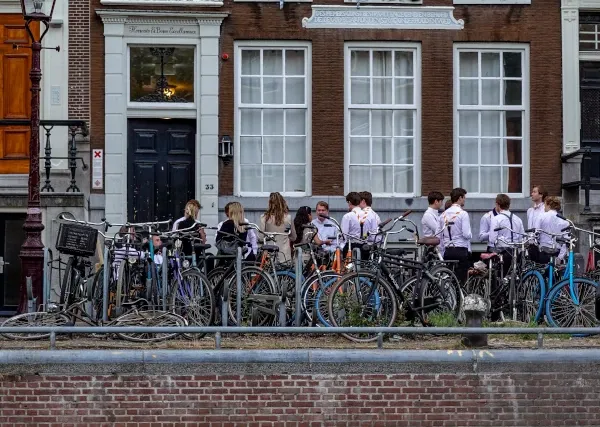
Freshers’ Week is here and so are the bike thieves. Here’s how students can protect their bikes with better locks, registration and sensible security habits.
For many students, a bicycle is one of the most convenient and affordable ways to get around university. It can be the difference between a 10-minute cycle to lectures and a 40-minute walk or expensive bus journey.
Unfortunately, that convenience also makes bicycles an attractive target for thieves.
A new report in The Guardian has highlighted the particular risk facing students at the start of the university year, with cycle theft reportedly spiking during Freshers’ Week and the weeks that follow. Aviva says bicycles account for 19% of insurance claims involving student possessions, while BikeRegister reports that university security teams regularly see increases in theft when new students arrive.
For students bringing a bicycle or e-bike to university this autumn, investing in proper cycle security should therefore be regarded as an essential part of owning one - not an optional extra.
Why are university students such attractive targets for bike thieves?
University towns and cities have many of the characteristics that make cycle theft attractive to criminals: large numbers of bicycles, thousands of potential victims, extensive cycle parking and bikes that may be left unattended for hours at a time.
The latest evidence from individual university cities illustrates the problem.
In Cambridge, police describe bicycle crime as a recognised issue, with cycle thefts reported daily. Cambridgeshire Constabulary recorded 567 bicycles reported stolen in Cambridge city centre during 2023 alone.
The problem is sufficiently significant that Cambridge has developed a dedicated multi-agency strategy involving police, the council, universities and other partners. Although cycle theft has fallen by 70% in Cambridge since 2019 following these interventions, the city continues to invest in CCTV, secure cycle parking, bike marking and enforcement. In 2025 alone, 1,750 bikes were marked through city initiatives.
And the problem is not confined to Cambridge.
Police.uk data for Oxford Central recorded 36 bicycle thefts in July 2026, making bicycle theft one of the area`s more commonly reported crimes that month.
The Guardian`s analysis of university-town theft also identified Oxford, Cambridge, York and Cardiff among the areas experiencing particularly high levels of cycle theft.
Bike theft can be more than an inconvenience
Losing a bike isn`t simply a financial setback. For students who depend on cycling to get to lectures, work, university placements or social activities, losing their bike can disrupt everyday life. A stolen e-bike can be an especially significant financial loss, with replacement costs potentially running into thousands of pounds.
As one Oxford university guide bluntly warns incoming students: “bike theft is rampant” and a high-quality D-lock is considered essential.
The message is clear: if you are taking a valuable bicycle to university, don`t assume that a basic cable lock or inexpensive padlock will provide adequate protection.

Choose a serious bicycle lock
The first line of defence against cycle theft is a strong, high-quality lock. Unfortunately, many cyclists make the mistake of buying a lock based primarily on price, weight or convenience.
A thin cable lock may be easy to carry, but it can offer very little resistance to a determined thief. By contrast, a substantial D-lock, hardened chain or other independently tested security product can significantly increase the time, effort and tools required to steal a bicycle.
This is where Sold Secure approval becomes particularly useful.
What is a Sold Secure bike lock?
Sold Secure is an independent security product testing organisation that assesses cycle security products against specific attack methods and threat levels.
Its current pedal-cycle ratings range from Bronze and Silver through to Gold and Diamond, with Diamond representing the highest pedal-cycle security rating.
Sold Secure describes its Gold rating as providing a high level of resistance against a dedicated bicycle thief and specifically identifies high-value bikes and high-risk locations such as large cities and university towns as an appropriate environment for Gold-rated products.
For a valuable bicycle being left around a university campus, therefore, a Sold Secure Gold or Diamond-rated lock can be a sensible starting point.
Why independent testing matters
A lock may look impressive, but appearance alone tells you very little about how it will perform against the tools used by professional thieves.
Sold Secure testing provides an independent indication of the level of resistance a product offers against recognised attack techniques.
It also has an important insurance benefit.
Always check your cycle insurance policy before buying a lock. Some insurers specify the minimum security rating required for particular bicycles or circumstances. Buying a cheaper lock that fails to meet your insurer`s requirements could create problems if you subsequently need to make a claim.
Sold Secure`s current bike lock ratings guide.
Don`t just lock the bike - lock it properly
Even an excellent lock can be defeated if it is used incorrectly. Students should get into the habit of following a simple checklist every time they park their bicycle:
1. Lock the frame
Don`t secure the lock through the front wheel alone. A thief may simply remove the wheel and take the rest of the bike.
Whenever possible, lock the frame and wheels to a substantial, immovable cycle stand or other approved fixing point.
2. Use two locks for higher-value bikes
Using two good-quality locks can provide an additional layer of protection and make a bicycle less attractive than an easier target.
A D-lock combined with a strong chain, for example, can allow the frame and both wheels to be secured more comprehensively.
Cambridgeshire Constabulary specifically recommends using two quality locks, including at least one D-lock, for improved protection.
3. Don`t leave unnecessary space inside the lock
Try to position the lock so there is as little room as possible for tools to be inserted between the bicycle and the lock.
4. Use recognised cycle parking
Whenever possible, use designated cycle parking in a busy, well-lit location. CCTV coverage can provide an additional deterrent.
Cambridge City Council recommends choosing busy, well-lit locations covered by CCTV and advises cyclists not to leave bikes overnight in public spaces where possible.
5. Avoid predictable routines
If you always leave an expensive bicycle locked to the same stand in the same place for several hours every day, you may inadvertently make it easier for a thief to observe your routine.

E-bikes need serious security too
The growing popularity of e-bikes has created another lucrative category of target for thieves. E-bikes are typically more expensive than conventional bicycles and can contain valuable components including motors, batteries, electronic systems and specialist wheels.
West Yorkshire Police explicitly warns that e-bikes and e-scooters are attractive targets because of their high value, portability and increasing popularity, recommending secure indoor storage and a high-quality Sold Secure-approved lock.
For students, this is particularly important.
An e-bike costing £1,500, £2,000 or more should not be protected with the same basic security you might use for an inexpensive second-hand bicycle.
Consider powered-cycle security ratings
Sold Secure has separate ratings for powered cycles, reflecting the higher values and different security requirements associated with e-bikes and other powered two-wheelers.
Sold Secure currently recommends considering its Powered Cycle-rated products for e-bikes, with Powered Cycle Diamond representing the highest level. Importantly, Sold Secure notes that its Pedal Cycle Diamond rating provides the same security level as Powered Cycle Gold because they are tested using the same tools, attack methods and time limits.
If you own an expensive e-bike, check both your insurer`s requirements and the current Sold Secure database before choosing your lock.
Register your bicycle with BikeRegister
A good lock helps prevent a theft. Bike registration helps you get your bicycle back if it is stolen.
These are two different but complementary parts of an effective cycle-security strategy.
BikeRegister is the UK`s national cycle marking and registration scheme. It says that more than 1.25 million bicycles are now registered, with all UK police forces able to access the database when checking recovered bikes.
Registration is free and provides a permanent registration record and logbook that can help establish ownership.
What information should you record?
Before heading off to university, record:
- The bicycle`s frame or serial number
- Make and model
- Colour
- Purchase date
- Purchase price
- Receipt or proof of purchase
- Clear photographs of the entire bicycle
- Close-up photographs of distinctive features
- Any unusual scratches, marks or modifications
- Battery and component details for an e-bike
- Your BikeRegister ID.
- Keep copies of receipts and photographs somewhere other than the bicycle itself - ideally in secure cloud storage as well as on your phone.
This information can be invaluable if the bicycle is stolen and subsequently recovered.
Cambridge City Council specifically advises cyclists to register their frame number and photographs with BikeRegister because it provides police with information that can help identify and return stolen bicycles.
Bike marking can also act as a deterrent
Registration isn`t only about recovery. A prominently displayed BikeRegister security mark can tell a potential thief that the bicycle is traceable and that can be enough to put them off.
BikeRegister says that its security marking products can give bicycles a unique reference and make them more identifiable to police and prospective buyers.
This creates another problem for the thief: a bicycle that is clearly marked and registered can be more difficult to sell on legitimately.
Cambridgeshire Constabulary has seen strong take-up of this approach among students. In November 2024, 590 students at 17 Cambridge colleges and Anglia Ruskin University registered their bikes with BikeRegister during police-supported marking events.
More recently, Cambridge recorded 2,802 BikeRegister registrations between April 2024 and March 2025, compared with 2,210 in the equivalent period two years earlier. Police also reported returning marked stolen bicycles to their owners.
Register your bicycle with BikeRegister.
Don`t forget the bike`s wheels and components
Thieves don`t always need to steal the entire bicycle. Wheels, saddles and other components can be targeted individually, particularly where a bicycle has quick-release components or is inadequately secured.
The National Union of Students has warned that when thieves cannot steal an entire bike, they may target individual components such as wheels.
For a higher-value bicycle, consider whether additional security is required for the wheels and other removable components.
A second lock or suitable security accessory can make a significant difference.

What about keeping your bike secure at student accommodation?
Don`t assume that your bicycle is safe simply because it is inside university accommodation. Check where your bicycle is expected to be stored and whether the cycle store is genuinely secure.
Look for:
- Controlled access
- Substantial cycle stands
- CCTV
- Good lighting
- Secure doors
- Anchoring points
- Evidence of regular security patrols.
If you are keeping an expensive e-bike in a garage, shed or communal storage area, consider additional security such as a ground anchor, heavy-duty chain and alarm where appropriate.
West Yorkshire Police recommends secure indoor storage for e-bikes wherever possible and suggests additional measures such as ground anchors, alarms and security lighting.
Check your insurance before you need it
Good physical security should be combined with appropriate insurance. Don`t simply assume that your parent`s home insurance, student accommodation policy or contents insurance automatically covers your bicycle.
Check:
- Is the bicycle covered away from home?
- Is student accommodation included?
- Is there a maximum value?
- Is an individual bicycle limit applied?
- Is an approved lock required?
- Does the bicycle have to be secured to an immovable object?
- Is overnight storage covered?
- Does the policy require a particular Sold Secure rating?
- Is an e-bike covered?
- Does the policy cover the battery and accessories?
- What excess would you have to pay?
The Guardian`s recent investigation found that some student insurance arrangements can have specific conditions relating to cycle storage and lock requirements.
Don`t wait until after a theft to discover that your security arrangements didn`t satisfy your insurance policy.
A simple student bike-security checklist
Before you arrive at university, make sure you can answer “yes” to all of these:
- I have a good-quality Sold Secure-approved lock.
- The lock rating meets my insurer`s requirements.
- I know how to lock my frame and wheels securely.
- I have considered using two locks for my valuable bike.
- I know where the secure cycle parking is on campus.
- I have registered my bike with BikeRegister.
- I have recorded the frame/serial number.
- I have photographs showing the bike and its distinctive features.
- I have kept my purchase receipt and proof of ownership.
- I have checked my insurance policy.
- I have considered additional security for an e-bike.
- I know what to do and who to contact if my bicycle is stolen.
Protect your bike before Freshers Week begins
The start of university is an exciting time and cycling can be one of the best ways for students to get around.
But the arrival of thousands of new bicycles in university towns also creates an opportunity for thieves.
The answer isn`t to stop cycling. It is to make your bicycle a harder target.
A strong, independently tested lock, correct locking technique, secure cycle parking, BikeRegister registration, detailed ownership records and appropriate insurance together provide a far stronger security strategy than relying on a cheap cable lock or assuming that university cycle storage is completely secure.
And if you`ve invested in an e-bike, don`t underestimate its appeal to thieves. Treat it as the valuable asset it is and invest accordingly in robust, high-quality security.
At Insight Security, we supply a range of high-quality bicycle and e-bike security products designed to help cyclists protect their bikes against theft.
Don`t wait until your bike disappears from a cycle rack to start thinking about security. The best time to protect your bicycle is before the thief gets the opportunity.
If you have any questions about your bicycle of e-bike security, or other security needs, remember we are here to help. Give us a call on 01273 092348 and we’ll provide you with free, expert advice.
For more information on University Bike Theft: How Students Can Keep Their Bike or E-Bike Safe talk to Insight Security