 Get Listed


Tool Theft in the UK: Tradespeople Face a Growing Crisis as Criminals Target Their Livelihoods
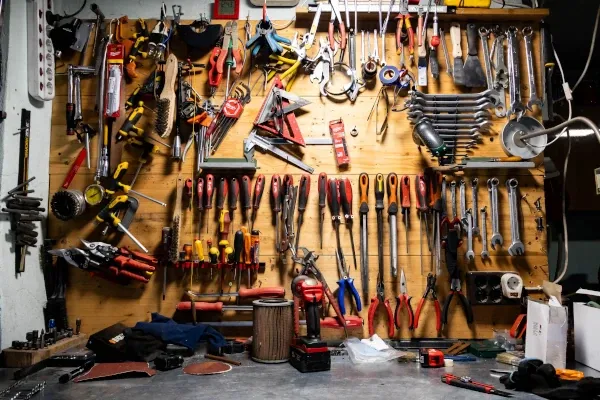

Tool theft is costing UK tradespeople thousands in lost equipment and work. Explore real cases, 2025 statistics, organised crime and essential security advice.
Tool Theft in the UK: A Challenging and Growing Threat to Tradespeople
For Britain`s builders, electricians, plumbers, carpenters and other skilled tradespeople, professional tools are far more than expensive pieces of equipment. They are the essential equipment they need to earning a living.
Yet tool theft continues to affect tradespeople across the UK, with criminals targeting vans, workshops, construction sites and business premises. The consequences can be devastating, leaving victims facing thousands of pounds in replacement costs, damaged vehicles, cancelled jobs and significant financial uncertainty.
In April, Insight Security explored the growing tool theft problem in our article, Tool Theft in the UK: A Growing Crisis for Tradespeople.
Since then, further reports have highlighted the scale of the problem, including disturbing accounts of repeat attacks on businesses and evidence of organised criminal networks involved in stealing and reselling valuable equipment.
New figures released in October 2026 suggest that the problem remains widespread. With the darker evenings creating additional opportunities for criminals, tradespeople are being urged to review their security precautions.

Tool Theft Statistics: The Scale of the Problem in 2026
Figures shared by the BBC Shared Data Unit, following Freedom of Information requests by insurer Aviva, reveal that at least 26,164 tool thefts were recorded across the UK during 2025.
This equates to approximately one reported theft every 20 minutes.
The figures were provided by 30 police forces. A further 15 forces were unable to supply data, meaning the true number of incidents is likely to be significantly higher.
Financial Impact
The financial impact on tradespeople is equally concerning.
According to Direct Line for Business insurance claims data, the average tool theft claim reached £4,206.60 in 2025, compared with £3,962.01 in 2024 and £3,314.87 in 2021.
These figures represent the average value of insurance claims, rather than the average value of tools stolen in every individual incident.
For a sole trader or small business, a single theft can represent a substantial financial setback. Repeat incidents can be even more damaging.
Real Cases of Tool Theft: The Human Cost
Behind the statistics are individual tradespeople and businesses struggling to recover from the loss of equipment they depend upon.
Birmingham Refrigeration Business Targeted Six Times
Lulzim Pjetri, owner of Alliance Refrigeration Group in Aston, Birmingham, has experienced tool theft on six separate occasions within a single year.
In one particularly brazen incident, thieves broke into a parked van while two members of staff were sitting inside the cab eating their lunch.
The offenders reportedly brandished crowbars and frighteningly told the workers that attempting to intervene would not be worthwhile.
Pjetri employs seven people and says the repeated attacks have left him concerned for his employees` safety, as well as the financial viability of his business.
Replacing stolen tools from a single van can cost up to £7,000. Vehicle repairs can add a further £4,000–£5,000, while additional losses arise from missed work and prolonged vehicle downtime. Some targeted and damaged works vans have reportedly been off the road for weeks.
The repeated attacks have taken a considerable emotional toll, with Pjetri describing the experience as very traumatic and expressing concerns about the future of his business.
£10,000 Theft Prompts Further Security Investment
Kerry Field, owner of Change It Homes in Norton Lindsey, Warwickshire, has also experienced repeated thefts.
One particularly costly incident resulted in approximately £10,000 worth of tools and motorbikes being stolen from his business premises.
CCTV footage reportedly showed the offenders making offensive gestures towards the cameras during the break-in.
Following the incident, Field invested a further £10,000 in improving security at his premises. The improvements included electric gates, CCTV cameras and additional measures to protect the site.
In another troubling development, a member of his staff discovered one of the stolen saws advertised for sale online. Field said he was advised to collect the tool himself after reporting it to police, although the force subsequently apologised over the advice.
The case illustrates how the consequences of tool theft can extend well beyond the original loss, forcing businesses to invest heavily in preventative security.
£2 Million Stash of Stolen Tools Recovered in East London
Organised tool theft is not limited to individual van break-ins.
In January 2026, the Metropolitan Police uncovered what was described as potentially the UK`s largest-ever recovery of stolen tools.
Officers discovered an estimated £2 million haul of stolen equipment at a property in Ilford, east London.
The investigation began after a construction company reported the theft of high-value equipment from a site in Tilbury, Essex. A tracking device fitted to the stolen equipment helped police locate the property.
Upon entering the premises, officers discovered a substantial quantity of additional stolen tools and machinery. The recovered equipment reportedly amounted to approximately ten lorry loads.
Three suspects were arrested, with police believing the individuals were connected to an organised criminal group involved in reselling stolen equipment online, potentially for distribution across the UK and Europe.
Some of the recovered equipment was believed to be linked to thefts dating back to 2019.
This case demonstrates that tool theft can be part of a wider criminal operation involving the systematic acquisition, storage and resale of stolen goods.
Is Organised Crime Behind the Tool Theft Epidemic?
There is growing evidence that organised criminal groups are involved in a significant proportion of tool thefts.
According to the National Business Crime Centre, stolen tools can be moved around the UK for resale, with some equipment also being transported overseas.
The financial incentives are considerable. Professional power tools, specialist equipment and construction machinery can command high prices on the second-hand market.
Criminals may target:
- Tradespeople`s vans parked overnight or outside residential properties.
- Construction sites containing valuable tools and machinery.
- Workshops and business premises.
- Commercial vehicles parked at customer locations.
The stolen equipment may subsequently be sold through online marketplaces, second-hand dealers or informal markets, including car boot sales.
The resale market is an important part of the problem. If stolen tools can be sold quickly and anonymously, criminals have an incentive to continue targeting tradespeople.
Police and industry representatives are increasingly focusing on disrupting these routes to market, rather than simply responding to individual thefts.
The Metropolitan Police has also begun issuing warnings to car boot sale organisers about the potential criminal liability associated with knowingly facilitating the sale of stolen or illicit goods.
What Is the UK Government Doing to Tackle Tool Theft?
The growing problem has attracted considerable attention from MPs, industry bodies and tradespeople`s organisations.
The government`s response includes increased police funding, collaboration with industry and new measures intended to help police recover stolen property.
National Business Crime Centre Funding
In January 2026, the Home Office confirmed that it was providing £2 million in funding to the National Business Crime Centre over three financial years.
The government also confirmed that it was working with tradespeople`s representatives, police, retailers and manufacturers to develop measures to prevent tool theft.
This work is intended to encourage improved security practices and better identification of stolen equipment.
New Police Powers to Recover Stolen Goods
The Crime and Policing Act 2026 introduces new powers allowing police, in certain circumstances, to enter and search premises where stolen goods have been electronically tracked.
The new powers are intended to help officers act more quickly when stolen property can be traced to a specific location and obtaining a warrant is not reasonably practicable.
The legislation includes safeguards, including authorisation by an officer of at least Inspector rank and requirements for reasonable grounds to believe the property is stolen and present at the premises.
These powers could prove particularly valuable in investigations involving GPS-tracked tools and machinery.
Will Professional Tools Have to Be Forensically Marked?
The government has also considered whether the Equipment Theft (Prevention) Act 2023 should be extended to include tradespeople`s power tools.
The Act focuses on certain agricultural equipment, including requirements for property marking and registration.
However, following consultation, the government concluded in March 2026 that compulsory marking and registration of tradespeople`s tools would create disproportionate costs and practical difficulties for retailers and businesses.
Consequently, the government decided not to include professional power tools in the secondary legislation.
Instead, it intends to consider alternative approaches to preventing theft and improving the identification and traceability of stolen equipment.
Targeting the Resale Market
Police forces are also increasing efforts to disrupt the resale of stolen tools.
For example, Leicestershire Police launched Operation Generator in 2026, supported by nearly £54,000 from the Police and Crime Commissioner.
The initiative targets the sale of stolen power tools at car boot sales, with officers undertaking patrols, engaging with sellers and buyers, distributing property-marking kits and carrying out enforcement activity.
This approach recognises that tackling the market for stolen goods is an important part of reducing the incentive for tool theft.
How Can Tradespeople Protect Their Tools from Theft?
While police and government initiatives are important, prevention remains essential.
Tradespeople can significantly reduce their exposure to theft by adopting a combination of physical security, property marking and sensible storage practices.
1. Avoid Leaving Tools in Vans Overnight
Whenever possible, remove valuable tools and equipment from vehicles when they are not in use. While this can be burdensome, removing valuable tools and equipment from vans left outside overnight is extremely effective.
Vans parked outside homes overnight are particularly vulnerable, especially when thieves can identify the vehicle as containing valuable equipment. Organised criminals will potentially identify and track trades vehicles to discover how and where they are stored at night.
Where removing tools is impractical, consider secure internal tool storage and additional vehicle security.
2. Improve Van Security
Standard vehicle locks may not provide sufficient protection against determined thieves who are happy to cause extreme vehicle damage to gain entry.
Consider additional security measures such as:
- Deadlocks and reinforced locking systems.
- Slamlocks where appropriate.
- Internal steel tool safes and secure storage boxes.
- Vehicle alarms and immobilisers.
- GPS tracking devices for valuable equipment.
- Parking with rear doors close to a wall or secure barrier can help restrict access.

3. Secure Tools and Equipment on Construction Sites
Construction sites can be attractive targets, particularly outside working hours, during weekends and over holiday periods.
Valuable equipment should be stored in appropriately secured containers, tool cabinets or dedicated storage areas.
Where possible, position storage away from site boundaries and areas that are poorly monitored.
Perimeter security, lighting, CCTV and robust physical barriers can all help reduce opportunities for theft.

4. Mark and Register Valuable Tools
Property marking can make stolen tools easier to identify and return to their rightful owners.
Consider using forensic marking products, such as synthetic DNA solutions, alongside visible identification labels or engraving.
Tradespeople should also record serial numbers and register equipment with relevant manufacturer or property-registration databases.
These measures may help police identify stolen equipment and can make it more difficult for criminals to sell on stolen goods.

5. Maintain a Detailed Tool Inventory
Keeping an up-to-date record of all valuable tools and equipment is essential.
This should include:
- Manufacturer and model.
- Serial numbers.
- Photographs.
- Purchase dates and receipts.
- Replacement values.
Having this information readily available can assist police investigations and help speed up insurance claims following a theft.

6. Review Tool Insurance
Insurance can provide an important financial safety net, but cover varies significantly between policies.
Tradespeople should review their policies carefully to check:
- Whether tools are covered overnight in vehicles.
- Whether equipment is covered when left at customer premises.
- Whether there are limits on individual tools or total equipment values.
- Whether new-for-old replacement is available.
- Whether security requirements or exclusions apply.
Remember - the cheapest policy may not necessarily provide sufficient protection.
Tool Theft Is More Than an Insurance Problem
Tool theft is not simply a matter of replacing expensive equipment.
For a tradesperson, losing essential tools can mean being unable to complete scheduled work, disappointing customers, losing future contracts and struggling to meet business expenses.
The financial consequences can extend to expensive vehicle repairs, increased insurance premiums, additional security investment and lost earnings.
There is also a considerable emotional impact.
Repeated attacks can leave tradespeople feeling vulnerable, frustrated and anxious about the security of their vehicles and business premises.
The growing evidence of organised criminal involvement makes the problem even more concerning. Stolen tools are not necessarily disappearing into isolated incidents of opportunistic theft; they may be entering a wider resale network that encourages further criminal activity.
Protecting Your Tools, Your Business and Your Livelihood
The latest figures and real-world cases demonstrate that tool theft remains a serious threat to UK tradespeople.
Although government and police initiatives are beginning to address the issue, there is no single solution.
Effective prevention requires a combination of improved vehicle security, secure tool storage, property marking, careful inventory management and appropriate insurance.
For tradespeople, taking preventative measures today could help avoid substantial financial losses and disruption tomorrow.
For businesses and construction sites, investing in effective security is not simply about protecting equipment. It is about protecting the people, livelihoods and services that depend upon it.
Insight Security provides a range of security products designed to help protect tools, equipment, vehicles and premises against theft and unauthorised access.
Explore our range of security chains and padlocks, security hasps, van storage boxes and other security solutions to help strengthen your protection against theft.
Frequently Asked Questions - Tool Security
How many tool thefts occur in the UK?
At least 26,164 tool thefts were recorded by 30 UK police forces during 2025, according to figures shared by the BBC Shared Data Unit in October 2026. The true total is likely to be higher because 15 additional forces were unable to provide data.
How much does tool theft cost UK tradespeople?
Direct Line for Business reported an average tool theft insurance claim of £4,206.60 in 2025. Actual losses can be substantially higher when vehicle repairs, lost earnings and business disruption costs are included.
Are organised criminal gangs involved in tool theft?
Yes. Police investigations have identified organised criminal groups involved in stealing, storing and reselling tools and machinery. Stolen equipment may be sold through online marketplaces, second-hand dealers or informal markets, sometimes for distribution overseas.
What is the government doing to tackle tool theft?
The government is working with police, industry and tradespeople`s representatives to prevent tool theft. Measures include funding the National Business Crime Centre, introducing new police powers to recover electronically tracked stolen goods and supporting initiatives to disrupt the resale of stolen equipment.
How can tradespeople prevent tool theft?
Tradespeople should remove tools from vans overnight wherever possible, install additional vehicle security, use secure tool storage, mark and register valuable equipment, maintain an inventory and ensure their insurance provides adequate cover.
For more information on Tool Theft in the UK: Tradespeople Face a Growing Crisis as Criminals Target Their Livelihoods talk to Insight Security