 Get Listed

Electric Versus Pneumatic Vacuums Compared
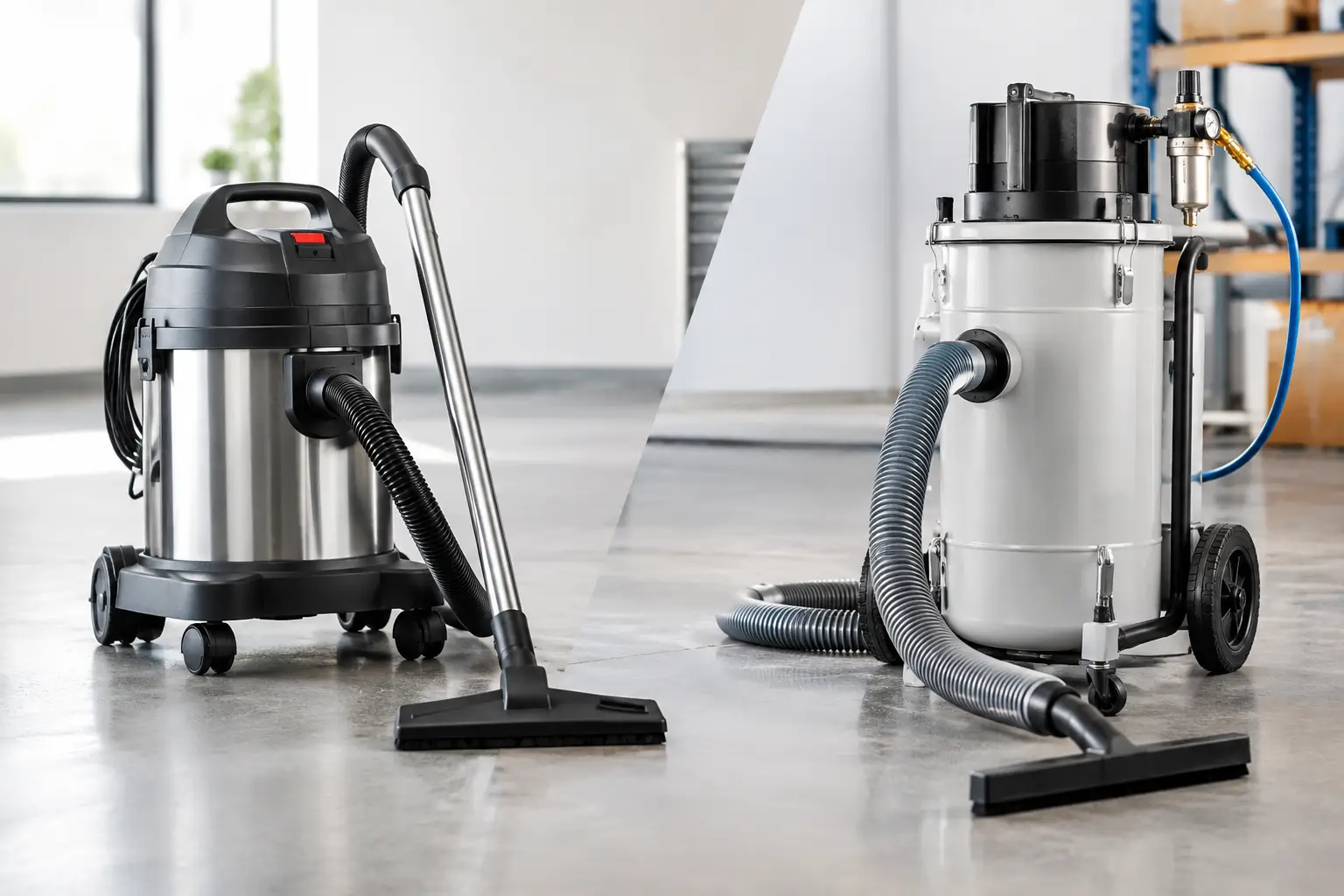
Choosing between electric and pneumatic industrial vacuums involves more than finding the nearest socket or airline. The power source affects running costs, recovery over a shift, mobility, maintenance and suitability for the working environment. Forvac Industrial's comparison explains why the material and operating conditions should guide the specification.
Fine dust beside a continuously running process creates different demands from metal-swarf recovery, powder collection in a classified area or clearing an oil spill during maintenance. The complete machine, filtration, accessories and collection method need to work together for the task.
How the two power sources work
Electric industrial vacuums use a motor to generate suction and airflow. Depending on the model and application, they may operate from single-phase or three-phase supplies. Where dependable mains power is available, an appropriately specified electric machine can be a straightforward option for frequent or extended operation.
Pneumatic vacuums use compressed air, commonly through a Venturi arrangement, to create suction. They avoid a conventional electric motor at the point of use and can be practical where an existing air network suits the application or local conditions favour an air-operated unit.
Both technologies can support demanding industrial work. The useful comparison includes material type, hose length and diameter, filtration, collection capacity, operating hours and available utilities, alongside any hazardous-area requirements. Power source alone does not establish whether a vacuum will perform the job.
Where electric equipment fits
Electric units are commonly suited to regular cleaning and recovery in engineering workshops, manufacturing facilities, warehouses and maintenance areas. They deliver suction without adding demand to the compressed-air network, which may already supply production machinery, controls and tools.
For higher-volume duties, suitable electric machines can combine larger containers, staged filtration and three-phase motors designed for continuous or near-continuous use. Applications can include dry dust, packaging debris, powders, swarf and liquids, provided the machine is configured for the material rather than assumed suitable for every waste stream.
Running cost is a significant consideration. Producing compressed air consumes energy, particularly when demand is sustained. For routine cleaning and long shifts, an electric vacuum will generally offer lower running costs where the supply and equipment specification are appropriate. Portable, fixed and centralised arrangements also give facilities different options for reaching work areas and reducing manual handling.
An ordinary electric vacuum is not suitable simply because mains power is available. Fine or hazardous dust, hot material and combustible substances require the correct filtration, construction, earthing and certification for the assessed application. Standard equipment must not be treated as a substitute for an appropriately specified hazardous-area system.
Where pneumatic equipment can be useful
Air-operated units can suit localised recovery tasks and locations where electrical leads or a conventional motor would be inconvenient or unsuitable. Examples discussed in the comparison include certain classified environments, chemical processing, paint shops and areas exposed to water, oil or heavy contamination. The actual specification still depends on the site.
Compact pneumatic equipment may be practical for recovering chips from a machine enclosure, collecting granules around a filling line or reaching a confined working location. An available airline can support occasional work without the same arrangement as a larger electric unit.
Pneumatic power does not automatically make a vacuum ATEX compliant. Static, conductive dust, hoses, filters, collection containers and accessories still require assessment. Where a classified zone or combustible material is involved, the complete system must suit the material, process and site conditions, with appropriate earthing where required.
The air supply also needs checking under real operating demand. Pressure losses, long pipe runs, undersized airlines and competing equipment can reduce performance at the connection. Adding a vacuum to a constrained compressor network may shift the bottleneck rather than resolve it.
Look beyond headline suction figures
Utility checks should reflect a normal working shift, with other machinery running. Compressor nameplate capacity does not establish the pressure and airflow available through a particular branch of the network. Likewise, an electrical connection must support the voltage, phase and duty required by the selected machine. Reviewing these conditions before purchase can prevent disappointing performance after installation.
Airflow and vacuum pressure describe different aspects of performance. Airflow helps transport lighter dust and larger volumes of lower-density material, while pressure can be important for denser debris, longer hoses and resistance through filters. Neither number on its own demonstrates suitability for a full shift.
Fine powders can need efficient filtration with sufficient surface area to avoid rapid blockage. Dense swarf affects container weight, safe emptying and hose requirements. Wet sludge can require separation and a controlled disposal method. These details should shape the machine and accessory selection.
A short demonstration may not reveal a filter that loads too rapidly, a container that fills too often or a supply unable to sustain the required duty. Expected operating time, material volumes and the practical emptying process therefore matter as much as initial recovery speed.
Assess lifetime cost and maintenance
Some pneumatic configurations can offer a lower initial equipment cost, especially for occasional local tasks where air is already available. Sustained compressed-air consumption can outweigh that saving. Electric systems may cost more to install in some cases, but can provide a more economical arrangement for regular recovery.
Compare energy, filters, servicing, installation and labour alongside purchase price. Electric equipment requires checks of motors, cables, switches, seals and filters. Pneumatic machines avoid some electrical components but depend on clean, dry air and sound connections. Both need hose inspection, filter care and safe collection arrangements.
Before specifying a vacuum, establish what material will be recovered, whether it is dry, wet, hot, abrasive, toxic or combustible, how far it must travel and how often the equipment will run. Confirm voltage and phase for electric equipment, or available pressure and airflow at the point of use for pneumatic units. Access, noise and container handling complete the picture.
Electric power is often the economical choice for sustained cleaning and fixed installations; pneumatic power can suit particular local tasks and environments. Forvac Industrial's central recommendation is to select around the process, utilities and assessed risks so that the equipment supports the real workload.
Source: Forvac Industrial
For more information on Electric Versus Pneumatic Vacuums Compared talk to Forvac Industrial