 Get Listed

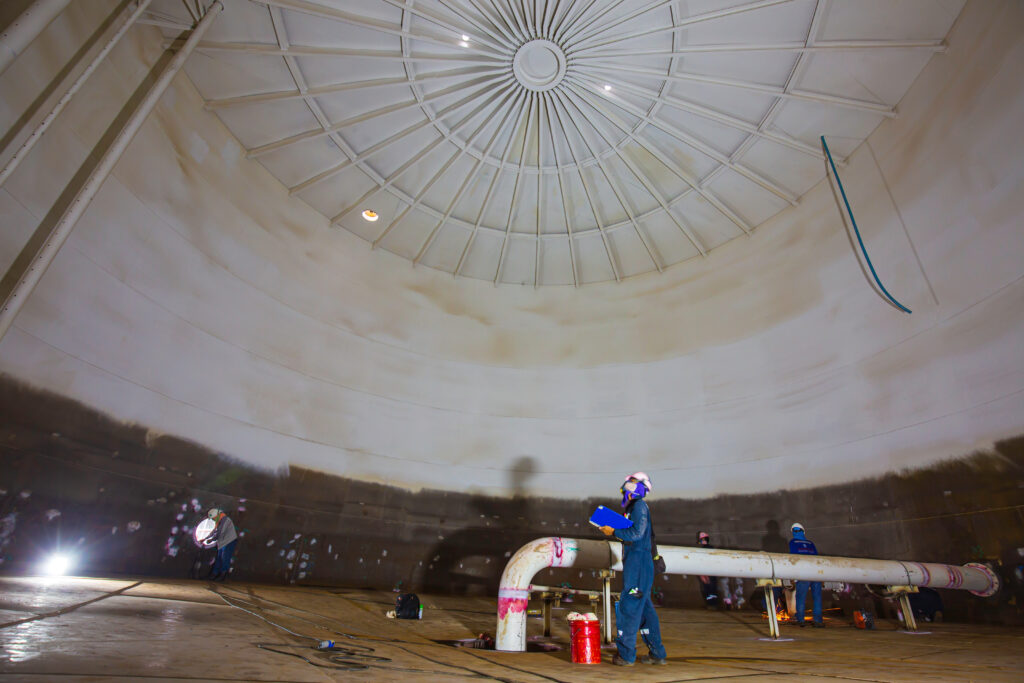
Storage tanks play a vital role in many industrial, manufacturing and processing environments. They may hold water, chemicals, fuels, oils or other important substances, but whatever their purpose, their condition needs to be taken seriously. A small defect, area of corrosion or hidden weakness can develop into a much larger problem if it is not identified early.
This is where professional storage tank inspection becomes essential. Non-destructive testing allows tanks to be assessed without unnecessary damage, helping operators understand the condition of their assets while keeping disruption under control. However, the inspection itself is only one part of the process. Independent oversight can also play a valuable role, especially when clients need confidence that the right checks are being carried out, the findings are being interpreted correctly and any recommendations are in their best interests.
At Format NDT, experience in storage tank inspection and customer representation allows clients to receive support with both the technical inspection work and the wider quality assurance process.
Why Storage Tank Condition Matters
Storage tanks are often exposed to demanding conditions. They may be affected by weather, temperature changes, stored substances, cleaning processes, operating pressure, settlement, impact damage or general wear over time. Even when a tank appears to be in good condition from the outside, there may be internal issues that cannot be seen during a basic visual check.
Corrosion is one of the most common concerns. It can affect walls, floors, roofs, welds, supports and associated pipework. Depending on the material being stored, corrosion may develop internally, externally or in localised areas where moisture, chemicals or contaminants are present. If this deterioration is not monitored, it can reduce wall thickness, weaken structural integrity and increase the risk of leaks.
For businesses, the consequences can be serious. A failed tank may cause production delays, environmental issues, safety concerns, product loss and expensive repairs. In some cases, the damage may also affect surrounding equipment or structures. A planned inspection programme is therefore far more than a routine maintenance task. It is an important part of responsible asset management.
The Role Of Non-Destructive Testing In Tank Inspection
Non-destructive testing is especially useful for storage tanks because it allows inspectors to assess materials and components without causing avoidable damage. This makes it possible to gather meaningful information while preserving the tank’s usefulness.
Different methods may be used depending on the tank type, material, access requirements and suspected issue. Ultrasonic testing, for example, can be used to measure wall thickness and identify areas where material loss may have occurred. Visual inspection can help identify surface condition, deformation, corrosion, cracking, coating failure and signs of previous repair. Dye penetrant inspection may be suitable for detecting surface-breaking defects in certain non-porous materials, while other techniques can be selected where appropriate.
A good inspection is not simply about carrying out a test and recording a result. It involves understanding the tank’s purpose, its service history, the risks associated with the stored material and the areas most likely to experience deterioration. The findings then need to be reported clearly so the client can make informed maintenance, repair or replacement decisions.
Format NDT provides storage tank inspection in line with EEMUA 159, which is widely recognised as guidance for the inspection, maintenance and repair of above-ground storage tanks. The EEMUA Publication 159 guidance is designed to help users establish inspection and maintenance requirements that minimise in-service problems and extend tank life.
Why Independent Oversight Adds Value
When a tank inspection is being planned or carried out, many parties may be involved. This can include site owners, contractors, maintenance teams, engineering teams, insurers, fabricators and inspection providers. Each may have a role to play, but the client still needs assurance that the process is being managed correctly and that their interests are being protected.
Independent customer representation helps provide that assurance. A customer representative acts on behalf of the client, helping to monitor standards, identify non-conformance and ensure important quality requirements are not overlooked. Format NDT’s customer representation service gives clients access to experienced quality assurance support for plant, equipment and inspection activity.
This can be particularly valuable during tank inspection projects because the results may influence important decisions. A recommendation to repair, monitor or replace a tank can have operational and financial implications. Independent oversight helps ensure those decisions are based on reliable information, not assumptions or incomplete inspection data.
Planning The Inspection Properly
A successful storage tank inspection starts before the first test is carried out. The inspection scope needs to be clear. The client should understand what is being inspected, which methods are being used, what access is required and how the results will be reported.
This is where customer representation can make the process more robust. A representative can help review inspection requirements, liaise with contractors and confirm that the agreed scope reflects the client’s objectives. They can also help ensure that safety, access and operational constraints are considered before work begins.
For example, a tank may need to be inspected during a planned shutdown, after cleaning or before being returned to service. Time may be limited, and access may be challenging. Without proper coordination, key areas could be missed or inspection work may become rushed. Independent oversight helps keep the process focused and organised, reducing the risk of gaps in the inspection record.
Planning also allows the inspection to be tailored to the tank’s condition and history. A tank with known corrosion concerns may need more detailed wall thickness measurements. A tank that has undergone repair may need closer attention around welds or heat-affected areas. A tank used for hazardous substances may require particularly careful reporting and follow-up action.
Turning Inspection Results Into Practical Decisions
The value of storage tank inspection depends heavily on how the results are interpreted and used. A technical report should do more than list measurements or observations. It should help the client understand what those findings mean in practical terms.
If wall thickness has reduced, the client needs to know whether the tank remains suitable for service, whether monitoring is required or whether remedial work should be considered. If defects are found around welds, the client needs to understand their significance. If corrosion is localised, the report should help identify whether it is likely to continue and whether preventive action may be needed.
Customer representation supports this stage by giving clients an informed point of contact who can review findings, ask the right questions and help ensure recommendations are clear. This is especially useful for organisations that do not have internal NDT specialists or for projects where several contractors are involved.
A representative does not replace the technical inspection report. Instead, they help the client navigate it. They can highlight areas that require attention, challenge unclear conclusions and ensure the inspection outcome is aligned with the client’s operational priorities.
Reducing The Risk Of Non-Conformance
Non-conformance can occur when work does not meet the required specification, standard or agreed process. In storage tank projects, this could relate to inspection coverage, reporting detail, repair quality, documentation, material verification or procedural control.
The earlier non-conformance is identified, the easier it is to deal with. If it is missed until later in the project, it can lead to delays, rework and additional costs. Independent representation helps by providing another layer of quality assurance.
For tank inspection work, this may include checking that inspection methods are appropriate, confirming that agreed areas have been examined and ensuring that findings are recorded in a useful way. Where repair or maintenance work follows inspection, customer representation can also help monitor whether the work is being completed to the required standard.
This kind of oversight is not about adding unnecessary complexity. It is about reducing uncertainty. When storage tanks are critical to operations, clients need confidence that the work has been done properly and that the condition of the tank is understood.
Supporting Long-Term Asset Management
Storage tank inspection should not be viewed as a one-off exercise. It is most valuable when it forms part of a long-term asset management strategy. Each inspection adds to the history of the tank, helping clients track deterioration, compare results and plan maintenance more effectively.
If inspection records are consistent and detailed, they can help identify trends. A slight reduction in wall thickness may not be urgent on its own, but if measurements show steady deterioration over several inspection cycles, the client can take action before the issue becomes more serious.
Independent oversight helps improve the quality and usefulness of this information. By ensuring inspection work is properly scoped, recorded and reviewed, customer representation supports better future decision-making. This can help businesses plan shutdowns, budget for repairs and avoid reactive maintenance wherever possible.
The Health and Safety Executive’s guidance on the storage of flammable liquids in tanks also highlights the importance of considering design, construction, operation and maintenance when managing storage risks. While every site and tank will have its own requirements, this reinforces the need to take storage infrastructure seriously throughout its service life.
When Should Businesses Consider Customer Representation?
Customer representation can be useful in many situations, but it is especially valuable when the work is complex, high risk or commercially important. For storage tanks, it may be worth considering when inspections are being carried out during shutdowns, when tanks hold hazardous or valuable substances, when previous defects have been identified, or when repair work is being completed by third-party contractors.
It can also be useful when a business does not have in-house inspection expertise. Many clients understand the importance of NDT but may not have the technical knowledge to assess whether the inspection scope, method or report is suitable. A customer representative can bridge that gap, giving the client greater confidence throughout the process.
For larger sites with multiple tanks, customer representation can also help maintain consistency. If several assets are being inspected across different dates or by different teams, oversight helps ensure information is gathered and reported in a way that supports comparison and future planning.
Why Work With Format NDT?
Format NDT has been providing non-destructive testing services since 1976 and supports clients across the UK with a wide range of inspection methods. The company offers storage tank inspection across the UK and beyond in some cases, reporting findings and providing recommendations after inspection work is completed.
This combination of technical testing capability and customer-focused representation means clients can receive support throughout the inspection process. From identifying the right approach to reviewing findings and helping prevent quality issues, Format NDT can provide practical assistance that supports both safety and reliability.
Storage tanks are too important to leave to guesswork. With the right inspection programme and independent oversight, businesses can better understand asset condition, reduce risk and make more confident maintenance decisions.
For organisations responsible for tanks, plant or industrial infrastructure, professional storage tank inspection and customer representation can work together to provide a clearer picture of asset integrity and a stronger basis for long-term planning.
For more information on Why Storage Tank Inspections Need Independent Oversight talk to Format NDT Ltd