 Get Listed

London is home to some of the UK’s most demanding construction, engineering, transport, infrastructure and manufacturing environments. From commercial developments and structural steelwork to plant rooms, pipework, pressure systems and fabricated components, many projects depend on materials performing exactly as expected. When a component fails, the cost can be far greater than the price of repair. It can affect safety, cause delays, disrupt operations and create avoidable risk.
This is where non-destructive testing plays an important role. NDT allows materials, welds, parts and structures to be examined without damaging them. Instead of cutting into a component or taking it out of use unnecessarily, trained inspectors can use suitable testing methods to look for defects, assess condition and provide useful reporting. For businesses looking for NDT in London, this can support better decision-making throughout fabrication, installation, maintenance and ongoing asset management.
What Makes NDT So Important in London?
London projects often involve busy sites, tight programmes and high expectations around safety, compliance and quality. Many assets are difficult to access, expensive to replace or critical to the operation of a building, facility or infrastructure project. In these situations, testing needs to be accurate, practical and planned around the working environment.
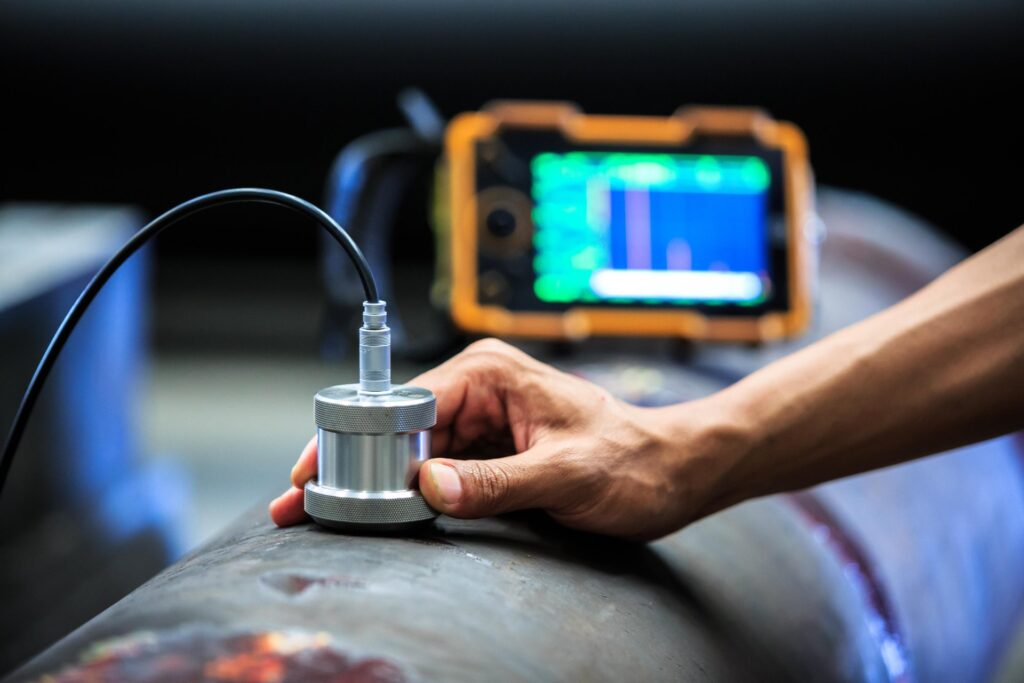
Non-destructive testing can be used to inspect welds, pipework, structural elements, tanks, castings, forgings and machined components. The right method depends on the material, access, likely defect type and inspection purpose. For example, ultrasonic testing can be useful for measuring thickness or detecting internal flaws, while magnetic particle inspection can help identify surface and near-surface defects in ferromagnetic materials.
Guidance from organisations such as the British Institute of Non-Destructive Testing helps show how wide the discipline is, covering different methods, sectors and qualification routes. For London businesses, the practical benefit is clear: NDT gives a way to investigate condition without unnecessarily damaging valuable assets.
Supporting Weld Quality and Fabrication Standards
Welds are one of the most common areas where NDT is required. In construction, engineering and manufacturing, weld integrity can affect the strength, reliability and long-term safety of a component or structure. Visual checks may identify obvious surface concerns, but not every defect can be seen from the outside.
Depending on the project, Format NDT can support weld inspection through methods such as visual inspection, ultrasonic testing, magnetic particle inspection, liquid penetrant testing and radiographic inspection. Each method has its own strengths. Some are suited to surface-breaking defects, while others can help reveal internal discontinuities.
For London projects, this can be especially valuable where delays are costly and space is limited. If inspections are considered early, testing can be planned around fabrication stages, installation windows or maintenance schedules. This helps reduce disruption and gives project teams clearer information before assets are relied upon.
Reducing Disruption Through On-Site Testing
Many components in London cannot be easily removed and sent away for examination. Plant rooms, structural elements, tanks, pipework, lifting points, pressure equipment and installed systems may need to be inspected in place. On-site testing helps reduce the need for transport and allows inspections to take place where the asset is located.
This can be useful for commercial properties, industrial facilities, transport-related sites and construction projects where access windows are limited. Instead of stopping work for longer than necessary, NDT can often be arranged around site requirements. The inspection method still needs to be suitable, but portable equipment and experienced technicians can make the process more practical.
On-site work also helps inspectors understand the operating environment. Surface condition, access, coatings, heat, lighting and surrounding activity can all affect how inspection work is planned. A good NDT provider will consider these details before selecting the most suitable method.
Choosing the Right NDT Method
Not every NDT method is right for every job. A component’s material, shape, thickness, surface condition and expected defect type all influence the best approach. This is why it is important to work with a company that offers more than one method.
For example, liquid penetrant testing can reveal surface-breaking defects in non-porous materials, making it useful for certain welds, castings and machined components. Radiographic inspection can provide insight into internal features where access and safety arrangements allow. PMI testing can help verify material composition where traceability is important.
The Health and Safety Executive provides information on inspection and non-destructive testing in relation to major accident hazard environments, showing how NDT can form part of wider inspection and safety management thinking in higher-risk industries. HSE guidance on inspection and NDT is particularly relevant where inspection decisions have a direct relationship with safe operation.
NDT for Maintenance and Asset Management
NDT is not only useful during new fabrication. It can also support maintenance, monitoring and investigation work. Over time, assets can be affected by corrosion, fatigue, wear, impact, heat exposure, operational stress or changes in service conditions. Regular inspection can help identify developing issues before they become more serious.
In London, this can matter for building services, industrial equipment, storage tanks, pipework, structural steel and other assets that are costly or difficult to replace. By using NDT as part of planned maintenance, businesses can make more informed decisions about repair, replacement or continued operation.
Format NDT also provides specialist services such as ferrite testing and replication inspection, which may be useful in specific materials or high-temperature service environments. Having access to a broad range of methods means the inspection can be adapted to the asset rather than forced into a standard approach.
Why Experience Matters
NDT results depend on more than equipment. The skill of the inspector, the suitability of the method, the quality of preparation and the interpretation of results all matter. An experienced technician understands not only how to carry out a test, but also how site conditions, material behaviour and component geometry can affect findings.
Format NDT has worked across a wide range of non-destructive testing requirements, supporting clients with practical inspection services and clear reporting. For London clients, this experience can help projects move forward with greater confidence, whether the work involves a single inspection or wider testing programme.
A reliable NDT partner should also be able to explain why a method is being recommended. If ultrasonic testing is suitable, the reasoning should be clear. If magnetic particle inspection would only reveal certain defect types, that should also be explained. Good advice helps customers understand what the inspection can and cannot confirm.
Reliable Testing for Demanding London Environments
London sites are rarely simple. Access can be restricted, schedules can be tight and safety requirements can be complex. That makes planning and communication essential. NDT should fit around the realities of the project while still maintaining proper inspection standards.
Whether a business needs weld inspection, surface crack detection, thickness measurement, material verification or wider non-destructive testing support, Format NDT can provide a practical service for London projects. The team can advise on method selection, on-site requirements and reporting so customers receive meaningful information from the inspection.
For businesses that need reliable NDT in London, Format NDT provides a wide range of non-destructive testing services designed to support safety, quality and confidence across demanding environments.
For more information on Why London Projects Depend on Reliable NDT Inspection talk to Format NDT Ltd