 Get Listed

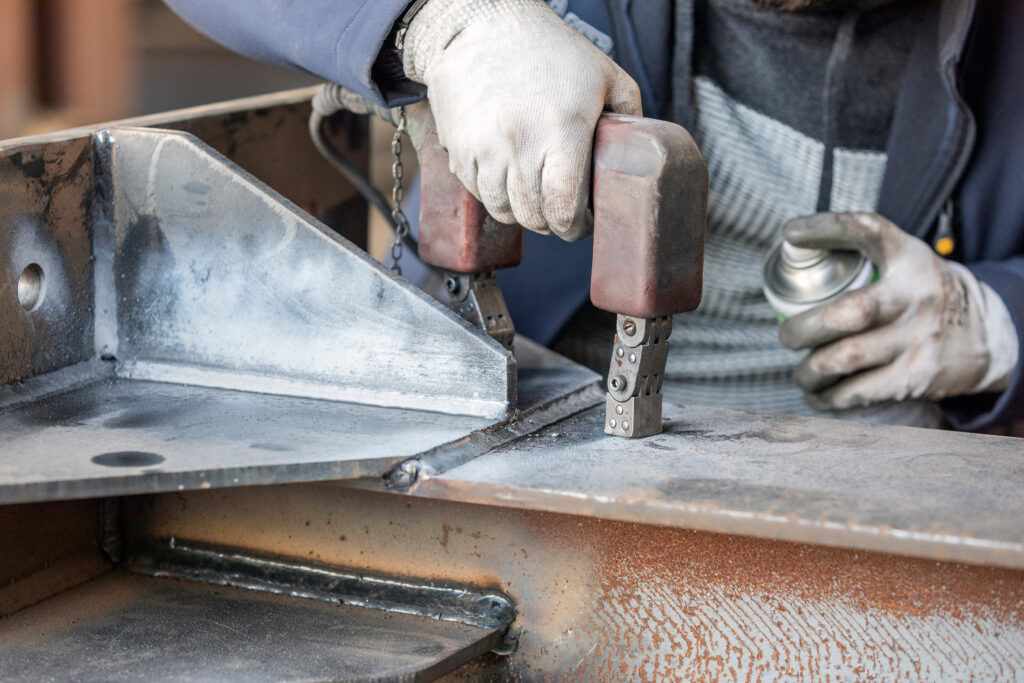
Magnetic particle inspection is a non-destructive testing method used to detect surface and near-surface discontinuities in ferromagnetic materials. It is commonly used on welds, castings, forgings, machined parts and metal components where cracks or defects could affect performance, safety or reliability.
At Format NDT, magnetic particle inspection is one of the key NDT methods available to customers who need practical, accurate inspection of suitable materials. It can often provide quick indications and can be carried out in a laboratory or on-site, depending on the component and inspection requirements.
How Magnetic Particle Inspection Works
Magnetic particle inspection works by magnetising the area being tested. If the material is sound, the magnetic field generally remains within the component. If there is a surface-breaking or near-surface flaw, the magnetic field is disrupted. Fine magnetic particles are then applied to the surface, and these particles gather around the area of leakage, creating a visible indication.
This indication can show the location, size and shape of a discontinuity. The method is particularly useful because it can make defects easier to see, especially where they may not be obvious through visual inspection alone.
MPI is sometimes referred to as magnetic testing or magnaflux testing. The method can be highly effective, but it is only suitable for ferromagnetic materials. This means it can be used on materials such as iron, carbon steel and some low-alloy steels, but not on many non-ferromagnetic materials such as aluminium, copper or many stainless steels. Guidance from The Welding Institute on magnetic particle inspection explains that MPI is used to detect surface and slightly subsurface flaws in ferromagnetic materials, which is why it is commonly chosen for welds, castings and forged components.
What Types of Defects Can MPI Find?
Magnetic particle inspection is mainly used to detect surface and near-surface discontinuities. These may include cracks, laps, seams, lack of fusion, fatigue cracks and other defects that interrupt the magnetic field. It is often used where surface integrity is important, particularly on components that will be exposed to stress, load, pressure or repeated use.
For welded components, MPI can be useful after fabrication, repair or maintenance. It can help identify defects around weld toes, heat-affected zones and other areas where cracking may occur. For castings and forgings, it can help reveal defects that may have developed during production or subsequent processing.
The key strength of MPI is its ability to highlight indications that could otherwise be missed. However, it is not designed to detect deep internal defects, which is why other methods such as ultrasonic testing or radiographic inspection may be recommended for some applications.
Why MPI Is Commonly Used for Weld Inspection
Welds are one of the most common applications for magnetic particle inspection. A weld may be subject to stress, vibration, pressure, temperature changes or demanding service conditions. Even small cracks or discontinuities can become significant if left unchecked.
MPI provides a practical method for checking suitable ferromagnetic welds for surface and near-surface defects. It can be used during fabrication, after repair work, before final acceptance or as part of maintenance inspections. In many cases, it is used alongside visual inspection, which helps assess surface condition, weld profile and general workmanship.
If internal defects are a concern, MPI may be combined with other methods. The value of a multi-method approach is that each technique provides different information. MPI can help with surface and near-surface indications, while ultrasonic or radiographic methods can support internal assessment.
Where Magnetic Particle Inspection Is Used
Magnetic particle inspection is used across many sectors where ferromagnetic components need to be inspected without damage. This can include manufacturing, fabrication, construction, energy, transport, heavy industry and maintenance work.
Typical applications may include welds, structural steel components, lifting equipment, shafts, gears, hooks, castings, forgings, pressure-related components and machinery parts. It can be used during production to support quality control or during service to help investigate wear, cracking or damage.
For businesses that rely on critical components, MPI can help provide confidence before parts are put into use. It can also support maintenance planning by identifying defects early, giving companies the chance to take action before issues worsen.
MPI in the Workshop and On-Site
Magnetic particle inspection can often be carried out in controlled workshop conditions, but it can also be suitable for site-based inspection. Format NDT can provide on-site testing where components are too large, fixed or inconvenient to transport.
On-site MPI can be useful for welded structures, machinery, plant, pipework, industrial equipment and other assets that need to be examined in place. This can reduce disruption and help inspections fit around maintenance schedules, shutdowns or project stages.
Before on-site MPI is arranged, the inspection provider will need to understand the material, access, surface condition and inspection requirements. Proper preparation helps ensure the test is practical and that the results are useful.
Surface Preparation Matters
MPI depends on the ability to apply the magnetic field and particles effectively. Surface condition can therefore have a direct impact on the quality of the inspection. Heavy coatings, contamination, scale, oil, grease or rough surfaces may need to be addressed before testing.
This does not mean every component must be perfectly polished, but the surface needs to be suitable for the inspection. If defects are hidden by coatings or contamination, the method may not provide reliable results. A professional NDT provider can advise what preparation is required before the test takes place.
Surface preparation is especially important when MPI is being used for acceptance checks, safety-related inspections or investigation work. Reliable results depend on the method being applied under suitable conditions.
When MPI May Not Be the Right Method
Magnetic particle inspection is highly useful, but it has limits. It is only suitable for ferromagnetic materials and is focused on surface and near-surface defects. If the component is made from a non-ferromagnetic material, another method will usually be needed.
For example, liquid penetrant testing can be used to detect surface-breaking defects in suitable non-porous materials, including some materials that cannot be tested with MPI. If internal defects are the main concern, ultrasonic or radiographic testing may be more appropriate.
This is why method selection is so important. The question is not simply whether MPI is available. The question is whether MPI can answer the inspection requirement.
How MPI Supports Maintenance and Quality Control
Magnetic particle inspection can support both new production and ongoing maintenance. During fabrication, it can help confirm that suitable components and welds are free from relevant surface defects before being accepted. During maintenance, it can help identify fatigue cracks, service-related damage or defects that may have developed over time.
This makes MPI valuable for businesses that want to reduce uncertainty around component condition. It does not remove the need for good design, fabrication or maintenance practices, but it can provide important inspection evidence.
Clear reporting also matters. After MPI has been completed, customers need to understand what was inspected, what was found and whether any relevant indications were present. Format NDT provides practical reporting to help customers make informed decisions.
Choosing Format NDT for Magnetic Particle Inspection
Format NDT provides magnetic particle inspection as part of a wider range of non-destructive testing services. This is important because the most suitable method can vary from project to project. If MPI is right for the job, it can provide fast, useful indications. If another method would be more suitable, the team can recommend alternatives.
Customers can also access related services such as PMI testing, ferrite testing, replication inspection and radiographic inspection. This gives businesses a more complete inspection service when multiple checks are required.
For companies working with ferromagnetic materials, welds, castings, forgings or critical components, magnetic particle inspection can be a practical and effective way to detect surface and near-surface defects without damaging the item being tested.
For more information on What Can Magnetic Particle Inspection Detect? talk to Format NDT Ltd