 Get Listed

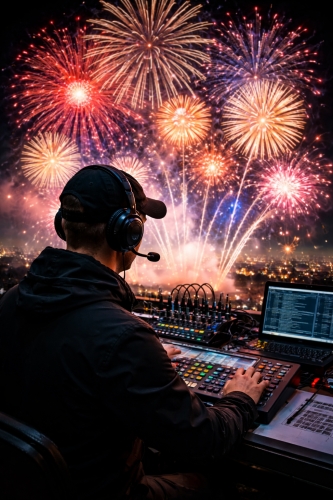
A spectacular firework display is a masterpiece of art and science. For the audience, it is a seamless choreography of light and sound. But for the crew behind the scenes, it is a high-stakes operation where safety, timing, and split-second decision-making are paramount.
While the visual impact relies on gunpowder and chemistry, the safety of the event relies entirely on communication. In an environment where ambient noise levels can rival a jet engine and visibility is often low, standard communication methods fail. For pyrotechnic crews, reliable earpieces and headsets are not just accessories; they are essential safety equipment.
The Regulatory Landscape for Major Displays
Organising a major public display requires a "robust and detailed approach," according to the Health and Safety Executive (HSE). Unlike a small garden party, professional displays involving Category 4 fireworks operate under strict regulatory frameworks.
The sheer power of professional pyrotechnics means that the margin for error is non-existent. The Control of Noise at Work Regulations 2005 are particularly relevant here. Employers must provide hearing protection when daily or weekly average exposure reaches 85 dB(A), and workers must not be exposed to noise above 87 dB(A) (taking hearing protection into account). Given that a single firework shell can exceed 150 dB at close range, the need for headsets that offer both communication and auditory protection is a legal and ethical necessity.
Site Management and Safety Zones
A professional display site is strictly divided into specific zones, each requiring different levels of access and communication.
- The Spectator Area: Where the public gathers.
- The Safety Area: A buffer zone (often a minimum of 50m deep) between the crowd and the firing line.
- The Firing Area: Where the mortars and cakes are rigged.
- The Fallout Area: Where debris lands (often 100m x 150m or larger).
Managing these zones requires a coordinated network of stewards and technicians. If a spectator breaches the safety barrier, or if the wind shifts debris toward the crowd, the "Stop Fire" command must be relayed instantly. There is no time to type a text message or wave a torch. A radio link allows the Safety Officer to halt the show immediately, preventing potential injury.
Behind the Scenes: The Role of Communication
Long before the first fuse is lit, communication plays a vital role in the setup. Rigging a major show involves laying thousands of metres of cable and securing heavy mortar racks. Technical crews need to coordinate testing of electronic firing systems (E-match) to ensure continuity without accidental ignition.
During the show, "spotters" are often positioned around the perimeter. Their job is to monitor smoke drift—especially if it moves towards roads or flight paths—and watch for fallout fires. These spotters need a direct line to the firing director. If a shell malfunctions or a rack tips, the information must flow back to the control desk instantly so that specific cues can be skipped or the show paused.
Why Professional Tools are Essential
Consumer-grade walkie-talkie headsets are simply not built for the rigours of a firing site. The environment is often dark, damp, and muddy. More importantly, the acoustic environment is hostile.
Standard earbuds offer zero hearing protection and will be rendered useless the moment the display begins. To hear a command over a barrage of aerial shells, the audio must be crystal clear, and the hardware must be durable enough to withstand rough handling and potential weather changes.
Recommended Audio Solutions for Pyro Teams
Different roles within a firework display team have different communication needs. Here are three professional-grade options tailored to specific tasks on site.
1. For Stewards and Site Managers: Discreet Management
For those managing the crowd, VIP areas, or the safety perimeter, bulky headsets can be intrusive. Stewards need to remain approachable to the public while staying connected to the command channel.
The D-Ring Covert Earpiece is an ideal solution. It fits securely over the ear, ensuring it doesn't fall out during crowd movement, yet remains comfortable for long shifts. The in-line microphone with Push-To-Talk (PTT) allows for quick status updates without fumbling for the radio unit.
2. For Riggers and Perimeter Security: Reliable Clarity
During the setup phase (the "rig"), crews are often spread across large fields or barge decks. They need durable equipment that can survive being snagged on a rack or dropped in wet grass.
The Standard Radio Headset offers excellent noise reduction for loud environments like construction phases or pre-show testing. With Kevlar-lined cabling for protection and a boom microphone, it ensures instructions are heard clearly. The over-head design helps reduce general background noise, keeping the crew focused on the task at hand.
3. For the Firing Team: Heavy Duty Protection
The crew closest to the firing zone faces the most extreme conditions. They are subjected to the immediate concussive force and decibel levels of the launch. For these operators, hearing protection is not optional—it is critical.
The Heavy Duty A-Kabel Headset is designed for combat-level noise environments. With a Single Number Rating (SNR) of 30dB, it significantly reduces noise exposure, keeping the wearer compliant with HSE regulations. It features a noise-cancelling microphone, meaning when the operator speaks, the roar of the fireworks is filtered out, ensuring the "Stop" or "Go" command is the only thing heard over the airwaves.
Emergency Protocols and Liaison
Every major display must have an emergency plan. This involves liaison with local authorities, the fire brigade, and the police. In the event of a significant incident, such as a large fire in the fallout zone or a structural failure, the internal radio network becomes the lifeline.
Clear audio allows the Site Safety Officer to coordinate with emergency services efficiently. Misheard instructions during a crisis can escalate a situation from manageable to disastrous. Using professional headsets ensures that there is no ambiguity when it matters most.
Post-Event Safety and Clean-up
The danger doesn't end when the finale fades. The "morning after" sweep is a critical safety phase where the crew scours the site for unspent ordnance (misfires) and debris.
Communication remains vital during the clean-up. If a live shell is discovered, the finder must be able to radio for a qualified technician to make it safe, while simultaneously warning others to stay clear. Robust communication tools ensure that the load-out is just as safe as the load-in.
Conclusion
A successful firework display is judged by the "oohs" and "aahs" of the audience, but a safe display is defined by the seamless coordination of the crew. Whether you are marshalling the crowds or pressing the buttons on the firing desk, being able to hear and be heard is non-negotiable. Investing in the right communication equipment ensures that the only surprises on the night are the ones exploding in the sky.
For more information on Safety in the Spark: Comms for Pyrotechnic Crews talk to Earpieceonline