 Get Listed


The real challenges of working with brass
Brass is a highly versatile engineering material, but it brings specific manufacturing challenges. Decision-makers across automotive, electrical, HVAC and general engineering know that producing consistent, high-quality brass components isn’t always straightforward.
Reflectivity, thermal conductivity and material cost all influence process choice. Poor cutting methods can lead to burrs, excessive heat input, edge hardening and dimensional inaccuracy. Those issues then create knock-on problems during forming, assembly and finishing.
When done properly, laser cutting can address many of these challenges. However, results depend on the capability of the equipment, the experience of the operator and tight process control.
At Central Laser Services, brass is cut using high-powered fibre laser technology designed to handle reflective materials safely and efficiently, delivering accurate results without compromising material integrity.
Why CZ108 brass is widely used for laser cutting
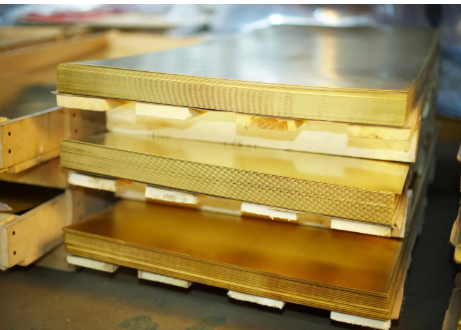
Most industrial brass laser cutting applications use CZ108. As outlined in our brass service overview, CZ108 typically contains around 63% copper and 37% zinc, offering strong corrosion resistance alongside excellent hot and cold working properties.
For manufacturers and procurement teams, that matters for three key reasons: predictable forming performance after cutting, consistent electrical and thermal conductivity, and reliable structural integrity in service.
Laser cutting CZ108 brass sheet also allows intricate geometries to be produced without the mechanical stresses associated with punching or stamping. This is particularly valuable for precision components used in electrical connectors and terminals, heat exchangers and radiator parts, locking systems and architectural hardware, and decorative-but-functional engineering assemblies.
Where tolerances are tight and repeatability is critical, fibre laser cutting provides a clear advantage.
Thickness capability and production flexibility
A common concern for production teams is whether brass laser cutting can handle different thicknesses without long lead times or inconsistent quality.
Central Laser Services cuts brass from 1 mm to 6 mm as standard, with additional options subject to availability. This range supports both lightweight electrical parts and more robust structural components.
Our 8 kW fibre laser machines operate for extended production hours and deliver consistent edge quality across batches. Components up to 2,980 mm x 1,480 mm can be processed, supporting efficient nesting and reduced material waste.
For businesses focused on controlling margins, this translates into improved material utilisation, reduced secondary finishing and a lower overall cost per part.
We cut flat 2D profiles directly from customer-supplied CAD files. The process is kept simple and focused: precision laser profiling, delivered on time and to specification.
Managing quality, heat and edge finish
Another common concern is the heat-affected zone and edge quality. Brass conducts heat efficiently, which can affect cut stability if parameters aren’t optimised.
Modern fibre laser systems with refined power control and effective assist-gas management help minimise thermal distortion, producing clean, sharp edges with minimal dross, stable dimensional accuracy and reduced post-processing.
For sectors such as electronics and defence, where brass parts must fit seamlessly into larger assemblies, that consistency is essential.
Our approach is straightforward: we optimise cutting parameters for each thickness and application. No guesswork, no unnecessary handling — just controlled, repeatable results.
Solving lead time and reliability issues
Many businesses don’t switch laser suppliers because of price. They switch because of reliability.
Missed deadlines disrupt production schedules. Poor communication increases internal workload. Inconsistent quality leads to rework and increases risk.
Central Laser Services has operated since 2003 with a simple standard: on time, on budget and on specification. For decision-makers, that reduces risk across production continuity, customer delivery commitments and internal cost control.
With fast quoting, consistent turnaround and self-monitoring laser systems that reduce non-productive downtime, projects move efficiently from CAD to finished profile. Brass laser cutting becomes a controlled process rather than a procurement concern.
When laser cutting is the right choice for brass
Laser cutting brass sheet isn’t only about complex shapes. In many cases, it’s about flexibility and responsiveness.
Compared with punching or tool-based methods, laser cutting offers no tooling costs, faster design iteration, economical short runs and efficient repeat production. For businesses managing fluctuating demand, that flexibility supports leaner operations.
Whether you need prototypes or repeat production, fibre laser cutting can deliver the consistency required for industrial use.
If you need reliable brass laser cutting with consistent quality and realistic lead times, speak to our technical team. Send your 2D CAD files for review and receive a clear, same-day quotation — no unnecessary process and no inflated promises, just accurate, trade-focused laser profiling delivered to specification.
For more information on Brass Laser Cutting for Industry: Overcoming Common Manufacturing Challenges talk to Central Laser Services