 Get Listed


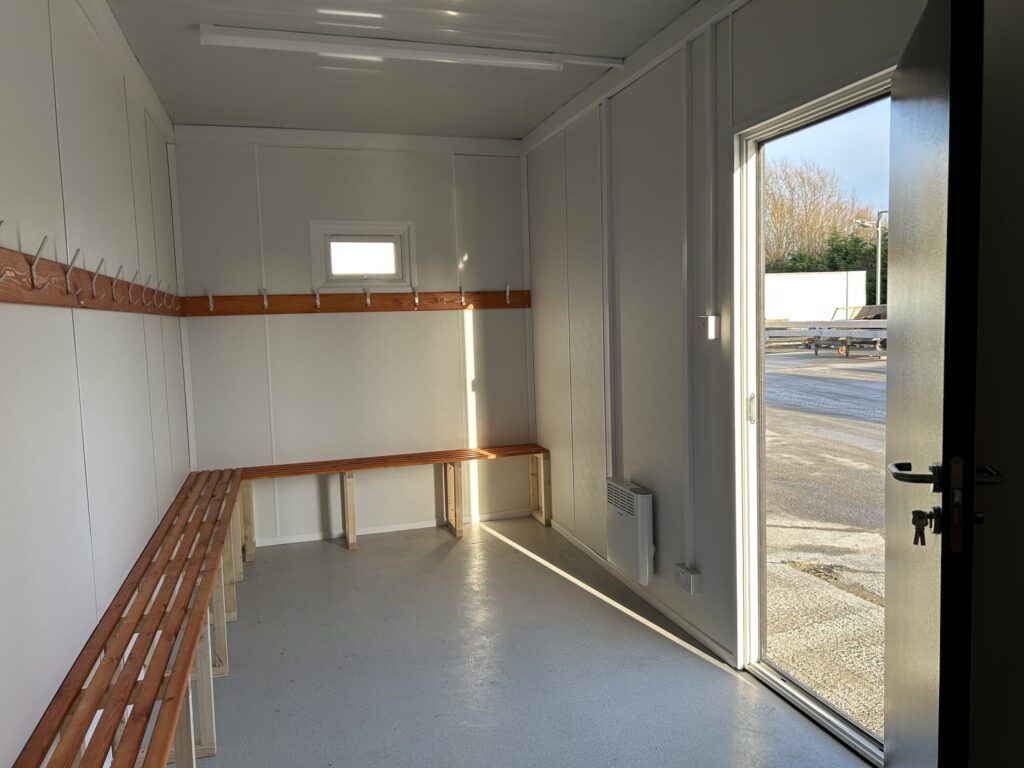
Changing rooms are a vital amenity for many businesses but often for diametrically opposed reasons.
For some industrial purposes, portable changing rooms built into high-quality cabins are absolutely essential to ensure that heavy-duty work can be undertaken as safely and comfortably as possible.
From truck stop amenities to construction site showers, changing rooms are versatile, multipurpose and indispensable, but the development of the trend for more dedicated and appropriate changing facilities comes from a rather more bourgeois industry.
Public Cabinets And Boudoirs
There was a slowly developing tradition of private changing spaces that gradually trickled down from royalty to the upper class, with the development of privacy screens and dedicated rooms for changing.
Privacy was an evolving concept that solidified into a more universal need in the last three centuries.
By the 19th century, this need had gestated into two specific kinds of dressing rooms adjacent to the bed-chambers; there were cabinets for men and boudoirs for women.
Both had evolved from being an adjacent room to the bed-chambers to somewhat more elaborate dressing rooms complete with everything required from increasingly elaborate morning rituals.
They were places that were simultaneously very private and very public, with many people rich enough to have a dressing room often using it to entertain and impress guests, providing an atmosphere of both personal comfort and distant opulence.
The Bathing Machine
Arguably the first ever portable areas designed for changing were bathing machines in the 18th century, although they are most commonly associated with Victorian seaside holidays in the 19th century.
Despite being called a “machine”, it is more of a wooden wheeled cart that was rolled out to sea to allow women (and occasionally men) to change their clothes in privacy, put on a bathing suit and enter the water.
Some of them even had curtains or privacy screens to ensure that the person was not seen until they were completely submerged, which was a necessity during an era where modesty was prioritised as a virtue.
Eventually, once they were done, there was even a little flag to raise that would indicate to the staff that they wanted to leave.
Bathing machines would remain popular until the rise of mixed-sex bathing starting in the late 19th century, and would largely be replaced by beach huts and more modern changing rooms.
However, the influence of the bathing machine can still be seen in modern portable changing facilities, and there are some travelling portable changing areas and hotels on wheels that adopt the exact same principle.
Fashion And The Changing Room
The dressing room became the template with the simultaneous rise of the department store in the 19th ceremony, which was a development that itself was precipitated by a change in how people purchased clothes.
Historically, clothes were either tailor-made or adjusted on demand, often at exorbitant cost, but the rise of ready-to-wear clothing that could be bought, adjusted and worn the same day revolutionised not only the shape of fashion but the shape of the high street.
Department stores would enable not only the landed gentry but eventually everyone to buy clothes in towns and cities.
This meant that there needed to be a private area within a public space where clothing could be tried on ahead of time, and this would invariably lead to the development of partitioned fitting rooms.
Exactly when they were introduced to department stores is not exactly known, but it was at some point between the launch of the first major ready-to-wear ranges in 1868 and the release of the 1883 Emile Zola novel Au Bonheur des Dames, which references them extensively.
They were referenced in that novel as a relatively common part of department stores, and they were initially only available to women, although that would change by the start of the 20th century.
Why Are Changing Rooms So Important Now?
Whilst they have extremely luxurious origins, changing rooms are a vital necessity for almost every business, and both temporary and permanent dressing facilities are available in the vast majority of workplaces.
In some industries, it is a legal requirement, given the need to put on PPE and have access to showers to wash away potential contaminants, whilst in other cases it is a matter of comfort and convenience.
It is seen even more commonly today as many offices provide changing facilities to encourage walking and cycling commuters by giving them a place to freshen up ready for a full day of work.
Whether by necessity or by choice, there are modular changing facilities available to suit every need.
For more information on When Did Changing Rooms First Become Vital For Businesses? talk to Cabinlocator Ltd