 Get Listed

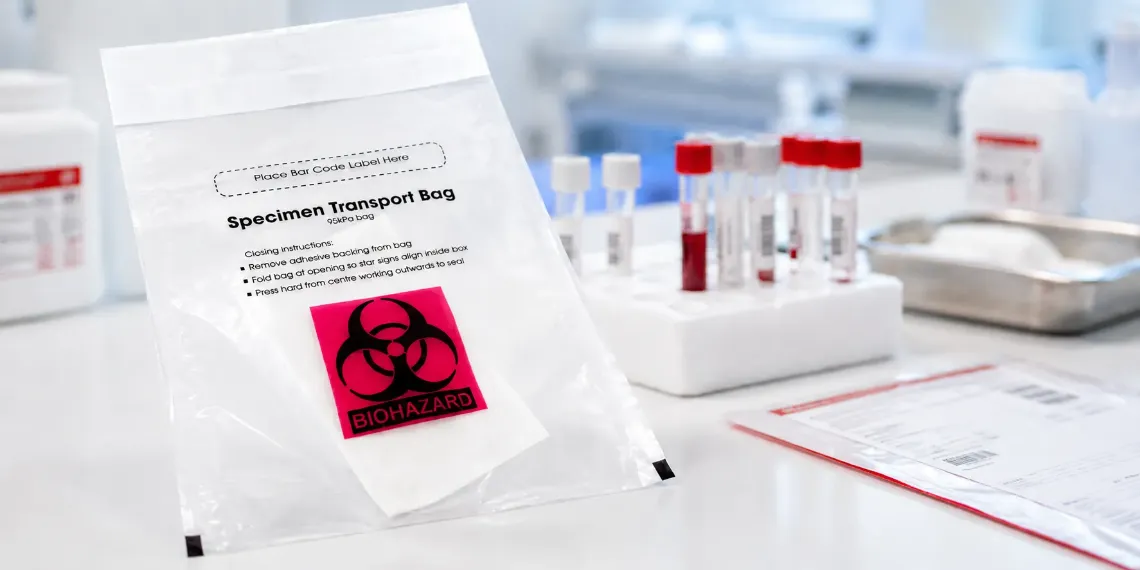
When medical, clinical or laboratory samples need to be transported, the packaging system is important.
For many biological samples, the correct approach is not simply to choose a specimen bag or carrier on its own. It is also important to understand how each packaging layer works within the UN3373 Category B and P650 / PI650 packaging framework.
This guide explains the principle of UN3373 triple packaging, where 95kPa specimen bags fit, when absorbent pads are required, and how insulated medical carriers can be used as the outer packaging layer when temperature-controlled transport is needed.
Article overview
This guide is intended as a practical overview of UN3373 triple packaging. It does not replace official transport guidance.
The sender remains responsible for classifying the substance, selecting the correct packaging system and checking the latest ADR, IATA and carrier requirements.
UN3373 packaging at a glance
A UN3373 packaging system is based on several layers, each with a specific role.
The primary receptacle holds the sample directly. This may be a tube, vial, swab container or sample pot.
The secondary packaging provides leakproof or siftproof containment around the primary receptacle. This may be a 95kPa specimen bag, UN3373 specimen transport bag or sample pouch.
Absorbent material is used to absorb liquid if the primary receptacle leaks. This may be an absorbent pad or absorbent sheet.
The outer packaging protects the consignment during handling and transport. This may be a box, case, mailer or insulated medical carrier.
The basic triple packaging principle
A UN3373 Category B packaging system is designed around three protective layers: the primary receptacle, secondary packaging and outer packaging.
For liquid samples, absorbent material is also used between the primary receptacle and the secondary packaging.
Each layer has a different purpose. The primary receptacle contains the specimen. The secondary packaging contains the primary receptacle and provides a further protective layer. The outer packaging protects the completed package during handling, movement and transport.
For buyers, the key point is simple: a specimen bag is not usually the complete packaging system on its own. It is one important component within a wider UN3373 / P650 packaging approach.
What is UN3373 packaging?
UN3373 is the transport classification used for Biological Substance, Category B.
In healthcare and laboratory settings, this can include many routine diagnostic and clinical samples being transported between hospitals, clinics, laboratories, testing facilities and collection points.
Common sample types include blood samples, swab samples, urine samples, stool samples and other biological specimens.
These may be used in clinic-to-laboratory routes, hospital testing, pathology, diagnostic or screening programmes, workplace testing, veterinary settings, medical applications or research environments.
Not every biological sample is automatically treated in the same way. Classification remains the responsibility of the consignor, and official guidance should always be checked.
What does P650 require in practice?
P650 is the packing instruction associated with UN3373 Biological Substance, Category B.
For road transport, this is commonly discussed under ADR Packing Instruction P650. For air transport, IATA Packing Instruction 650 / PI650 is relevant.
Although the detail depends on the transport mode, carrier and current regulations, the practical principle is that the sample should be protected by a complete layered packaging system.
For liquid biological substances
For liquid biological substances, the primary receptacle must be leakproof.
The secondary packaging, such as the specimen bag or pouch, must also be leakproof.
Absorbent material should be placed between the primary and secondary packaging, and the absorbency level should be sufficient for the liquid contents being transported.
Where multiple fragile primary receptacles are used, they should be separated or wrapped to prevent contact.
For liquid substances under P650, either the primary receptacle or secondary packaging must be capable of withstanding 95 kPa without leakage.
Why 95kPa matters
For liquid substances under P650, either the primary receptacle or the secondary packaging must be able to withstand an internal pressure of 95 kPa without leakage.
This is why 95kPa specimen bags are commonly selected as the secondary packaging layer for UN3373 sample transport.
For solid biological substances
For solid samples, the primary receptacle and secondary packaging should generally be siftproof rather than leakproof.
However, if there is any possibility of residual liquid, buyers should consider packaging suitable for liquids, including absorbent material.
Primary receptacles: the sample container
The primary receptacle is the first layer of the packaging system. This is the container that directly holds the specimen.
Examples include blood tubes, sample vials, swab tubes, stool sample containers, urine sample pots and other diagnostic sample containers.
Universeal does not supply primary receptacles, but they are important because the performance of the overall packaging system starts here.
The primary container should be appropriate for the sample type, properly closed and suitable for the conditions of transport.
Where multiple fragile primary receptacles are placed inside one secondary package, they should be wrapped or separated so they cannot knock together, break, puncture the bag or leak during normal handling.
Secondary packaging: where 95kPa specimen bags fit
The secondary packaging is the layer around the primary receptacle.
In many healthcare, pathology and laboratory sample transport systems, this is a leakproof specimen transport bag or pouch.
A 95kPa specimen bag provides a clear secondary packaging option within the wider UN3373 / P650 system.
It is commonly used for medical, clinical, pathology and laboratory sample transport, particularly where liquid samples are involved.
Secondary packaging can help provide additional containment if a primary receptacle leaks, reduce exposure risk during handling and transport, and keep samples contained and identifiable during movement.
It also allows buyers to select ADR or IATA bag options depending on the transport route, while supporting regular clinic-to-laboratory, hospital-to-laboratory and courier collection workflows.
Universeal supplies 95kPa ADR specimen bags for road transport and 95kPa IATA specimen bags for air transport for use within UN3373 Category B sample transport workflows.
Standard biohazard and urgent sample bags
Not every specimen transport workflow requires the same type of secondary bag.
Alongside 95kPa specimen transport bags, some healthcare and laboratory teams also use standard biohazard specimen bags with document pouches or urgent sample specimen bags for routine handling, document separation and visual identification.
These bags can be useful for internal hospital workflows, routine pathology handling, separating paperwork from the sample compartment, identifying urgent samples and supporting specimen handling where the required containment performance is provided elsewhere in the packaging system.
Standard specimen bags vs 95kPa bags
Standard biohazard specimen bags and urgent sample bags are useful for routine sample handling, document separation and visual identification, but they should not be treated as a direct substitute for 95kPa specimen transport bags.
For liquid substances under P650, either the primary receptacle or the secondary packaging must be capable of withstanding 95 kPa without leakage.
A non-95kPa specimen bag may be appropriate where the primary receptacle provides the required 95 kPa performance, or where the sample has been assessed as an exempt human or animal specimen and is packaged according to the applicable exempt specimen requirements.
If the sample is classified as UN3373 Biological Substance, Category B and the primary receptacle does not provide the required 95 kPa performance, a 95kPa specimen transport bag should normally be selected as the secondary packaging layer.
ADR road transport bags vs IATA air transport bags
A key buying decision is the transport route.
A sample moved by road may have different requirements from a sample that may be moved by air.
ADR road transport typically applies to clinic-to-laboratory, hospital-to-laboratory, courier round and regional healthcare logistics routes. Buyers should choose suitable road transport specimen bags and check ADR / P650 requirements.
IATA air transport may apply to samples that could move by air, international routes or air-courier networks. Buyers should choose suitable IATA / PI650 specimen bags and check carrier requirements.
For mixed or uncertain routes, buyers should check with the carrier before dispatch and should not assume road packaging is suitable for air transport.
As a practical rule, buyers should avoid assuming that a road transport specimen bag is automatically suitable for air transport. If samples may travel by air, it is sensible to choose an appropriate IATA specimen transport bag and confirm the latest requirements with the carrier.
Absorbent pads: a small component with an important role
Absorbent material is an important part of UN3373 packaging for liquid samples.
It is placed between the primary receptacle and secondary packaging so that, if a tube, vial or container leaks, the liquid can be absorbed before it affects the rest of the package.
This is especially relevant for blood samples, urine samples, swabs with transport medium, liquid diagnostic specimens and multiple sample tubes placed into one specimen transport bag.
When choosing absorbent material, buyers should consider how much liquid is in each primary receptacle, whether multiple receptacles are being packed together, whether the sample route is routine or higher-risk, and whether the absorbent pad is supplied separately or pre-packed.
Absorbency should match the sample volume
Absorbent material should be sufficient for the liquid contents being transported.
Universeal can supply absorbent pads in different absorbency levels, including a standard 50ml option, but buyers should always match absorbency to the sample volume and packaging configuration.
Outer packaging: insulated medical carriers for temperature-controlled transport
The outer packaging layer provides external protection for the consignment during handling and transport.
Depending on the route, this may be a box, case, mailer or reusable carrier.
For medical samples that need to be moved under temperature-controlled conditions, an insulated medical carrier can provide a practical outer packaging option.
It helps protect samples during collection, handling and onward transport while supporting temperature-controlled medical logistics workflows.
Insulated carriers may be useful for clinic-to-laboratory transport, hospital-to-laboratory routes, pathology collection rounds, diagnostic sample movement, temperature-sensitive samples and reusable healthcare logistics.
Temperature-controlled transport
An insulated medical carrier can provide a practical outer packaging option where samples need protection during handling and temperature-controlled transport.
It should be used as part of a wider packaging system that includes suitable primary receptacles, secondary packaging and absorbent material where required.
An insulated medical carrier should not be treated as a substitute for correct primary and secondary containment. Instead, it forms the outer transport layer around the primary receptacle, secondary packaging and absorbent material.
For air transport, buyers should also check the specific IATA and carrier requirements for the outer packaging, including rigidity and marking requirements.
For road-based healthcare logistics, an insulated carrier can be a practical solution where temperature control, repeated handling and route efficiency are important.
Universeal supplies SecureLab Chill insulated medical carriers for temperature-controlled medical sample transport.
How the components work together
The correct packaging system should be considered as a complete process.
First, the sample is sealed inside a suitable primary receptacle, such as a tube, vial, pot or swab container.
The primary receptacle is then placed into secondary packaging, such as a 95kPa specimen bag or UN3373 transport bag.
Absorbent material is added where liquids are being transported.
The secondary package is then placed into outer packaging, such as an insulated medical carrier, case, box or other suitable outer packaging.
Before dispatch, route and marking requirements should be checked against ADR, IATA, carrier and UN3373 requirements.
This layered approach is the reason buyers should avoid choosing products in isolation. The correct secondary bag is important, but it still needs to be used with the right primary receptacle, absorbent material and outer packaging.
Common buying mistakes
One common mistake is assuming that a specimen bag is the complete system. A bag is usually only the secondary packaging layer, so buyers should think in terms of primary, secondary, absorbent and outer packaging.
Another mistake is choosing road packaging for air transport. Air transport may involve IATA / PI650 requirements, so the route and carrier should be checked before selecting bags.
Forgetting absorbent material is another common issue. Liquid samples require absorbent material between layers, and absorbent capacity should be matched to the sample volume.
Buyers should also avoid using a standard bag where 95kPa secondary packaging is required. Standard biohazard or urgent pathology bags may not provide 95kPa performance.
Temperature control should not be treated as a separate consideration. Temperature-sensitive samples need suitable outer transport planning, and insulated medical carriers may be appropriate.
Finally, the completed package should always be checked. P650 applies to the packaging system, not just individual components.
A better buying question
For many healthcare and laboratory buyers, the question is not simply: which UN3373 bag do I need?
A better question is: which combination of primary receptacle, secondary packaging, absorbent material and outer packaging is suitable for this sample and this route?
Official guidance and buyer responsibility
This guide is intended to help buyers understand the role of different packaging components within a UN3373 Category B sample transport system.
For full and current requirements, buyers should refer to official guidance and transport regulations, including GOV.UK guidance for road transport of UN3373 patient samples, ADR Packing Instruction P650, IATA Packing Instruction 650 / PI650 for air transport, and any carrier-specific guidance from the courier, airline or logistics provider being used.
Classification and final packaging selection remain the responsibility of the consignor.
Carrier requirements should also be checked before dispatch, especially where samples may travel by air or form part of a wider healthcare logistics network.
UN3373 specimen bags and medical sample transport products
Universeal supplies a range of products for medical, clinical and laboratory sample transport workflows.
These include 95kPa ADR specimen bags for road transport applications, 95kPa IATA specimen bags for air transport applications, standard biohazard specimen bags for routine sample handling and document separation, urgent sample specimen bags for priority sample identification, absorbent pads for liquid containment support, and insulated medical carriers for temperature-controlled sample movement.
Need help choosing suitable components?
View the Universeal UN3373 packaging range or contact the team for help choosing suitable specimen transport bags, absorbent pads and insulated medical carriers for your sample transport route.
Frequently asked questions
What is a 95kPa specimen bag?
A 95kPa specimen bag is a secondary packaging bag or pouch designed to withstand an internal pressure of 95 kPa without leakage.
These bags are commonly used as the secondary packaging layer within UN3373 Category B sample transport systems, particularly where liquid samples are involved.
Do UN3373 samples always need 95kPa bags?
Not always.
For liquid substances under P650, either the primary receptacle or the secondary packaging must be capable of withstanding 95 kPa without leakage.
If the primary receptacle already meets this requirement, a 95kPa bag may not be the only possible route.
In practice, many buyers choose 95kPa specimen transport bags because they provide a clear secondary packaging option within the wider system.
Are standard biohazard bags suitable for UN3373 samples?
Standard biohazard specimen bags can be useful for routine sample handling, document separation and visual identification.
However, they should not be treated as a direct substitute for 95kPa specimen transport bags where 95kPa secondary packaging is required.
They may be appropriate where the required pressure performance is provided by the primary receptacle, or where the sample has been assessed as an exempt specimen and packaged accordingly.
Are urgent sample bags 95kPa bags?
Urgent sample bags are typically used for priority sample identification and routine specimen handling workflows.
Unless they are specifically tested and supplied as 95kPa secondary packaging, they should not be assumed to provide 95kPa performance.
Buyers should check the sample classification, primary receptacle performance and transport route before selecting the appropriate bag.
Are specimen transport bags the same as secondary packaging?
In many UN3373 packaging systems, yes.
A specimen transport bag or pouch is commonly used as the secondary packaging layer around the primary receptacle.
However, it is only one part of the full packaging system.
Do I need absorbent pads with UN3373 specimen bags?
For liquid samples, absorbent material is required between the primary receptacle and the secondary packaging.
The absorbent material should be sufficient to absorb the contents of the primary receptacle or receptacles being transported.
What is the difference between ADR and IATA specimen transport bags?
ADR relates to road transport, while IATA relates to air transport.
If samples may be transported by air, buyers should check whether IATA PI650 applies and choose suitable air transport specimen bags.
Can an insulated medical carrier be used as outer packaging?
An insulated medical carrier can provide a practical outer packaging option where medical samples need protection during handling and temperature-controlled transport.
It should be used as part of a complete packaging system that also includes suitable primary receptacles, secondary packaging and absorbent material where required.
For air transport, buyers should also check IATA and carrier requirements for the outer packaging.
What packaging is needed for Biological Substance, Category B?
Biological Substance, Category B shipments under UN3373 are generally based on a triple packaging system: primary receptacle, secondary packaging and outer packaging.
For liquid samples, absorbent material is also used between the primary receptacle and secondary packaging.
For more information on UN3373 Explained: Triple Packaging, 95kPa Specimen Bags & Medical Sample Transport talk to Universeal (UK) Ltd