 Get Listed

Security Bags: Types, Uses & How to Choose
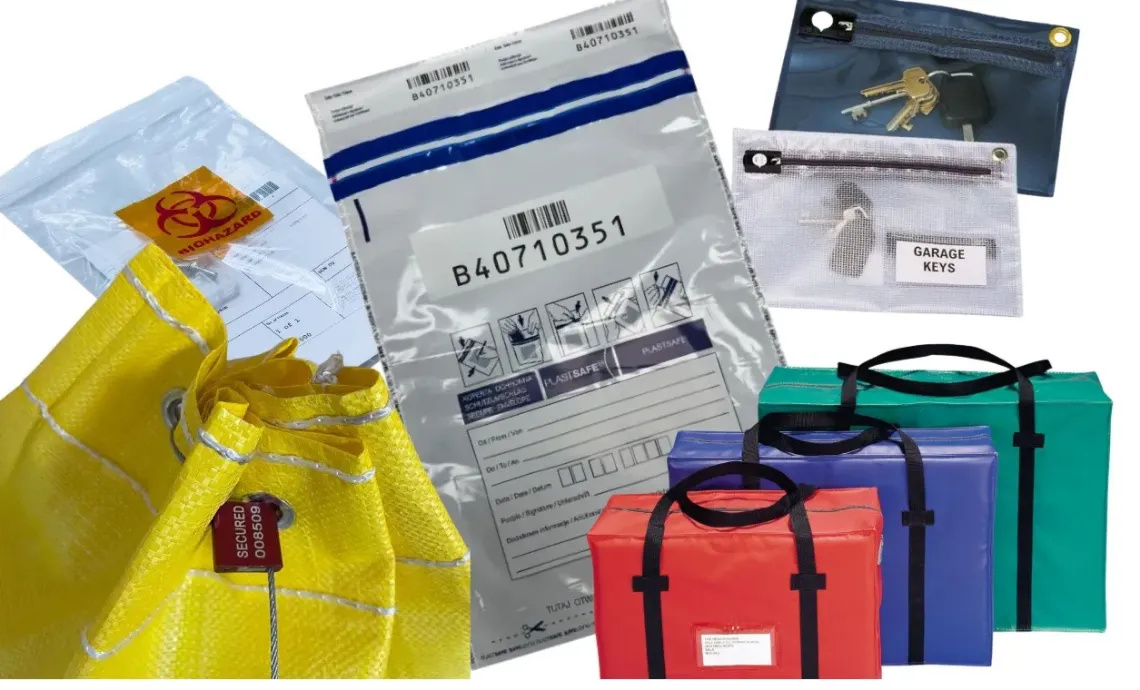
Security bags are used to transport or store sensitive items with clear, visible tamper evidence. They are designed to make interference obvious during handling and transit, supporting reconciliation, audit trails and chain-of-custody procedures where needed. You’ll see them used for confidential documents, cash handling, evidence processes and healthcare logistics. This guide outlines the main types of security bags, typical applications, and what to specify when it comes to security and traceability features.
Browse the full range here: security bags
What are security bags?
“Security bags” is a broad term covering several formats, including single-use envelopes and mailers, reusable PVC pouches and higher-capacity security sacks. The right choice depends on whether the movement is one-way or closed-loop, the size and weight of the contents, and the level of identification and control required by your process.
Quick selector: which security bag do you need?
Most decisions come down to three factors: what you are moving, whether the journey is one-way or closed-loop, and how much traceability you need.
Single-use security envelopes and tamper-evident mailers are generally chosen for post, courier and external transfers. Reusable security pouches are typically used for repeat routes and internal logistics, secured each trip with a disposable tamper-evident seal. For higher-capacity or bulk movements, security sacks are often the better fit.
Some workflows need specialist formats. Evidence handling may require additional identification and strict handover control. Diagnostic samples transported as Category B use UN3373 packaging in a defined pack format. For airport and duty free liquids, STEB bags use ICAO-style markings and origin coding to support transfer checks.
Single-use: tamper-evident bags
Reusable: reusable security bags
Types of security bags and when to use them
Single-use security envelopes and tamper-evident mailers
Single-use security envelopes, sometimes called deposit envelopes or tamper-evident mailers, are designed for one-way movements such as post, courier and external transfers. They are commonly used for confidential documents, cash deposits, key handling, small valuables and secure despatch where the recipient needs clear evidence of opening.
They are typically available in clear film or opaque white, depending on whether the contents should be visible once sealed.
Single-use tamper-evident bags are often specified where you need obvious evidence of opening and straightforward traceability, particularly when items are leaving your organisation’s control. Depending on the product, features may include Level 1 or Level 4 security closures, reinforced side welds with microprint, sequential numbering, barcode IDs and tear-off receipt formats to support handover records.
STEB bags (duty free security bags)
STEB bags (Security Tamper-Evident Bags) are specialist tamper-evident bags used in airports and duty free retail to package liquids and other goods for onward travel. ICAO-style STEB bags use recognisable red/green markings with origin coding, such as the State or airline code and manufacturer identifier, to support transfer checks and screening controls.
View options here: STEB bags (duty free security bags)
Reusable security pouches and carriers (PVC)
Reusable PVC security pouches and carriers are designed for repeat use in closed-loop processes such as internal logistics, controlled distribution and regular collections or deliveries. They are normally secured each trip using a disposable tamper-evident seal, supporting route control and repeat handling without sacrificing visibility of interference.
Security sacks (higher capacity / heavier duty)
Security sacks are used when capacity and durability matter most, for example bulk movements, consolidations or higher-volume routes. They are commonly secured using a tamper-evident seal through eyelets or locking points and can support identification and route control in the same way as other security bag formats.
Evidence and chain-of-custody formats
Evidence processes tend to prioritise identification and repeatable handover procedures. Bags may include write-on panels, unique IDs (numbering and barcodes) and closures designed to make opening clearly visible. The best option depends on your workflow, including how items are logged, stored and transferred between responsible parties.
Start by browsing by type: security bags
Common applications
Confidential documents and secure mail
For secure post, courier and internal transfers of documents, single-use security envelopes and mailers are the most common option. Choose a size that suits the contents and consider unique IDs if you need an audit trail or proof of despatch and receipt.
Cash handling and valuables
For one-way deposits and external transfers, single-use deposit envelopes and tamper-evident mailers are widely used. For repeat routes and closed-loop movements, reusable PVC pouches are often chosen for durability and route control. Numbering, barcodes and receipt features can support reconciliation at every handover point.
Evidence handling
Evidence workflows usually require consistent identification and logging. Bags may be specified with write-on areas, unique IDs and tamper-evident closures that show clear signs of opening. If chain-of-custody is essential, your bag specification should match your handover and recording steps.
Healthcare logistics and diagnostic samples
Healthcare requirements vary depending on what is being moved. For secure transfer of documents, personal property or non-regulated items, standard tamper-evident formats may be suitable.
For diagnostic samples transported as Category B biological substances, UN3373 packaging follows a defined pack format and typically requires leakproof 95kPa bags, absorbent material and compliant outer packaging.
View UN3373 components here: UN3373 Category B (P650) secondary packaging
Single-use vs reusable: how to choose
A practical starting point is the journey type.
One-way or external transfer usually means single-use security envelopes or tamper-evident mailers.
Closed-loop or repeat routes usually mean reusable PVC pouches or sacks, secured each trip with a disposable tamper-evident seal.
Once you have that decision, refine it by considering what you are carrying, how many handovers occur, whether you need a receipt, and whether you need scanning or ID checks at multiple points. For duty free liquids and airport transfers, use ICAO-style STEB bags with the required markings and origin coding.
Tamper evidence and traceability: what to specify
Security bags are designed to provide clear evidence of interference. They work best when paired with good process controls, such as counts, handover records and tracked services where appropriate.
When specifying a bag, consider:
-
closure type, such as Level 1 or Level 4 tamper-evident closures, or numbered seals for reusable formats
-
unique identification, including sequential numbering and barcode formats
-
handover support, such as tear-off receipts or write-on panels
-
format and capacity, including flat versus gusseted designs, and envelope versus pouch versus sack formats
-
material requirements, including recycled content targets or reusable closed-loop objectives
Where to buy security bags online
When buying online, focus on the format that matches your workflow and the level of traceability you need. For many buyers, the key decision is whether standard stock sizes are sufficient or whether controlled distribution needs bespoke print and tighter identification formats.
For more information on Security Bags: Types, Uses & How to Choose talk to Universeal (UK) Ltd