 Get Listed


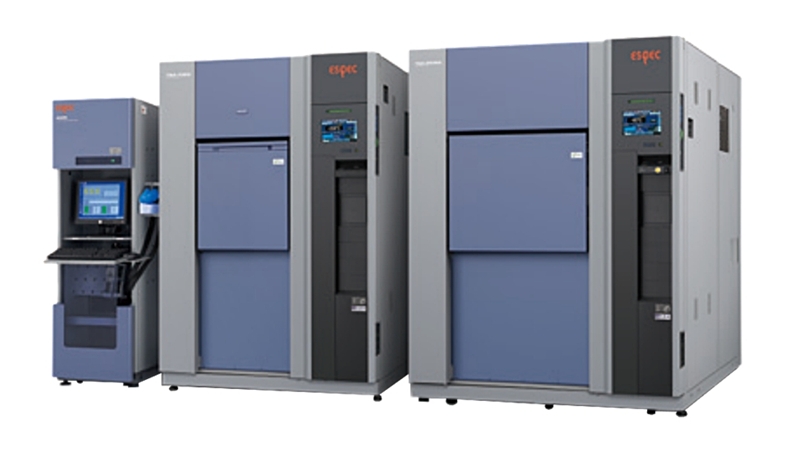
In semiconductor reliability testing, conductor resistance evaluation, often using systems like Automatic Micro-Resistance systems (AMR Systems), focuses on detecting cracks and changes in connection resistance under various conditions, like temperature cycling, to ensure reliable connections.
Conductor resistance is measured continuously, during temperature cycling, to detect changes in resistance that might indicate crack formation or other issues. Samples are subjected to temperature cycles to simulate real-world conditions and stress the connections, revealing potential weaknesses. Resistance measurement of these connections can help detect weaknesses, prevent failures, and ensure the longevity of devices.
Why Semiconductor Conductor Resistance Matters
The solder joints and connector parts in semiconductor devices are critical in establishing electrical conductivity. As the device undergoes thermal cycling, which is common in real-world applications, the materials experience stress and may develop cracks or other forms of degradation that increase electrical resistance. A rise in resistance can lead to signal loss, overheating, or even complete failure of the component.
Monitoring and evaluating resistance changes over time, particularly in environments with fluctuating temperatures, is therefore essential for determining the reliability of these connections. With more sensitive, high-performance electronics emerging every day, understanding minute changes in resistance has become more critical than ever.
Traditional Resistance Evaluation Methods
Typically, resistance evaluation of solder joints and connectors involves measuring the resistance across the connection points. In a simple setup, a small current is passed through the connection, and the resulting voltage drop is measured to calculate the resistance.
However, as the components become smaller and more complex, so do the challenges associated with measuring resistance. The delicate nature of solder joints—especially in high-performance devices like BGAs and CSPs—means that even small cracks or fatigue could lead to significant electrical resistance issues. Evaluating these connections accurately requires high precision and the ability to detect even the most minute changes in resistance.
Challenges in Resistance Testing
While traditional resistance measurement methods provide valuable data, they often fall short when it comes to the following challenges:
Extreme Conditions: Many semiconductor devices operate in environments with fluctuating temperatures, which can induce stress on the solder joints and connectors. Evaluating resistance under both low and high-temperature thermal cycles is essential to accurately assess the durability of these connections.
Small and Complex Components: As electronic components shrink, the contact points for measuring resistance become increasingly tiny and complex. This calls for specialised tools that can measure extremely small resistance changes.
Data Management: With multiple measurements to track and manage, especially when conducting tests across a range of conditions, it becomes essential to have a systematic approach to data storage, analysis, and reporting.
Efficiency: For manufacturers testing large volumes of components, being able to run evaluations efficiently while maintaining high accuracy is crucial.
How the Espec Solder Joint Evaluation System Solves These Challenges
The Espec AMR System is designed to overcome these challenges by offering advanced features that support high-precision measurement in a thermal cycling environment. Choose from a direct electric current (AMR-UD) or alternating electric current (AMR-UA) system for measuring micro currents applied to the specimen during conductor resistance measurement.
High Precision Measurement Across Temperature Cycles
The system allows continuous measurement of resistance values under both low and high-temperature conditions, mimicking real-world operational environments. This capability is vital for accurately evaluating the durability of solder joints and connector contacts under thermal stress, which can lead to minute resistance changes that signal potential failures.
Wide Measurement Range
The system offers a wide measurement range, enabling it to detect minute resistance changes that might go unnoticed in traditional evaluation setups. This allows for more sensitive testing and accurate detection of cracks or fatigue in the joints.
4-Terminal Measurement Method
A 4-terminal measurement method ensures that the resistance measurement is highly accurate and provides a more reliable reading, which is critical when testing small or complex semiconductor components.
Multi-Channel Evaluations
The system supports multi-channel evaluations, allowing you to test up to 280 channels simultaneously. This capability greatly enhances testing efficiency and accuracy, especially when evaluating large volumes of components.
Easy Integration with Environmental Test Chambers
The Espec system can be connected to environmental test chambers, providing full control over temperature and humidity conditions. This integration allows for continuous monitoring and scheduling, making it easier to manage and track test parameters. Automated alarms are triggered if failures are detected, ensuring quick identification and mitigation of issues.
Seamless Data Management
Data storage and processing are automated and managed through a computer system, making it easy to analyse results using spreadsheet software or other data processing tools. The system also allows for LAN compatibility, enabling remote monitoring and management of testing procedures, improving the overall workflow.
Applications of the Espec Solder Joint Evaluation System
The Espec AMR System is designed for a wide range of applications, including:
- Through-hole conductor evaluation
- Solder-joint contact evaluation (BGA, CSP, etc.)
- Connector contact resistance evaluation
- FPC life evaluation
- Contact resistance evaluation of switches, relays, and connectors
- Lead-free solder joints evaluation
- Evaluating conductive adhesives and anisotropic conductive films
For more information on Understanding Semiconductor Conductor Resistance Evaluation talk to Unitemp Ltd