 Add My Company
Sign In


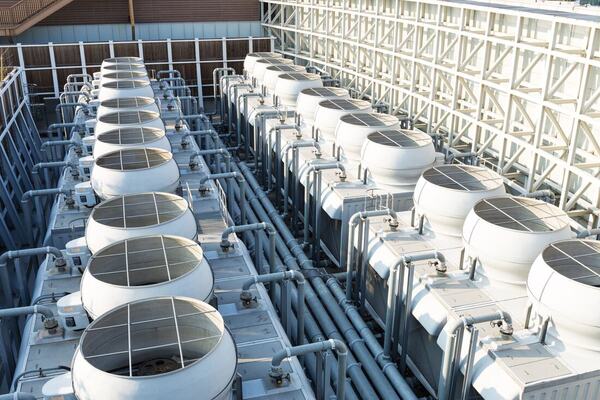
Not sure whether you need a chiller or a cooling tower? While both are crucial for removing heat in commercial and industrial settings, they work in very different ways.
This guide explains how each system operates, its key differences, and when they’re best used, so you can make a more informed decision for your cooling setup.
This guide explains how each system operates, its key differences, and when they’re best used, so you can make a more informed decision for your cooling setup.
Key Takeaways
- Chillers and cooling towers are both used for heat removal, but they function using different technologies and are suited to different types of applications.
- Chillers come in two main types, air-cooled and water-cooled, each designed for different environments and cooling loads.
- Cooling towers are available in several designs, including natural draft, induced draft, and crossflow, all focused on maximising heat rejection from water-cooled systems.
- When used together, chillers and cooling towers can create an energy-efficient solution that reduces running costs and extends the life of your cooling equipment.
Understanding Chillers vs Cooling Towers

Chillers and cooling towers are essential components of efficient cooling systems in both industrial and commercial environments. In many HVAC systems, a cooling tower and chiller are the two systems most often compared and integrated for optimal heat management. While they share the goal of reducing heat, they work in different ways and suit different operational needs.
The cooling process in each system is distinct: chillers use refrigeration cycles to remove heat, while cooling towers rely on evaporative cooling to dissipate heat from water or other fluids. Chillers offer greater flexibility, making them ideal for a wide range of applications. In contrast, cooling towers, often used alongside water-cooled chillers, rely on evaporative cooling methods to achieve efficient temperature control.
By understanding how these systems function (the cooling tower vs chiller comparison is a common decision point in Cooling system design), you can make informed decisions based on your facility’s cooling demands, whether that’s a factory, office block, or data centre.
The cooling process in each system is distinct: chillers use refrigeration cycles to remove heat, while cooling towers rely on evaporative cooling to dissipate heat from water or other fluids. Chillers offer greater flexibility, making them ideal for a wide range of applications. In contrast, cooling towers, often used alongside water-cooled chillers, rely on evaporative cooling methods to achieve efficient temperature control.
By understanding how these systems function (the cooling tower vs chiller comparison is a common decision point in Cooling system design), you can make informed decisions based on your facility’s cooling demands, whether that’s a factory, office block, or data centre.
Types of Chillers
There are two main types of chillers: air-cooled and water-cooled. A chiller unit is the main component responsible for absorbing heat from the coolant material and transferring it out of the system.
An air-cooled chiller absorbs heat from water and transfers it directly into the surrounding air. This makes them ideal for smaller facilities or spaces with moderate cooling needs, such as light industrial sites or commercial buildings. However, air-cooled chillers may fall short in high-heat environments.
That’s where water-cooled chillers shine: they use water to absorb and dissipate heat, offering greater efficiency for large-scale operations like food processing plants or heavy industrial processes. But may well require a Cooling Tower or dry-cooler to finally dissipate the heat. Water cooled chillers are commonly used in these large-scale applications, and evaporator heat exchangers within the chiller system play a key role in removing heat from the coolant material in a closed-loop process. The water cooled chiller takes considerably less space than the equivalent air cooled chiller.
Choosing between them depends on your cooling capacity, budget, and installation space. Air-cooled chillers are simpler to install and cost-effective for smaller jobs, while water-cooled chillers provide the high performance needed in demanding conditions, and industrial chillers are available in both air-cooled and water-cooled designs for different cooling needs.
An air-cooled chiller absorbs heat from water and transfers it directly into the surrounding air. This makes them ideal for smaller facilities or spaces with moderate cooling needs, such as light industrial sites or commercial buildings. However, air-cooled chillers may fall short in high-heat environments.
That’s where water-cooled chillers shine: they use water to absorb and dissipate heat, offering greater efficiency for large-scale operations like food processing plants or heavy industrial processes. But may well require a Cooling Tower or dry-cooler to finally dissipate the heat. Water cooled chillers are commonly used in these large-scale applications, and evaporator heat exchangers within the chiller system play a key role in removing heat from the coolant material in a closed-loop process. The water cooled chiller takes considerably less space than the equivalent air cooled chiller.
Choosing between them depends on your cooling capacity, budget, and installation space. Air-cooled chillers are simpler to install and cost-effective for smaller jobs, while water-cooled chillers provide the high performance needed in demanding conditions, and industrial chillers are available in both air-cooled and water-cooled designs for different cooling needs.
Types of Cooling Towers
There are several cooling tower types available, including portable cooling tower options for modular or compact applications. Each type is designed to meet specific cooling needs in industrial and commercial environments.
Natural draft cooling towers rely on natural convection to circulate air and are typically used in large-scale applications like power stations, where they can manage substantial heat loads without mechanical assistance. Induced draft cooling towers, by contrast, use fans to draw air through the system, improving efficiency and helping to prevent the recirculation of warm air. These are widely used across various industries due to their effectiveness and compact design.
A counterflow tower operates by directing hot water downward through the fill while air flows upward, creating a cooling flow that maximises heat exchange between the water stream and the air. This design is known for its efficient cooling performance.
In a crossflow tower, hot water flows downward through media fill due to gravity, while air blows horizontally across the water, facilitating heat exchange. The remaining water is collected at the bottom of the tower and recirculated for continuous cooling.
Mechanical draft cooling towers, which include both induced and forced draft models, use fans to control airflow, drawing in outside cool air and expelling hot air as part of the cooling process. While these towers offer precise cooling performance, they are associated with higher operating costs due to the energy consumption of large fans and other system components.
Each design offers specific benefits depending on space, heat load, and system design, making it important to choose the right type for your cooling setup. Proper management of cooled water and the water stream is essential for maintaining efficient tower operation.
Natural draft cooling towers rely on natural convection to circulate air and are typically used in large-scale applications like power stations, where they can manage substantial heat loads without mechanical assistance. Induced draft cooling towers, by contrast, use fans to draw air through the system, improving efficiency and helping to prevent the recirculation of warm air. These are widely used across various industries due to their effectiveness and compact design.
A counterflow tower operates by directing hot water downward through the fill while air flows upward, creating a cooling flow that maximises heat exchange between the water stream and the air. This design is known for its efficient cooling performance.
In a crossflow tower, hot water flows downward through media fill due to gravity, while air blows horizontally across the water, facilitating heat exchange. The remaining water is collected at the bottom of the tower and recirculated for continuous cooling.
Mechanical draft cooling towers, which include both induced and forced draft models, use fans to control airflow, drawing in outside cool air and expelling hot air as part of the cooling process. While these towers offer precise cooling performance, they are associated with higher operating costs due to the energy consumption of large fans and other system components.
Each design offers specific benefits depending on space, heat load, and system design, making it important to choose the right type for your cooling setup. Proper management of cooled water and the water stream is essential for maintaining efficient tower operation.
How Chillers Work
Chillers work by removing heat from a liquid via vapour compression or absorption, using a continuous refrigeration cycle. The process begins in the evaporator, where the chiller absorbs heat from the circulating process water. This causes the refrigerant to evaporate. The compressor then increases the refrigerant pressure, pushing it to the condenser unit, where heat is transferred to a heat exchanger.
The heat exchanger then removes heat from the system by transferring it to a cooling medium, either air (in air-cooled chillers) or water (in water-cooled chillers). The refrigerant then returns to the evaporator, and the cycle repeats. In this process, the chiller removes heat from the coolant and rejects heat to the environment, which can result in excess heat or unwanted heat that must be managed to maintain system efficiency.
Key components include the compressor, evaporator, condenser unit, heat exchanger, and expansion device, all of which must operate efficiently for optimal performance. Chillers typically maintain water temperatures around 10°C (50°F), making them well-suited for environments requiring precise temperature control, such as data centres, manufacturing lines, and pharmaceutical production.
Choosing the right chiller type and maintaining the system properly can significantly enhance efficiency and reliability in high-demand applications, while effectively managing excess heat.
The heat exchanger then removes heat from the system by transferring it to a cooling medium, either air (in air-cooled chillers) or water (in water-cooled chillers). The refrigerant then returns to the evaporator, and the cycle repeats. In this process, the chiller removes heat from the coolant and rejects heat to the environment, which can result in excess heat or unwanted heat that must be managed to maintain system efficiency.
Key components include the compressor, evaporator, condenser unit, heat exchanger, and expansion device, all of which must operate efficiently for optimal performance. Chillers typically maintain water temperatures around 10°C (50°F), making them well-suited for environments requiring precise temperature control, such as data centres, manufacturing lines, and pharmaceutical production.
Choosing the right chiller type and maintaining the system properly can significantly enhance efficiency and reliability in high-demand applications, while effectively managing excess heat.
How Cooling Towers Work
Cooling towers act as heat exchangers, removing waste heat from water and releasing it into the atmosphere through evaporation. Warm water is sprayed through nozzles, creating fine droplets that increase surface area for evaporation. At the same time, a fan located at the top of the tower draws air upwards. This airflow accelerates evaporation, helping to lower the water temperature. Maintaining a constant supply of cooling water is crucial for continuous operation, and water pumps play a key role in circulating the cooling water throughout the system to ensure efficient heat removal.
To improve efficiency, most systems include drift eliminators, which capture small water droplets from the outgoing air stream to reduce water loss. Many modern cooling towers also feature automated controls that adjust fan speeds and pump operations based on temperature readings, optimising performance and reducing energy use.
Regular tower maintenance, such as monitoring water quality, using sand filters for water treatment, and inspecting system components, is essential to ensure efficient operation and prolong equipment life. Cooling towers are essential in many industrial applications, providing a reliable, cost-effective method for managing thermal loads and maintaining stable system temperatures.
Cooling towers however are restricted by the ambient temperature and can only cool to water to 3C less than ambient dry bulb temperature. If warm water spray is sued the maximum cooling is reduced to 3C ambient wet bulb temperature.
To improve efficiency, most systems include drift eliminators, which capture small water droplets from the outgoing air stream to reduce water loss. Many modern cooling towers also feature automated controls that adjust fan speeds and pump operations based on temperature readings, optimising performance and reducing energy use.
Regular tower maintenance, such as monitoring water quality, using sand filters for water treatment, and inspecting system components, is essential to ensure efficient operation and prolong equipment life. Cooling towers are essential in many industrial applications, providing a reliable, cost-effective method for managing thermal loads and maintaining stable system temperatures.
Cooling towers however are restricted by the ambient temperature and can only cool to water to 3C less than ambient dry bulb temperature. If warm water spray is sued the maximum cooling is reduced to 3C ambient wet bulb temperature.
Major Components of Chillers vs Cooling Towers

Both chillers and cooling towers have key components that allow them to function efficiently. Chillers rely on mechanical systems to move and manage heat. The main components include the compressor, evaporator, and condenser heat exchangers, all of which work together to absorb heat from process water and release it into a secondary cooling medium such as air or water.
Cooling towers, on the other hand, rely more on water flow and air movement. Key parts include the water distribution system, fill media (which increases surface area for heat exchange), drift eliminators, and fans to promote airflow. The entire system operates based on the principle of evaporative cooling, where heat is removed as some of the circulating water evaporates.
While chillers use refrigerant cycles and mechanical compression to manage cooling, cooling towers depend on water-air interaction and natural evaporation. Understanding these components helps ensure effective maintenance and long-term energy-efficient performance.
Cooling towers, on the other hand, rely more on water flow and air movement. Key parts include the water distribution system, fill media (which increases surface area for heat exchange), drift eliminators, and fans to promote airflow. The entire system operates based on the principle of evaporative cooling, where heat is removed as some of the circulating water evaporates.
While chillers use refrigerant cycles and mechanical compression to manage cooling, cooling towers depend on water-air interaction and natural evaporation. Understanding these components helps ensure effective maintenance and long-term energy-efficient performance.
Energy Efficiency and Environmental Impact
Energy efficiency is a key factor when comparing chillers and cooling towers. Cooling towers can be up to 100 to 1000 times more energy-efficient than air-cooled chillers, especially in large-scale settings. Water-cooled chillers, however, tend to be more efficient than air-cooled alternatives due to the better thermal properties of water. Pairing a water-cooled chiller with a cooling tower can yield significant energy savings and system performance improvements, showcasing how cooling towers enhance overall efficiency .
From an environmental perspective, both systems can help reduce carbon emissions when optimised properly. Cooling towers, in particular, support green building certifications like BREEAM and LEED Platinum by contributing to lower energy usage and improved system efficiency. Monitoring water consumption in cooling towers and chillers is also important, as it helps reduce waste and supports sustainability goals. Regular maintenance and system checks are crucial to keeping environmental impact and running costs as low as possible.
From an environmental perspective, both systems can help reduce carbon emissions when optimised properly. Cooling towers, in particular, support green building certifications like BREEAM and LEED Platinum by contributing to lower energy usage and improved system efficiency. Monitoring water consumption in cooling towers and chillers is also important, as it helps reduce waste and supports sustainability goals. Regular maintenance and system checks are crucial to keeping environmental impact and running costs as low as possible.
Water Conservation
Water use is another important factor. Water-cooled chillers typically operate in a closed-loop system, which allows for water recycling and reduces overall waste. Careful monitoring of water flow, temperature, and quality can help detect leaks, prevent buildup, and support more sustainable operation. With the right water management strategies, facilities can cut waste and make better use of resources without compromising cooling performance.
Applications and Use Cases
Water-cooled chillers are ideal for industries with high cooling demands and where consistent, reliable cooling is essential. They’re commonly found in sectors like pharmaceutical manufacturing, food production, and industrial machining, as well as in data centres and large commercial buildings. Water-cooled chillers are also widely used to cool industrial processes such as water jet cutting and other high-heat applications.
Cooling towers are typically used in power stations, hospitals, server farms, and hotels, anywhere that large volumes of heat need to be removed efficiently. They are also essential components in power plants, thermal power stations, and gas refining plants, where they play a critical role in power generation and heat dissipation. When paired with a water-cooled chiller, a cooling tower can deliver enhanced performance, lower energy use, and longer system lifespan. Both systems offer distinct advantages depending on the specific needs of your facility.
Cooling towers are typically used in power stations, hospitals, server farms, and hotels, anywhere that large volumes of heat need to be removed efficiently. They are also essential components in power plants, thermal power stations, and gas refining plants, where they play a critical role in power generation and heat dissipation. When paired with a water-cooled chiller, a cooling tower can deliver enhanced performance, lower energy use, and longer system lifespan. Both systems offer distinct advantages depending on the specific needs of your facility.
Combining Chillers and Cooling Towers

Integrating chillers and cooling towers is a smart way to boost cooling efficiency in industrial and commercial settings. This combination provides design flexibility, improved heat transfer, and reliable temperature control, especially for high-demand cooling needs.
Typically, water-cooled chillers work hand-in-hand with larger cooling towers. The tower cools the water that condenses the refrigerant in the chiller’s condenser, helping the system operate efficiently even under heavy loads. Thoughtful placement of these units within your facility can reduce energy loss and improve overall performance.
Typically, water-cooled chillers work hand-in-hand with larger cooling towers. The tower cools the water that condenses the refrigerant in the chiller’s condenser, helping the system operate efficiently even under heavy loads. Thoughtful placement of these units within your facility can reduce energy loss and improve overall performance.
Maintenance and Monitoring

Routine maintenance and ongoing monitoring are key to preventing costly breakdowns and keeping your cooling systems running efficiently. Regular upkeep helps reduce energy consumption, extends equipment life, and ensures your cooling remains consistent.
Regular Maintenance Tasks
For optimal operation, maintenance should include:
- Cleaning chiller coils and checking compressor performance
- Reviewing refrigerant levels and expansion valve function
- Lubricating all moving components
- Inspecting and cleaning cooling tower fill media and drift eliminators
- Monitoring water levels, fan operation, and pump function
System Efficiency Monitoring
Keeping a close eye on system performance is essential. Proper water treatment in water-cooled chillers prevents scale build-up that can reduce efficiency. Monitoring energy use and balancing cooling loads can further improve performance and reduce operating costs over time.
Cost Considerations

When choosing between chillers and cooling towers, consider both upfront and running costs:
Although chillers might have higher initial costs, their precise temperature control and flexibility often justify the investment. Cooling towers offer a cost-effective, energy-efficient solution for handling large heat loads over the long term.
- Air-cooled chillers generally cost between £5,000 and £200,000, depending on size and features
- Cooling towers usually require less capital investment and have lower electricity costs over time
- Refurbishing cooling towers can add up to 15 years of life and save significant replacement expenses
Although chillers might have higher initial costs, their precise temperature control and flexibility often justify the investment. Cooling towers offer a cost-effective, energy-efficient solution for handling large heat loads over the long term.
Choosing the Right System for Your Needs

Deciding on the best cooling system depends on your facility’s requirements. Factors to consider include:
- Availability of water and space for equipment
- The scale and precision of cooling needed
- Budget for installation and ongoing costs
- Building layout and infrastructure
Why Work With Refcool?
We’re more than just a supplier, we’re your partner in advanced cooling solutions. With over 20 years of experience, we specialise in designing, installing, and maintaining energy-efficient chillers and free cooling systems tailored to your business needs.
Whether you’re installing a new chiller, upgrading an existing system, or adding free coolers for enhanced performance, we make the process straightforward, transparent, and focused on delivering real value.
We work by three core principles:
Whether you’re installing a new chiller, upgrading an existing system, or adding free coolers for enhanced performance, we make the process straightforward, transparent, and focused on delivering real value.
We work by three core principles:
- Buy the Right Equipment: Not all chillers or cooling systems are the same. We assess your needs carefully and recommend the solution that balances performance, cost, and efficiency, no unnecessary complexity.
- Install It Properly: Even the best equipment can fail if poorly installed. Our expert team ensures your chillers and free coolers are installed, commissioned, and tested to perform optimally from day one.
- Run It Efficiently: Our tailored maintenance packages keep your cooling systems running at peak efficiency all year. We provide scheduled inspections, performance checks, and expert advice to maximise lifespan and minimise downtime.
Summary
Knowing the differences between chillers and cooling towers is crucial for making informed decisions about your cooling setup. Chillers offer precise, flexible cooling, while cooling towers excel at managing large volumes of waste heat efficiently, highlighting their slight differences . Both systems have unique advantages suited to different applications.
By weighing energy efficiency, maintenance, cost, and operational needs, you can select the most appropriate cooling system for your facility. Regular maintenance and monitoring will then keep your equipment performing at its best for many years.
By weighing energy efficiency, maintenance, cost, and operational needs, you can select the most appropriate cooling system for your facility. Regular maintenance and monitoring will then keep your equipment performing at its best for many years.
Frequently Asked Questions
What are the main differences between air-cooled and water-cooled chillers?
The primary difference between air-cooled and water-cooled chillers lies in their heat transfer methods; air-cooled chillers expel heat into the surrounding air, making them ideal for low-heat environments, whereas water-cooled chillers utilise water for more efficient heat transfer, particularly in large-capacity applications. Therefore, the choice between the two depends on the specific cooling requirements and operational context.
How do cooling towers achieve efficient cooling?
Cooling towers achieve efficient cooling through evaporative cooling, where warm water is sprayed to enhance evaporation, while fans draw air upwards to aid in heat removal. This combination maximises heat dissipation and minimises energy consumption.
What are the key maintenance tasks for chillers and cooling towers?
Key maintenance tasks for chillers and cooling towers include cleaning coils and fill media, inspecting drift eliminators, reviewing refrigerant levels, and monitoring compressor performance. Additionally, ensuring proper lubrication and maintaining water levels are crucial for optimal performance.
Why is it beneficial to combine chillers and cooling towers?
Combining chillers and cooling towers improves cooling efficiency and offers a cost-effective solution for large-scale operations. This integration enhances heat transfer and provides design flexibility.
What factors should be considered when choosing a cooling system?
When choosing a cooling system, it is crucial to consider access to water, required cooling capacity, available space, and the building structure. Additionally, consulting with experts can ensure the selection of the most suitable cooling solution for your specific needs.
For more information on Chiller vs Cooling Tower: Key Differences Explained talk to Refcool Refrigeration Ltd
Enquire Now
List your company on FindTheNeedle.