 Get Listed


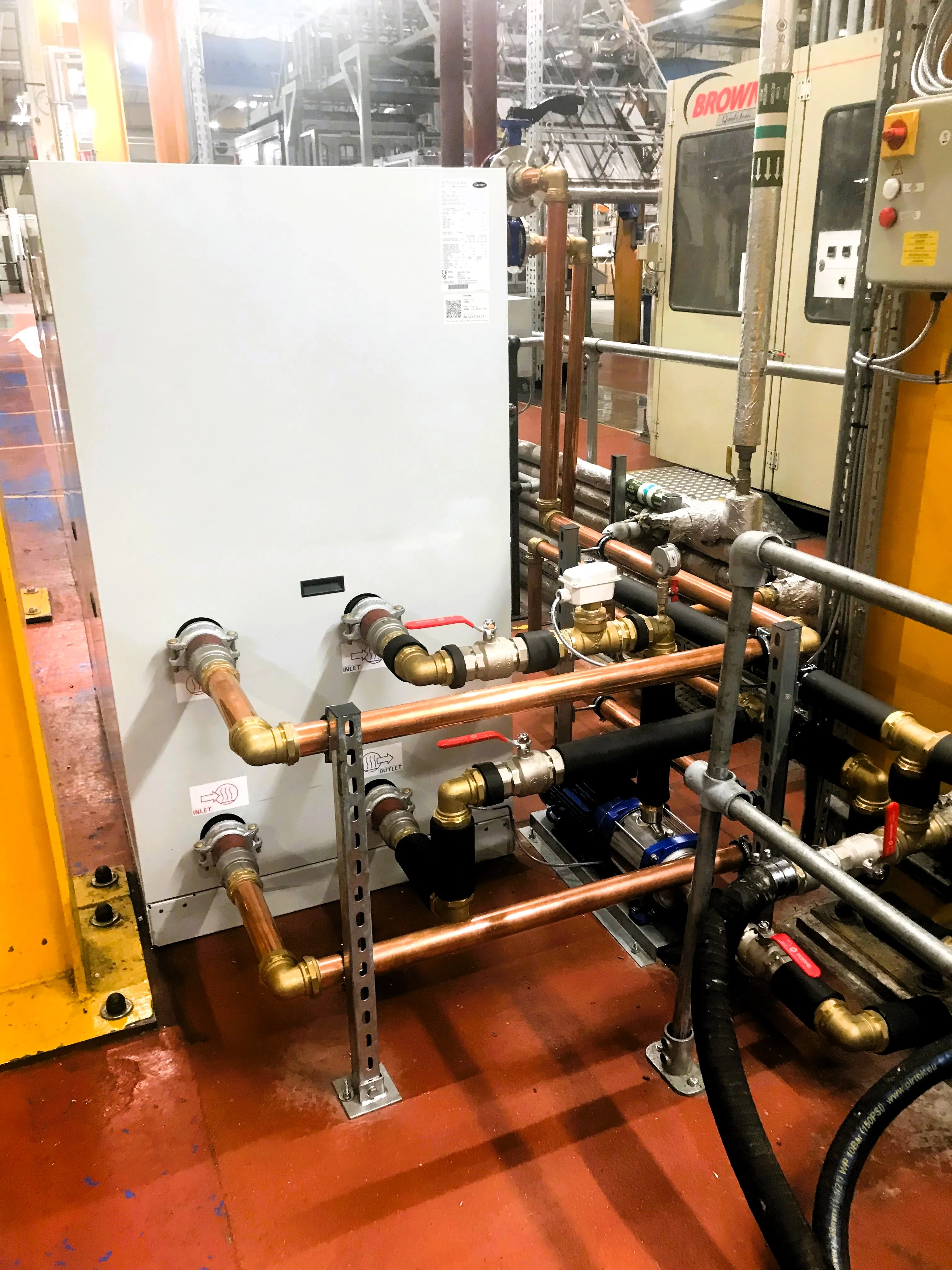
When choosing a cooling system, understanding the types of water-cooled condensers is essential. At Refcool, we design, install, and maintain water-cooled and air-cooled condensers, ensuring efficient heat transfer and reliable operation across a range of industrial and commercial systems.
Water-cooled condensers are found in diverse industries, such as medical manufacturing, food processing, dairy production, and brewing, where maintaining steady temperatures and pressure is critical.
In this article, we’ll explain how different types of condensers work, the difference between water-cooled and air-cooled options, and which design is best for your application, including their use in air conditioner systems.
Understanding Water Cooled Condensers
A water-cooled condenser plays a vital role in the cooling process. It works by transferring heat from the hot refrigerant vapour to the cooling water, allowing the refrigerant to condense as it loses energy to the water. During condensation, the refrigerant undergoes a phase change from vapour to liquid, releasing latent heat, which is absorbed by the water. This ensures stable operation, efficient heat exchange, and reliable cooling performance.
The process begins when hot refrigerant enters the condenser. As it flows through the system, heat is transferred through a surface, such as condenser tubes, plates, or two nested tubes, into the cooling medium. The temperature differential between the refrigerant and water drives this process. The coldest water makes contact with the outer tube, ensuring efficient heat removal and minimising power consumption.
Once the water absorbs the heat, it is sent to a cooling tower or heat exchanger, where it dissipates heat to the environment by releasing the absorbed energy into the ambient air through evaporative cooling. This continuous cycle keeps industrial and commercial systems running efficiently.
Types of Water Cooled Condenser
There are several types of water-cooled condensers, each designed for specific applications and performance requirements. The main types are shell and tube, brazed plate, and coaxial tube-in-tube.
Shell and Tube Condenser
The shell and tube condenser is one of the most common and reliable types of water-cooled condensers. It consists of straight water tubes housed inside a cylindrical shell.
-
Hot refrigerant gas enters the shell and transfers heat to cooling water flowing through the tubes.
-
Baffles inside the shell increase turbulence, improving the heat transfer rate and thermal performance.
-
Once condensation occurs, the newly condensed liquid refrigerant exits the system and continues to the expansion valve.
Shell and tube condensers are widely used in industrial systems and water-cooled chillers because of their durability, efficiency, and ease of maintenance.
Brazed Plate Condenser
A brazed plate condenser uses stacked metal plates, often stainless steel or copper, to achieve high-efficiency heat transfer in a compact design.
-
The cold fluid (cooling water) flows between embossed plates, creating turbulence that boosts the heat transfer coefficient.
-
The design allows efficient heat exchange even with limited space.
-
Ideal for packaged water-cooled chillers and industrial processes that require a small footprint and consistent performance.
Because of their compact size, brazed plate condensers are perfect for high-performance systems where reliable cooling and energy efficiency are priorities.
Coaxial Tube-in-Tube Condenser
A coaxial tube-in-tube condenser uses two nested tubes to maximise efficiency. The refrigerant flows through the inner tube, while cooling water moves in the opposite direction through the outer tube, a counter-flow design that improves the heat transfer rate.
-
The temperature difference across the tubes enhances efficient heat transfer.
-
The design minimises fouling and pressure loss, ideal for water-cooled systems with continuous operation.
-
The result is a compact, durable condenser that delivers reliable cooling in demanding environments.
Comparing Air Cooled and Water Cooled Condensers
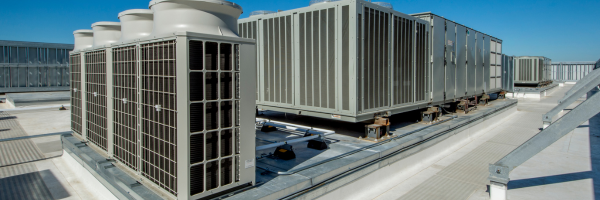
Both air-cooled condensers and water-cooled condensers have advantages depending on the environment and cooling requirements. Some systems also utilise evaporative condensers or cooling towers to enhance heat rejection, especially in large-scale HVAC and industrial applications.
Different condenser types transfer heat with varying efficiency. For example, evaporative condensers combine air and water cooling mechanisms to improve heat transfer performance and reduce water consumption compared to traditional water-cooled systems. Cooling towers, often used in conjunction with water-cooled condensers, play a crucial role in maintaining efficient heat transfer and system reliability.
Air Cooled Condenser
An air-cooled condenser uses ambient air as the cooling medium. Fans blow air over condenser coils, transferring heat away from the refrigerant gas.
-
Lower maintenance and no water usage
-
Simpler installation and fewer components
-
Less efficient in high-temperature conditions due to higher condensing temperature
Water Cooled Condenser
A water-cooled condenser uses cooling water to remove heat. It offers lower condensing temperatures, greater thermal performance, and more consistent heat transfer than air-cooled units. The condenser coil is a key component in this process, facilitating the transfer of heat from the refrigerant to the cooling water. Water-cooled condensers are often paired with cooling towers, which dissipate heat to the external environment by using external water sources. Adjusting motor speed in cooling tower fans or pumps can further optimise energy use and system efficiency.
-
Improved energy efficiency and lower power consumption
-
Better suited for high-load or continuous-use systems
-
Often paired with a cooling tower or evaporative condenser for optimal performance
While air-cooled systems suit smaller installations or limited-water areas, water-cooled systems remain the preferred option for larger industrial and commercial applications.
The Role of Heat Exchangers
A heat exchanger is a key component of any condenser system. It enables heat transfer between two fluids, typically refrigerant vapour and cooling water, without mixing them.
Factors that influence heat exchanger performance include:
-
The temperature differential between the fluids
-
The heat transfer coefficient
-
The quality of water treatment
-
The condition of the tube wall and metal plates
At Refcool, we design condensers and heat exchangers that maintain high efficiency, durability, and compliance with environmental standards.
How Condensers Integrate with Water-Cooled Chillers
In water-cooled chillers, the condenser is part of a closed-loop system. Water-cooled condensers are integral to water chillers, which are widely used in industrial and commercial cooling applications. The condenser removes heat from the refrigerant before sending the cooling water to a cooling tower for rejection.
-
The evaporator, compressor, condenser, and expansion valve work together to control the cooling process in water chillers.
-
The cooling water continuously circulates between the condenser and the cooling tower.
-
The water chiller relies on efficient heat transfer from the condenser to maintain stable operating conditions for industrial processes, air conditioning, and data centres.
Importance of Water Quality and Maintenance
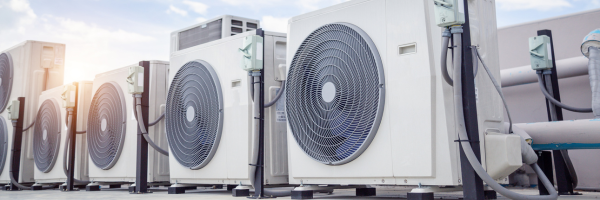
Maintaining water quality is crucial for water-cooled condensers. Poor water quality can cause scaling, corrosion, or biofilm growth, all of which reduce heat transfer efficiency.
Regular water treatment, cleaning, and monitoring of condenser tubes prevent these issues. Investing in water conservation and filtration systems can significantly extend equipment life and enhance thermal performance.
Why Choose Refcool?
At Refcool, we specialise in the design, installation, and maintenance of chillers, heat exchangers, and condensers for industrial and commercial applications. Here’s why businesses across the UK choose us:
-
Complete Cooling Solutions: From water-cooled systems to air-cooled chillers, we deliver end-to-end project management.
-
Expert Engineering: Our systems are designed for maximum heat transfer, optimal power consumption, and energy efficiency.
-
Proven Reliability: We use high-grade materials and advanced condensing medium designs to ensure performance and longevity.
-
Customised Approach: Every system we supply is built around your process, site conditions, and efficiency goals.
-
Maintenance Support: We offer servicing, refurbishment, and emergency support for all cooled condensers and industrial systems.
Our mission is simple: deliver efficient, sustainable, and reliable cooling that keeps your processes running smoothly.
Final Thoughts
Understanding the types of water-cooled condensers, from shell and tube to brazed plate and coaxial tube-in-tube, is essential for choosing the right equipment. Compared with air-cooled designs, water-cooled condensers offer superior heat transfer, lower condensing temperature, and improved thermal performance.
At Refcool, we combine decades of experience with advanced design and manufacturing techniques to ensure every system delivers efficient, long-lasting results. Whether you need a water-cooled chiller, heat exchanger, or complete cooling solution, we’re ready to help.
Frequently Asked Questions
What is a water-cooled condenser?
A water-cooled condenser is a heat exchanger that removes heat from refrigerant vapour by transferring it to cooling water, which then dissipates the heat through a cooling tower or similar system.
What are the main types of water-cooled condensers?
The primary types are shell and tube, brazed plate, and coaxial (tube-in-tube) condensers, each offering different benefits in terms of efficiency, size, and maintenance.
How does a water-cooled condenser differ from an air-cooled condenser?
Water-cooled condensers use water as the cooling medium, providing more efficient heat transfer and lower condensing temperatures, while air-cooled condensers rely on ambient air and typically have higher condensing temperatures.
What factors should I consider when choosing a condenser type?
Key considerations include water availability and quality, ambient conditions, space constraints, thermal load requirements, maintenance needs, and total cost of ownership.
Where are water-cooled condensers commonly used?
They are widely used in industrial processes, HVAC systems, data centres, food and beverage manufacturing, and other applications requiring reliable and efficient cooling.
For more information on Types of Water-Cooled Condenser: What You Need to Know talk to Refcool Refrigeration Ltd