 Get Listed


Direct Thermal vs. Thermal Transfer:
Choosing the Right Label Printing Method for Your Business
When it comes to efficient and cost-effective label printing, thermal technology reigns supreme. Unlike inkjet or laser printers, thermal printers use heat to create images, offering speed, clarity, and durability. However, within thermal printing, there are two primary methods: Direct Thermal and Thermal Transfer. While both rely on heat, their underlying mechanisms, material requirements, and suitability for various applications differ significantly.
At North & South Labels Ltd, with over 25 years of expertise, we frequently guide businesses in making this crucial choice. Understanding the distinctions between direct thermal and thermal transfer isn't just about technical specifications; it's about optimising your labelling for longevity, readability, and overall operational efficiency.
Let's dive into the core differences to help you decide which method is best for your unique needs.
Explore Thermal Transfer
Explore Direct Thermal
Thermal printers in action
What is Thermal Transfer Printing?
Thermal transfer printing involves a more robust process that uses a heated printhead to melt ink from a thermal transfer ribbon onto the label material. The ink is then permanently transferred and bonded to the label surface.
Key Characteristics:
Requires a Ribbon: An essential consumable, the ribbon comes in various formulations (wax, wax/resin, resin) depending on the desired durability.
Versatile Material Compatibility: Can print on a much wider array of label materials, including various papers, polypropylene, polyester, vinyl, and more.
Durable Print: The transferred ink creates a highly durable, long‑lasting image.
Advantages of Thermal Transfer Printing:
Superior Durability: Prints are highly resistant to fading, smudging, scratching, moisture, chemicals, and extreme temperatures (including cold and heat).
Long Lifespan: Ideal for labels that need to remain legible for years.
Versatile Material Options: Compatible with a vast range of paper, synthetic, and specialty label materials.
High Print Quality: Produces crisp, clear images, text, and barcodes, essential for high‑resolution graphics and critical data.
Colour Options: Available with coloured ribbons for branding or colour‑coding.
Increased Printhead Life: The ribbon acts as a buffer, reducing direct contact between the printhead and the label, potentially extending printhead life.
Disadvantages of Thermal Transfer Printing:
Higher Consumable Cost: Ribbons are an additional ongoing cost.
More Complex Operation: Requires matching the right ribbon to the label material and involves changing ribbons.
Ribbon Waste: Used ribbons need to be disposed of.
Slightly Slower (in some cases): The additional step of transferring ink can sometimes lead to marginally slower print speeds compared to direct thermal.
Ideal Applications for Thermal Transfer Labels:
Asset Tracking Labels
Product Identification Labels
Compliance Labels
Laboratory & Healthcare Labels
Outdoor Labelling
Thermal Transfer Printing Diagram
What is Direct Thermal Printing?
Direct thermal printing is the simpler of the two methods. It works by applying heat directly to a specialised, heat-sensitive paper or synthetic label. When the thermal printhead's elements heat up, they activate a chemical coating on the label material, causing it to turn black and form the desired image, text, or barcode.
Key Characteristics:
No Ribbon Required: This is the most significant differentiator. Direct thermal printers do not use ink, toner, or ribbons.
Heat-Sensitive Material: Requires specific direct thermal labels with a chemically treated surface.
Simplicity: Fewer consumables mean easier operation and less maintenance.
Advantages of Direct Thermal Printing:
Cost-Effective: Lower upfront costs for consumables (no ribbons to purchase).
Simplicity: Easy to load media and operate, making them user-friendly.
Low Maintenance: Fewer moving parts and consumables typically mean less downtime and easier upkeep.
Compact & Portable: Often found in mobile printers due to their simpler mechanism.
Environmentally Friendly (Potentially): No ribbon waste to dispose of.
Disadvantages of Direct Thermal Printing:
Limited Durability: Labels are susceptible to fading when exposed to heat, direct sunlight, prolonged UV light, or abrasion. Images can darken or become unreadable over time.
Short Lifespan: Not ideal for labels that need to last more than 6–12 months.
Sensitive to Environment: Can be affected by extreme temperatures, certain chemicals, and friction.
Limited Material Choice: Primarily limited to heat-sensitive direct thermal papers or synthetics.
Ideal Applications for Direct Thermal Labels:
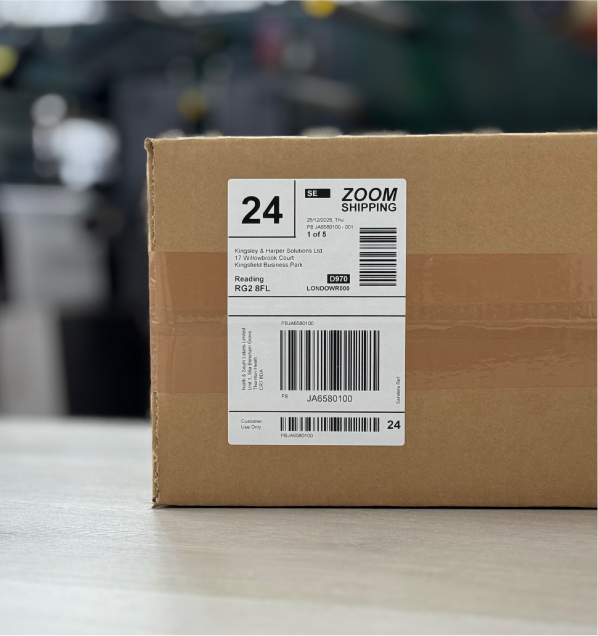
Shipping Labels
Receipts
Tickets
Temporary Badges
Perishable Food Labels
Cold & Freezer Storage
Diagram of direct thermal printing
Thermal Transfer vs. Direct Thermal: At a Glance
To help you quickly compare the key differences between these two printing methods, here's a side-by-side overview:
Feature Thermal Transfer Direct Thermal
Method Heated printhead melts ink from a ribbon onto label. Heated printhead applies directly to heat-sensitive label.
Consumables Labels + Thermal Transfer Ribbons Direct Thermal Labels Only
Material Types Wide variety (paper, synthetic, specialty) Heat-sensitive paper & synthetic (limited)
Print Durability Excellent (resists fading, smudging, chemicals, abrasion, extreme temps) Limited (fades with heat, light, abrasion; susceptible to chemicals)
Lifespan Long-term (years) Short-term (6-12 months)
Clarity/Quality Crisp, high-resolution text & barcodes Good, but can degrade over time
Cost Higher upfront consumable cost (ribbons) Lower upfront consumable cost (no ribbons)
Maintenance More complex (ribbon matching/changes) Simpler (fewer consumables)
Environmental Impact Ribbon waste No ribbon waste
Ideal Applications Asset tags, product labels, outdoor, compliance, automotive parts, electronics, chemical drums, tool identification Shipping labels, receipts, tickets, temporary badges, perishable food, cold/freezer storage
Making the Right Choice with North & South Labels Ltd
Choosing between direct thermal and thermal transfer isn't always straightforward, but it boils down to two critical factors:
Required Label Lifespan: How long does the information on your label need to remain perfectly legible and scannable?
Environmental Conditions: What will the label be exposed to after printing (heat, cold, moisture, abrasion, chemicals, sunlight)?
At North & South Labels Ltd, we understand that every business has unique labelling demands. Our team of experts is ready to discuss your specific application, budget, and durability requirements to recommend the most suitable and cost-effective thermal labelling solution.
Contact us today for a free consultation or to request samples! We're here to help you get your labels right, every time.
For more information on Direct Thermal vs. Thermal Transfer: talk to North & South Labels Ltd