


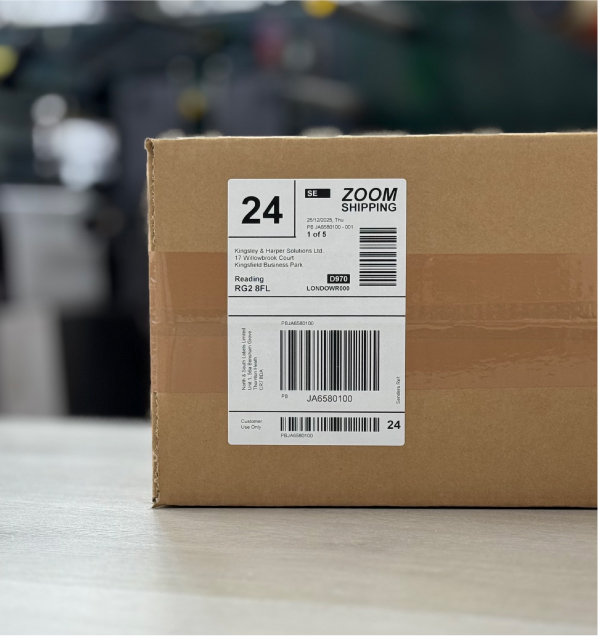
What is Thermal Transfer Printing?
Thermal transfer printing involves a more robust process that uses a heated printhead to melt ink from a thermal transfer ribbon onto the label material. The ink is then permanently transferred and bonded to the label surface.
Key Characteristics:
- Requires a Ribbon: An essential consumable, the ribbon comes in various formulations (wax, wax/resin, resin) depending on the desired durability.
- Versatile Material Compatibility: Can print on a much wider array of label materials, including various papers, polypropylene, polyester, vinyl, and more.
- Durable Print: The transferred ink creates a highly durable, long-lasting image.
Advantages of Thermal Transfer Printing:
- Superior Durability: Prints are highly resistant to fading, smudging, scratching, moisture, chemicals, and extreme temperatures (including cold and heat).
- Long Lifespan: Ideal for labels that need to remain legible for years.
- Versatile Material Options: Compatible with a vast range of paper, synthetic, and specialty label materials.
- High Print Quality: Produces crisp, clear images, text, and barcodes, essential for high-resolution graphics and critical data.
- Colour Options: Available with coloured ribbons for branding or colour-coding.
- Increased Printhead Life: The ribbon acts as a buffer, reducing direct contact between the printhead and the label, potentially extending printhead life.
Disadvantages of Thermal Transfer Printing:
- Higher Consumable Cost: Ribbons are an additional ongoing cost.
- More Complex Operation: Requires matching the right ribbon to the label material and involves changing ribbons.
- Ribbon Waste: Used ribbons need to be disposed of.
- Slightly Slower (in some cases): The additional step of transferring ink can sometimes lead to marginally slower print speeds compared to direct thermal.
Ideal Applications for Thermal Transfer Labels:
- Asset Tracking Labels
- Product Identification Labels
- Compliance Labels
- Laboratory & Healthcare Labels
- Outdoor Labelling