 Add My Company

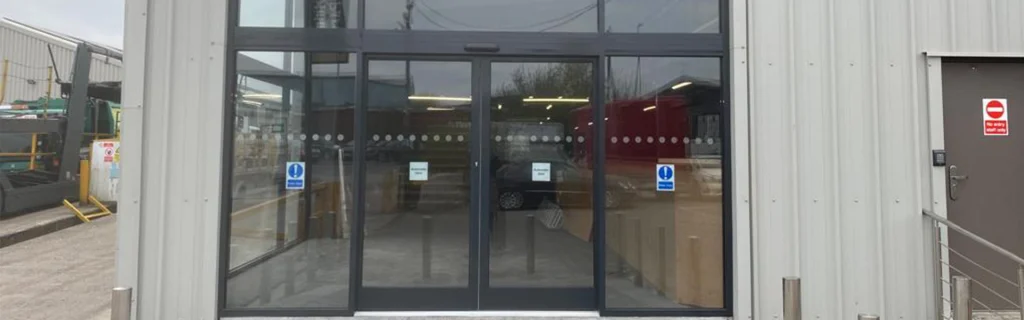
Automatic doors are central to safe, accessible, and efficient buildings – guiding foot traffic, supporting inclusivity, and creating a professional first impression. Like any electromechanical system, they need a structured maintenance schedule to stay safe, compliant, and reliable. This guide explains how often automatic doors should be serviced, why it matters for BS EN16005 compliance, what a professional service includes, and the risks of skipping maintenance.
Why Servicing Automatic Doors Is Essential
Regular automatic door servicing delivers four critical outcomes:
Safety & Legal Compliance
Commercial entrances must remain safe for public use. Routine maintenance verifies that safety sensors, presence detection, door speeds, and closing forces are within safe parameters and aligned to BS EN16005 good practice. For many sites, maintenance also supports broader duties under health & safety and accessibility frameworks (e.g. the Equality Act’s emphasis on inclusive access).
Reliability & Uptime
High-traffic doors cycle hundreds or thousands of times per week. Wear accumulates on rollers, belts, arms, motors, control boards, and tracks. Preventative maintenance catches faults early – reducing breakdowns, protecting your operations, and preventing queues or access issues at peak times.
Cost Control & Asset Life
Proactive servicing is significantly cheaper than reactive call-outs and emergency parts. Correct lubrication, alignment, and recalibration extend operator lifespan, prevent component failures, and optimise energy use by ensuring correct closing/sealing.
User Experience & Accessibility
Smooth, quiet operation, accurate sensor detection, and consistent opening widths create a welcoming, professional experience for staff, customers, and visitors – including wheelchair users, people with mobility aids, and those carrying goods.
How Often Should Automatic Doors Be Serviced?
Servicing frequently depends on traffic, door type, environment, and risk profile. As a practical UK rule of thumb:
- High-traffic sites (hospitals, retail anchors, transport hubs, fast-food/drive-thru, supermarkets): every 3 months
- Medium-traffic buildings (offices, schools, clinics, hotels, multi-tenant commercial): every 6 months
- Low-traffic doors (restricted-access or low-use internal doors): at least annually
Factors that may increase frequency:
- Usage intensity: long opening times, extended peak periods, shift work.
- Environment: wind loads on external doors, dirt/dust, grease (kitchens), humidity/temperature swings, construction dust during fit-outs/refurbs.
- Door type & activation: heavy leaves, toughened, laminated glazing, bi-parting vs single-slide, swing operations, radar vs touchless sensors, access control integrations.
- Risk profile: healthcare settings, safeguarding requirements, vulnerable users, evacuation routes, or security-sensitive entrances.
- History: frequent breakdowns or borderline measurements on previous service sheets.
What's Included in a Professional Automatic Door Service?
A high-quality automatic door maintenance visit is more than a quick look. It’s a documented end-to-end safety and performance check. Expect engineers to cover:
- Safety & Activation Systems
- Test activation sensors (radar/infrared/microwave) for detection zone, approach speed, and consistency.
- Test safety/presence sensors for threshold protection, side-screen coverage, and hold-open logic.
- Verify obstruction response: stop/reverse behaviour, dwell times, and re-trigger accuracy.
- Confirm emergency breakout (where fitted) and manual opening function.
- Mechanical Components
- Inspect and adjust tracks, rollers, carriages, guides, pivots, arms (as applicable).
- Check belts/chains for tension and wear; replace if frayed or stretched.
- Verify hinges/closers on swing doors; assess closing speed and latching behaviour.
- Assess leaf alignment and clearances to prevent binding and draughts.
- Operator & Controls
- Evaluate motor performance, gearbox noise, and thermal behaviour.
- Inspect control boards, wiring, connectors, earths, and cable strain relief.
- Confirm battery backup/UPS status (if fitted) and power-fail mode.
- Validate opening/closing speeds, forces, dwell times, and partial-opening settings.
- Door Set, Seals & Structure
- Check glazing, profiles, seals, and brush strips for integrity and energy performance.
- Assess thresholds, guide rails, and floor conditions for trip risks or debris accumulation.
- Confirm signage (push/pull, keep clear, accessibility) and user instructions are present and visible.
- Cleaning, Lubrication & Calibration
- Clean sensors and covers; remove dust from tracks and photo-cells.
- Apply manufacturer-approved lubricants to specified points.
- Recalibrate sensors and control logic to site conditions (football, environment).
- Documentation & Recommendations
- Provide a service report noting measurements, tests, and remedial actions.
- Grade issues by urgency (e.g. Safety-critical, Performance, Advisory).
- Record compliance checks aligned with BS EN16005 principles.
- Update service stickers/logs for audit and insurance purposes.
What Happens If You Don't Service Your Doors?
Skipping automatic door servicing is not advised and can lead to:
- Safety incidents: doors closing too quickly, failing to detect users, or not reversing on obstruction.
- Increased downtime: minor wear becomes major failures – motors overheat, belts snap, sensors drift out of spec.
- Higher energy bills: poor sealing and misalignment introduce draughts and heat loss.
- Shorter asset life: unlubricated mechanisms and misaligned tracks accelerate wear on costly components.
- Compliance & insurance exposure: inadequate maintenance records and unsafe performance may cause inspection failures and jeopardise claims if an incident occurs.
For more information on How often should Automatic Doors be serviced? talk to Next Doors Ltd