 Get Listed


Are all acoustic panels the same?
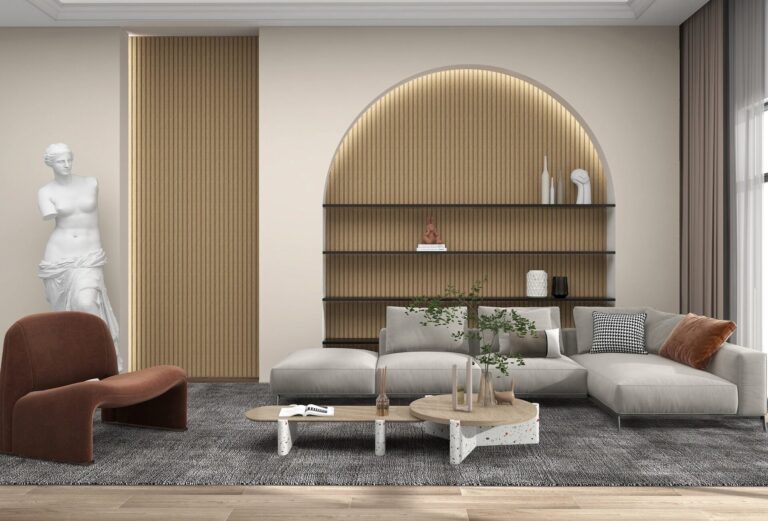
If you’re shopping for acoustic panels, it’s tempting to assume they’re all interchangeable — a decorative wall covering that also makes your room sound nicer. The truth is more nuanced. Acoustic panels share a purpose (reducing unwanted reflections and improving room acoustics), but they differ significantly in construction, thickness, quality, appearance and real-world performance. Here’s what to look for and why these differences matter.
Why thickness and material matter
- Thickness: Thinner panels (around 10–25 mm) and slatted decorative panels usually absorb higher and mid frequencies well — this reduces sibilance and harsh reflections. Thicker panels (50 mm and above), or those with an additional thick absorptive backing, are much better at absorbing low frequencies (bass), which are more challenging to tame. If you’re creating a home theatre or music room, include thicker or layered panels to control more of the frequency range.
- Material and density: Performance isn’t just about thickness. High-density materials such as mineral wool, dense PET (polyester) fibre or performance acoustic foams generally deliver higher absorption across a broader frequency range than very low-density foams or hollow decorative boards. Decorative wood or MDF slatted panels rely on a combination of a slatted face and internal absorptive material — the quality of that backing determines how effective the system really is.
Levels of sound absorption vs “soundproofing”
- Acoustic panels primarily control internal acoustics, reducing reverberation, slap echo, and flutter echo, so that speech and music sound clearer in medium- to large-sized rooms. In other words, they are excellent for eliminating echo and reverberation inside a room.
- Full soundproofing (preventing sound transmission between rooms) is a different challenge. Acoustic panels alone are not a substitute for soundproofing measures like mass-loaded vinyl, decoupling, additional drywall layers, or dedicated insulation in walls/ceilings. Good panels improve in-room clarity but do not reliably block sound from leaving or entering a room unless they’re part of a broader sound-isolation system.
Quality, durability and maintenance
- Lightweight and durable: Many modern acoustic panels are engineered to be both lightweight (easy to handle and mount) and durable for long-term use. Quality finishes resist wear and maintain appearance over time.
- Easy to install: Higher-quality panels are designed for straightforward installation — options include adhesive, screws or pins. Because they are lightweight, DIY installation is often practical.
- Cleaning and maintenance: Quality panels tend to have finishes and groove designs that are easier to clean. Cheaper versions, especially low-cost slatted or grooved panels, often trap dust in narrow grooves; that dust can be stubborn to remove and make panels look tired. Cleaning tips: use a soft brush or vacuum with a brush attachment for regular maintenance, and wipe finished surfaces with a slightly damp microfiber cloth. Avoid abrasive cleaning on delicate finishes.
Design and placement — versatility for home spaces
- Orientation: Many panels are designed to be mounted vertically or horizontally, offering flexibility in pattern and acoustic coverage.
- Feature and media walls: Acoustic panels are commonly used as feature walls in living rooms and bedrooms, and they’re a popular choice for media walls because they combine function (improving sound) with form (stylish appearance).
- Colours and finish: A broad range of colours and finishes are typically available, so you can match panels to your home décor or create a bold focal wall.
- Size: Our panels are 2400 mm x 600 mm (2.4 m x 0.6 m), which covers 1.44 m² per panel — large-format panels speed up installation and create a strong visual impact.
How to choose the right panels for your room
- For speech-focused spaces (offices, conference rooms): mid-thickness panels or slatted panels with quality backing are usually sufficient.
- For home theatres and music rooms: include thicker panels or combine decorative slatted panels with thicker absorptive elements to control both mid and low frequencies.
- For aesthetics-first projects (feature walls): choose panels with a high-quality finish and accessible cleaning options — avoid cheap grooves that trap dust if appearance matters.
Bottom line
Not all acoustic panels are the same. Thickness, material density, and internal construction determine how much and what frequencies a panel will absorb. High-quality panels are lightweight, durable, easy to install and maintain, and come in a range of colours and finishes to match your decor. Keep in mind that while they eliminate reverberation and echo and greatly improve in-room sound, they are not by themselves full soundproofing solutions. At Meridian we can help you pick the right thickness and material for your specific room size and use (home theatre, living space, bedroom, or workspace). Check out our range of Sucado and Neowall panels today!
For more information on Are all acoustic panels the same? talk to Meridian Building Plastics