 Add My Company

Marine inspection technology has evolved rapidly over the last decade, but one truth remains clear: no single inspection method is perfect for every situation. At Marine Inspection Services Ltd (MIS), our approach has never been about choosing between drone or rope access — it’s about combining both techniques to deliver the most efficient, cost-effective, and class-approved inspection possible.
This blended approach was proven recently on a large marine project where MIS completed a full inspection using both drone and rope-access personnel, dramatically reducing the need for scaffolding and significantly cutting project time and cost.
1. Drone Inspection: Fast, Safe, and Cost-Saving
Drones have transformed how general visual inspections (GVI), close visual inspections (CVI), and even UTM checks can be performed inside cargo holds, tanks, void spaces, and hull areas.
MIS is certified by DNV, Lloyd’s Register, and ABS to perform:
- Visual inspections on behalf of CLASS by applying RITS (Remote Inspection technique)
- UTM (Ultrasonic Thickness Measurement by drone)
These approvals mean our drone inspections are fully recognised and accepted by class societies — offering vessel owners a safe, compliant alternative to traditional access methods.
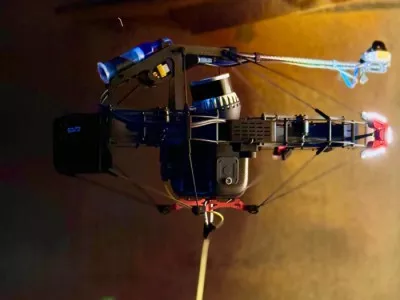
MIS class-approved drone performing UTM alongside close visual inspection.
Key benefits of MIS drone inspections:
- No scaffolding
- Rapid inspection of large areas
- Safe access to hazardous or confined spaces
- High-resolution, repeatable data
- Reduced risk and downtime
On a recent project, drones were used to complete all general visuals, close visuals, and UTM, eliminating the need for large-scale scaffolding from the outset.
2. Rope Access: Precision Where It Matters
While drones provide broad and efficient coverage, certain defect confirmations still require hands-on NDT. Rope-access inspection teams play a critical role in verifying drone-identified defects.
MIS rope-access technicians are certified to carry out all NDT methods listed on our website, providing precise confirmation and class-compliant reporting.
How rope access reduced costs on the recent project:
- Drones highlighted potential defects.
- Rope-access NDT personnel investigated only those specific areas.
- No unnecessary scaffolding was erected to access locations that did not require repair.
- Scaffolding was only installed where repairs were actually needed
MIS rope access inspection inside cargo hold
3. The Winning Formula: Drone + Rope Access = Maximum Efficiency
Using both methods in sequence created a streamlined, high-value inspection process:
Step 1 — Drone Inspection
- Completed CVI, GVI, and UTM.
- Identified all suspect areas.
- Eliminated large-scale scaffolding needs at the outset.
Step 2 — Rope Access NDT
- Verified defects identified by drone.
- Conducted close-contact UTM and NDT.
- Determined which areas actually required repair.
Step 3 — Scaffolding Only Where Required
Only after rope-access technicians confirmed defects were locations marked for repair, and scaffolding was erected solely in those verified areas.
The combined system delivered clear, measurable savings for the client: reduced labour, reduced congestion, and a shorter project schedule.
4. Quality Repairs: Overseen by MIS Steel Supervisors
Inspection is only the first part of the job. Ensuring repairs are executed correctly is essential to preventing defect recurrence.
Our steel supervisors:
- Recommended repair methods.
- Modified repair plans when necessary.
- Oversaw critical stages such as fit-up.
- Monitored welding quality to class standards.
This ensured repairs were structurally sound, long-lasting, fully compliant, and approved smoothly by attending class representatives.
Drone inspection inside cargo hold during MIS drone inspection
5. Trusted by Class, Valued by Clients
MIS inspectors maintain excellent working relationships with attending class surveyors. Our experience, transparency, and consistent quality help:
- Streamline class approval processes.
- Reduce owner and superintendent stress.
- Shorten project timelines.
- Ensure every step meets regulatory expectations.
Conclusion: The Future of Marine Inspection Is Hybrid
Drones and rope access are not competing methods — they are complementary tools that, when used together, deliver unmatched efficiency and cost savings.
The MIS hybrid inspection model:
- Reduces scaffolding costs.
- Improves safety.
- Cuts downtime.
- Increases inspection accuracy.
- Ensures class compliance.
- Prevents unnecessary repairs.
- Supports high-quality steelwork and long-term asset integrity.
This is modern marine inspection done right: smarter, safer, faster, and more reliable.
For more information on Drone vs Rope Access — Why the Most Efficient Marine Inspections Use Both talk to Marine Inspection Services (MIS)