 Get Listed

How to Design an Open Shed with Flat Pack Containers
Designing an open shed using flat pack containers is a smart way to create extra storage or workspace in your garden or yard. By combining modular steel containers with thoughtful planning, you can build a durable, affordable, and visually appealing open shed that fits your property and your budget.
Why build an open shed with flat pack containers?
Flat pack containers offer a flexible, modular solution for outdoor storage and workspaces. Delivered in kit form and assembled on site, they are ideal where access is restricted or where a permanent brick or timber structure is not practical. With galvanised steel construction, they provide a robust and weather-resistant alternative to traditional sheds.
In this step-by-step guide, we’ll walk you through how to plan, design, and finish your container-based open shed so it works for storage, hobbies, or a small garden workshop and many other uses.
Kovobel container outside kitchen
- Assess your needs and available space
Start by clarifying what you want your open shed to do. Are you storing garden tools and equipment, larger machinery, bikes, or creating a small outdoor workspace?
Ask yourself:
What will I store or do in the shed (storage, workshop, hobby space, shelter, outside kitchen, bike shelter)?
How much floor area and headroom do I need?
Do I need open sides, partial cladding, or a fully enclosed space with an open front?
Measure the area where you plan to install the shed, check access routes for delivery and assembly, and note any nearby boundaries, fences, or trees that might influence the layout.
- Choose the right flat pack container
The container is the core structure of your open shed. Kovobel flat pack units are manufactured from galvanised steel, designed for outdoor use, and can be assembled or dismantled quickly on site.
When choosing your container:
Match the size (length, width, height) to your storage or workspace requirements.
Consider durability and weather resistance for year-round outdoor use.
Review your budget, including any additional fittings or finishes.
You can also combine multiple flat pack containers to create larger open sheds, drive-through bays, or segmented storage zones.
- Understand local laws and regulations
Before you finalise your design, check any planning or building regulations that may apply to container-based structures on your property. Requirements vary by location and by how the shed will be used.
In some cases, planning permission may be required, especially if:
The structure is intended as a more permanent feature.
It is close to a boundary or neighbouring property.
It is unusually tall or large for the setting.
It’s always worth checking with your local planning authority or seeking professional advice if you are unsure.
- Design the layout of your open shed
With your needs and constraints clear, you can start designing the open shed. Sketch out the layout, including:
The position and orientation of the flat pack container(s).
Which sides will be open, partially open, or enclosed.
Locations for doors, access points, or roller shutters.
Internal shelving, racking, or workbenches.
Think about how you will move around the space, how equipment will be brought in and out, and how the shed will look from your house or garden. Your design should balance functionality with aesthetic appeal.
- Plan insulation and ventilation
If you intend to use the open shed as a workspace or to store temperature-sensitive items, it is important to consider insulation and ventilation at the design stage.
Key points to think about include:
Insulation – Lining walls and roofs can help stabilise temperatures and reduce condensation.
Ventilation – Vents, louvres, or opening sections help maintain airflow and reduce moisture build-up.
Use type – A simple storage shed might need minimal upgrades, while a workshop may need more extensive insulation and airflow.
These measures can be added during or after assembly, depending on your budget and how you plan to use the space.
- Prepare the foundation and choose the placement
A stable, level base is essential for the longevity and performance of your container shed. Depending on ground conditions and local requirements, you might use:
Concrete pads or strips
Concrete blocks or paving slabs
A compacted gravel base
A custom-built foundation system
Ensure the site is level, well drained, and accessible for assembly. Correct placement will help prevent movement, reduce water ingress, and keep doors operating smoothly.
- Add customisation and finishing touches
Once your flat pack container is assembled and in place, you can personalise the open shed to suit your property and style.
Popular customisations include:
Painting or coating the exterior to match existing buildings or your garden design.
Adding cladding panels or decorative features to soften the industrial look.
Installing shelves, racks, hooks, and worktops for organised storage or workspace use.
The goal is to create a shed that is not only practical but also visually integrated with your home and outdoor space.
- Plan for security and lighting
Protecting your belongings is an important part of shed design, especially if you store tools, machinery, or bikes.
Consider:
High-quality locks or security-rated door hardware.
Additional hinges, locking bars, or security hasps.
Internal or external lighting to improve visibility and safety in the evenings.
Motion-activated lights or CCTV where appropriate.
Well-planned security and lighting can make the open shed safer and more convenient to use all year round.
- Integrate the shed with your landscaping
To help your container shed blend into its surroundings, think about how it sits within your garden or yard design.
Simple landscaping ideas include:
Planting shrubs, trees, or climbers to soften the structure.
Adding planters, trellises, or screens to break up large metal surfaces.
Using paths, stepping stones, or gravel to connect the shed to other areas.
Thoughtful integration can make your open shed feel like a natural and permanent part of your outdoor space.
- Carry out regular maintenance
Like any outdoor structure, your container shed will benefit from routine inspection and maintenance.
Regularly:
Check for signs of rust, damage, or impact and treat affected areas promptly.
Inspect roof and joints for leaks or standing water.
Ensure doors, hinges, and locks operate smoothly and remain secure.
Clear debris from around the base to maintain good drainage.
Clear leaves and organic material from the roof to reduce the loading
A little maintenance goes a long way in protecting your investment and keeping your open shed looking its best.
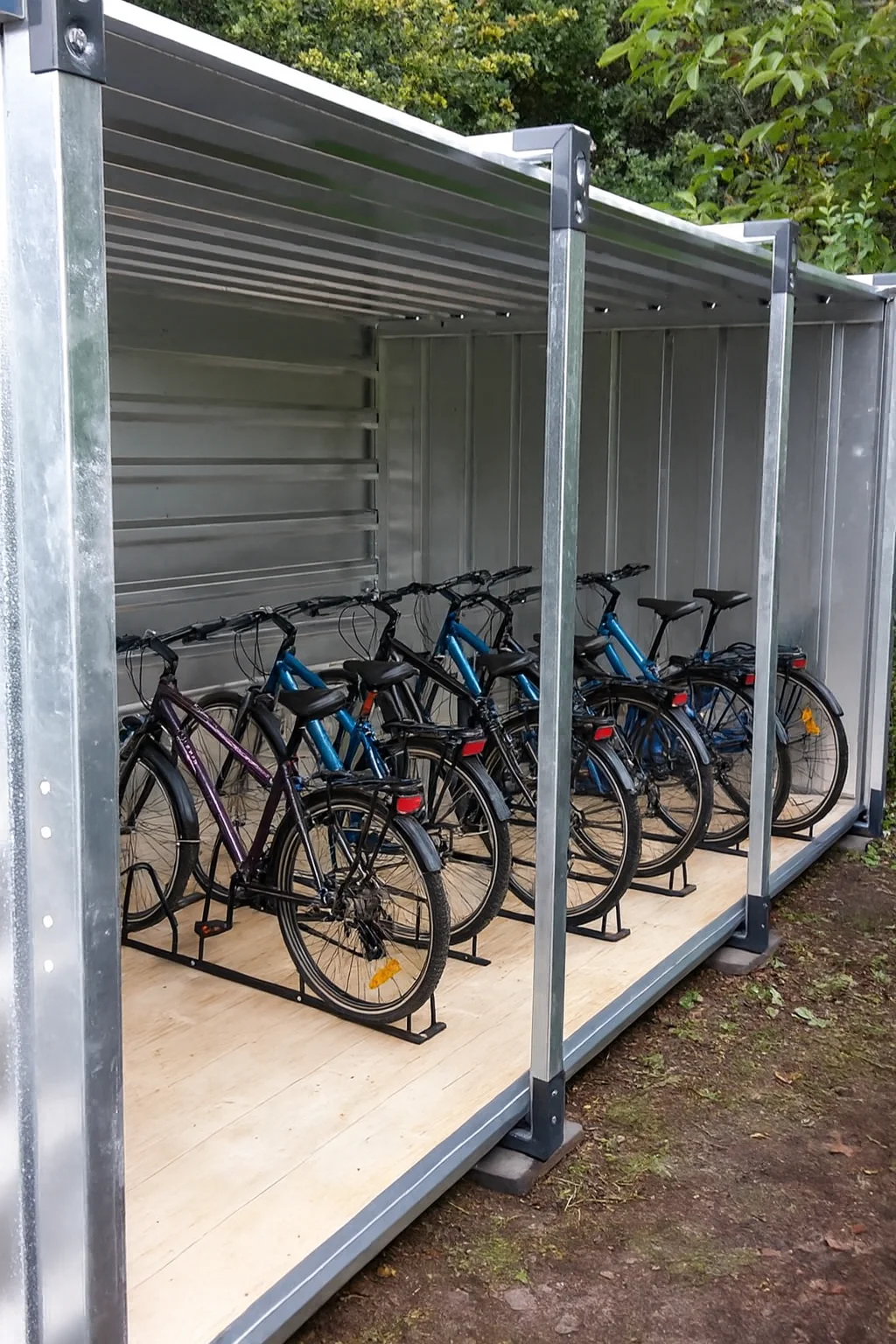
Open Shelter Flat pack bike shed
Conclusion: A versatile open shed from flat pack containers
Designing an open shed with flat pack containers is a rewarding project that combines flexibility, durability, and style. With careful planning and customisation, you can create a versatile space for storage, work, or relaxation that will serve your needs for years to come.
To explore size options and configurations, visit our flat pack open sheds page or contact the Kovobel team for expert guidance on specifying your container-based shed.
For more information on 10 Steps to Designing Your Flat Pack Open Shed or Shelter talk to Kovobel UK