 Get Listed
Sign In

CAN Bus Explained Part 1
29/07/2026
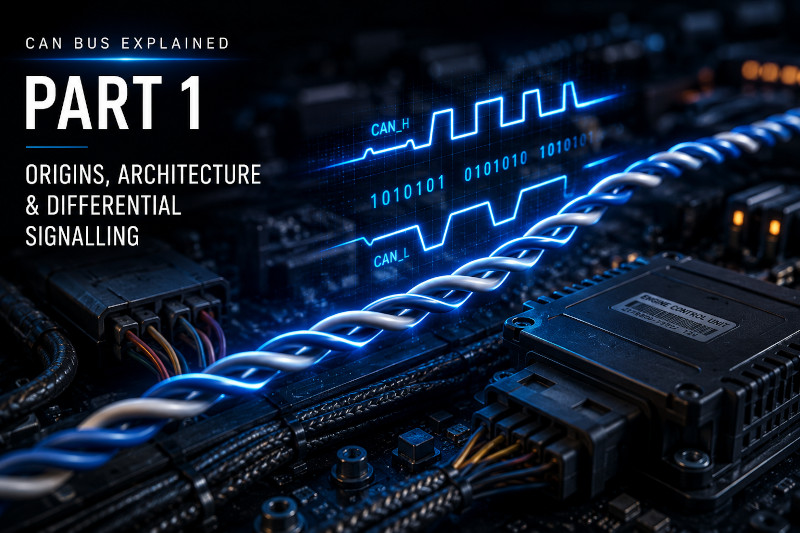
Controller Area Network, or CAN, was developed to let multiple electronic control units communicate reliably over a shared two-wire bus.
The first part of Kanda’s CAN Bus series explains the origins of CAN, the structure of a CAN network and the importance of differential signalling. By driving CAN_H and CAN_L in opposite directions, the system can reject much of the electrical interference that would otherwise affect communication in vehicles, factories and other demanding environments.
The article also outlines the main strengths of CAN, including reduced wiring, deterministic message priority, automatic error detection and recovery, and strong resistance to electrical noise. These characteristics have helped CAN remain widely used in embedded and industrial systems for decades.
The first part of Kanda’s CAN Bus series explains the origins of CAN, the structure of a CAN network and the importance of differential signalling. By driving CAN_H and CAN_L in opposite directions, the system can reject much of the electrical interference that would otherwise affect communication in vehicles, factories and other demanding environments.
The article also outlines the main strengths of CAN, including reduced wiring, deterministic message priority, automatic error detection and recovery, and strong resistance to electrical noise. These characteristics have helped CAN remain widely used in embedded and industrial systems for decades.
For more information on CAN Bus Explained Part 1 talk to Kanda
Welcome back to FindTheNeedle.
Not registered? Get listed — most visitors don't have an account yet.
List your company on FindTheNeedle.