 Get Listed

In today’s fast-paced supply chain landscape, warehouse efficiency is no longer a “nice-to-have”; it’s essential for survival. Whether you’re operating a small fulfilment centre or managing a vast distribution hub, optimising performance directly impacts your bottom line. From reducing operational costs to improving customer satisfaction, efficient warehouses are the backbone of a successful logistics operation. Let’s explore what warehouse efficiency really means, why it matters, and the practical steps that help you get there.
Why Warehouse Efficiency Matters
An efficient warehouse does more than simply store and move products; it drives
profitability. By improving warehouse efficiency, businesses can:
- Reduce operational costs: Efficient workflows minimise wasted motion, excess inventory, and unnecessary handling.
- Increase throughput: Streamlined processes mean faster order fulfilment and quicker turnaround times.
- Gain a competitive edge: In an era of next-day delivery expectations, speed and accuracy make all the difference.
In short, a well-optimised warehouse helps you do more with less, less space, less time, and fewer resources.
Busy vs. Efficient: Understanding the Difference
It’s easy to mistake activity for productivity. Many warehouses are busy, but not necessarily efficient. A “busy” warehouse might have employees constantly on the move, forklifts buzzing, and products being handled multiple times. But if that movement doesn’t lead to faster, more accurate order fulfilment, it’s simply wasted energy.
Efficiency, on the other hand, is about results. It’s the art of achieving maximum output with minimal input, optimising every process, movement, and resource for measurable gain.
Defining Warehouse Efficiency
At its core, warehouse efficiency is about optimising every element of your operation, from inventory management to picking and packing, to ensure seamless flow, accuracy, and productivity. It’s not just about doing things faster, but doing them better.
An efficient warehouse uses space wisely, minimises waste, leverages data, and continually improves. It focuses on both physical and digital efficiency, combining smart layout design with advanced technologies to support daily operations.
Key Metrics and KPIs to Track
To manage efficiency, you need to measure it. Here are some common metrics that provide valuable insight into warehouse performance:
- Order Cycle Time: The time it takes from order receipt to shipment.
- Pick Rate: The number of items picked per hour or shift is a critical productivity indicator.
- Inventory Accuracy: The percentage of inventory correctly recorded versus what’s physically in stock.
- Dock-to-Stock Time: The time taken to move received goods from the dock into storage locations.
- Space Utilisation: How effectively warehouse space is being used, a vital indicator for warehouse space optimisation.
Tracking these KPIs regularly helps pinpoint inefficiencies and drive continuous
improvement.
Foundational Principles: Lean, Flow & Waste Elimination
At the heart of warehouse efficiency lies the philosophy of Lean operations. Lean focuses on eliminating waste, anything that doesn’t add value to the customer. This includes unnecessary movement, overstocking, poor layout, and inefficient workflows.
By designing for flow, the smooth, uninterrupted movement of materials and information, warehouses can significantly boost performance and consistency.
Practical applications include:
- Reducing travel distance between pick zones
- Implementing “just-in-time” inventory practices
- Standardising work processes
- Using visual management tools for clarity and communication
Optimising Layout & Storage Systems
One of the most impactful ways to boost efficiency is through warehouse space optimisation. Effective layout design ensures that every square meter is used purposefully, supporting both storage density and workflow speed.
Consider:
- Slotting strategies: placing high-turnover SKUs in easily accessible areas.
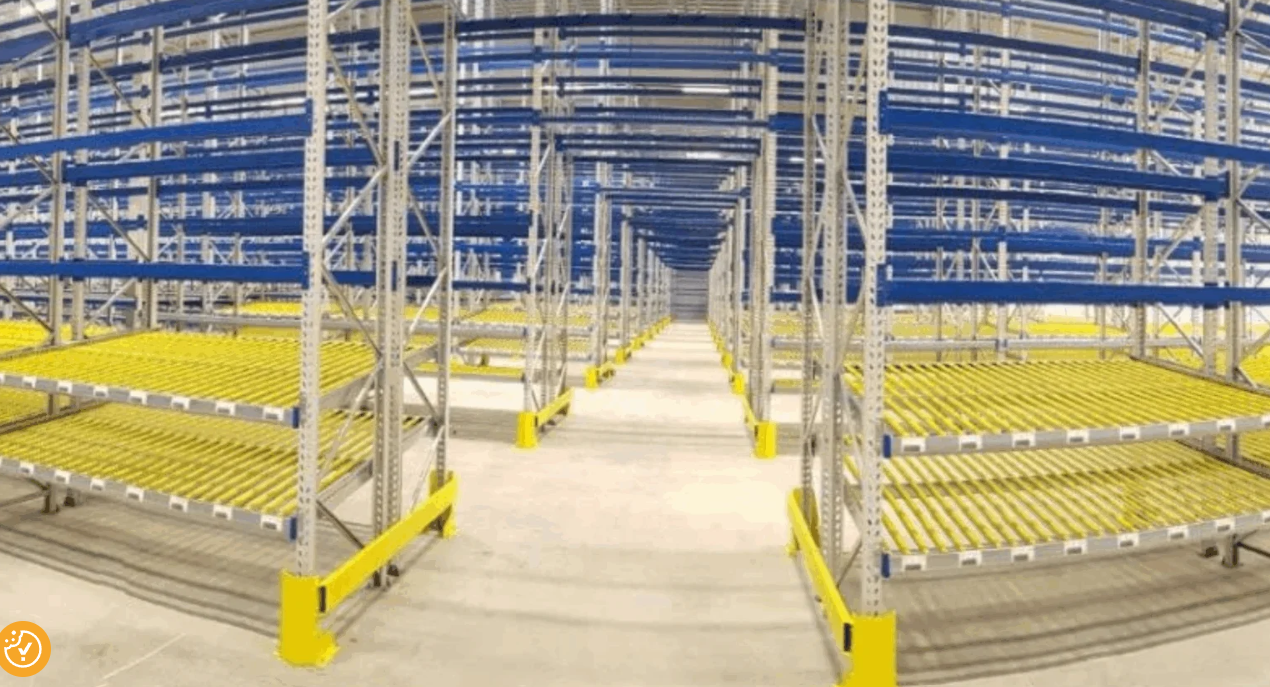
- Vertical storage systems: using racking and mezzanines to maximise warehouse space.
- Zoning and labelling: clear organisation reduces travel time and picking errors.
Companies like IKON specialise in helping businesses rethink layouts and implement smart storage solutions. Whether through modular shelving, pallet racking, or automated systems, solutions that focus on maximising warehouse space are essential for efficiency and scalability.
Overcoming Common Challenges
Even the most advanced warehouses face obstacles. Common challenges include:
- Poor data accuracy leading to stockouts or overstocking
- Resistance to change among staff
- Inefficient layout designs that slow down picking and packing
- Underutilised space wastes potential capacity
The solution lies in a combination of technology, training, and continuous improvement. Start small, measure, analyse, adjust, and repeat. Over time, these incremental changes deliver substantial performance gains.
Final Thoughts
Warehouse efficiency is not a one-time project but an ongoing pursuit of excellence. By embracing Lean principles, optimising space, investing in smart tools, and empowering your team, you can build a warehouse that runs smoothly, cost-effectively, and is ready for growth.
Whether you’re rethinking your layout, looking to maximise warehouse space, or exploring a partner like IKON for tailored solutions, every step toward improvement brings you closer to operational excellence and a stronger competitive advantage.
For more information on Boosting Warehouse Efficiency: Practical Steps That Work talk to IKON Solutions ltd