 Get Listed

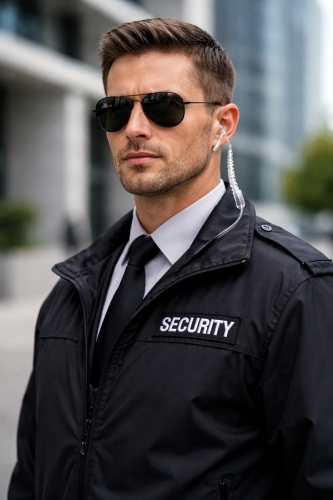
When you spot a security guard at a busy shopping centre or a music festival, you might notice a small, coiled tube disappearing behind their ear. It is a detail often popularised by spy films and secret service portrayals, but in the real world of professional security, that earpiece is far more than a prop—it is a critical lifeline.
For security professionals, the ability to communicate instantly and discreetly is often the difference between a resolved incident and a chaotic escalation. While a uniform establishes authority, the technology a guard wears ensures they can back up that presence with effective action.
In this post, we will explore why earpieces are a standard tool in the security industry, how they function in high-noise environments, and the specific benefits they offer for both safety and discretion.
Instant communication: The primary purpose
The most fundamental reason security guards wear earpieces is to maintain a constant, open line of communication with their team and control room. Security is rarely a solitary job; it relies on a network of eyes and ears working in unison.
When an incident occurs—whether it is a medical emergency, a shoplifting attempt, or a lost child—speed is of the essence. Fumbling for a handheld radio, adjusting the volume, and bringing it to the mouth can waste valuable seconds. An earpiece allows for what is known as "push-to-talk" efficiency, often via a microphone clipped to a lapel or cuff.
This instant connectivity allows guards to:
- Alert colleagues: Quickly direct other team members to a specific location without shouting or drawing attention.
- Report incidents: Relay descriptions of suspicious individuals or hazards to a central control room.
- Request backup: Summon immediate assistance if a situation escalates beyond one person's control.
Types of earpieces used in security
Not all earpieces are created equal. While there are various headsets available, the most recognisable type in the security sector is the acoustic tube earpiece.
Often referred to as "surveillance kits" or simply "curly" earpieces, these devices feature a clear, coiled tube that connects the radio's speaker to the ear tip. This design is favoured for several reasons. Firstly, the clear tube is low-profile and blends into the skin tone, making it less obtrusive than a bulky headset. Secondly, the coiled design allows for freedom of movement; if a guard turns their head or engages in physical activity, the tube stretches rather than pulling the earpiece out.
These earpieces are designed to fit snugly into the ear canal, often using custom-moulded tips for comfort during long shifts. This secure fit ensures that the device stays in place even during running or physical confrontations, a crucial reliability factor for active personnel.
Functionality in high-noise areas
One of the greatest challenges in security environments—such as concerts, nightclubs, or busy sporting events—is noise pollution. A standard handheld radio blaring out instructions is useless if the ambient noise level is drowning out the audio.
Earpieces bridge this gap by delivering audio directly into the ear canal, bypassing the surrounding cacophony. This direct feed ensures that instructions from the control room are heard clearly the first time. For example, if a fire alarm is triggered in a noisy stadium, a guard needs to hear the evacuation protocol immediately. Relying on a loudspeaker or a standard radio in such an environment could lead to miscommunication and danger.
Furthermore, many professional-grade earpieces come equipped with noise-cancelling microphones. This technology filters out background roar when the guard speaks, ensuring their message is received clearly by the rest of the team.
Benefits of using earpieces
Beyond the mechanics of hearing and speaking, the use of earpieces offers strategic advantages that enhance the overall effectiveness of a security operation.
preventing radio noise from the public
Nothing disrupts a calm environment quite like the sudden crackle and squawk of a walkie-talkie. In settings like hospitals, corporate lobbies, or luxury hotels, maintaining a peaceful atmosphere is part of the security mandate. Earpieces keep radio chatter silent to the public, ensuring that the guard hears the message without disturbing guests or patients.
Facilitating hands-free operation
Security guards often need their hands free—to check IDs, open doors, administer first aid, or use defensive equipment. Holding a radio restricts mobility and dexterity. An earpiece system allows the radio unit to remain clipped securely to a belt or vest, leaving the guard's hands free to interact with their environment while still listening to the communications feed.
Protecting sensitive information
Perhaps the most critical benefit is privacy. Security teams frequently transmit sensitive data, such as the names of VIPs, details about potential security breaches, or the location of cash-in-transit movements. If this information were broadcast over a loudspeaker, it could be overheard by the very individuals the security team is trying to guard against. An earpiece ensures that only the intended recipient hears the message, maintaining operational security.
Who uses security earpieces?
While the image of the Secret Service agent is the most common association, earpieces are standard equipment across a broad spectrum of protective roles.
- Private Security Personnel: From shopping centre guards to corporate concierges, these professionals use them to coordinate daily logistics and safety protocols.
- Law Enforcement: Police officers utilise them for tactical communication, particularly during raids or crowd control situations where coordination is vital.
- Event Staff: At festivals and conferences, stewards use them to manage crowd flow and respond to health and safety issues.
- Close Protection Officers: Bodyguards rely on them heavily to communicate with drivers and advance teams without alerting the public or the principal (the person being protected) to potential threats.
Additional reasons for use
The rationale for using earpieces extends beyond simple communication; it often touches on psychology and tactical advantage.
Discretion during radio calls
In a volatile situation, discretion is often the better part of valour. If a guard spots a shoplifter, announcing "suspect located in aisle four" over a loudspeaker gives the suspect a chance to run or become aggressive. With an earpiece and lapel mic, the guard can whisper the update, allowing the team to coordinate a safe interception without the suspect realising they have been spotted.
Minimizing distractions
Constant radio chatter can be distracting to others. In a corporate meeting or a quiet gallery, the sound of radio traffic is unprofessional. By containing the sound, the guard remains present and attentive to their immediate surroundings without the radio becoming a nuisance.
Context: The wider security equipment ecosystem
While the earpiece is vital, it is just one component of a comprehensive security toolkit. To understand its importance, we must view it alongside the other equipment that ensures a guard can perform their duties effectively.
- Uniform: As the first line of defence, the uniform establishes authority and presence. The earpiece complements this by adding a layer of professional connectivity.
- Two-Way Radios: The earpiece is useless without the radio itself. These robust devices form the backbone of the network, capable of transmitting over long distances and through concrete structures.
- Surveillance Systems: CCTV acts as the eyes, while the earpiece acts as the ears. A control room operator watching a monitor can guide a guard on the ground via their earpiece, creating a cohesive loop of observation and action.
- Defensive Tools: In high-risk environments, guards may carry batons or pepper spray. The earpiece ensures that if these tools are needed, backup is already on the way.
- First Aid Kits: When medical assistance is required, the earpiece is the tool used to summon paramedics while the guard utilises their first aid kit to stabilise the patient.
- Flashlights: For night patrols, a flashlight provides visibility, while the earpiece provides the link to safety should the guard encounter an intruder in the dark.
- Access Control: Keycards and biometric scanners regulate entry, but when the technology fails or is breached, the human element—connected via earpiece—steps in to secure the perimeter.
Ready for duty
The earpiece is a small piece of plastic and wire, yet it represents the connectivity and professionalism of modern security. It allows guards to be in two places at once: physically present in their post, and aurally connected to the entire security network.
Whether it is for hearing clearly in a thumping nightclub, protecting the privacy of a VIP, or simply keeping a hospital ward quiet, the earpiece is an indispensable tool. It transforms a solitary guard into a coordinated team member, ensuring that when safety is threatened, the response is swift, silent, and effective.
(23) (1)
For more information on Do security guards wear earpieces? Here is why it matters talk to Earpieceonline