 Get Listed
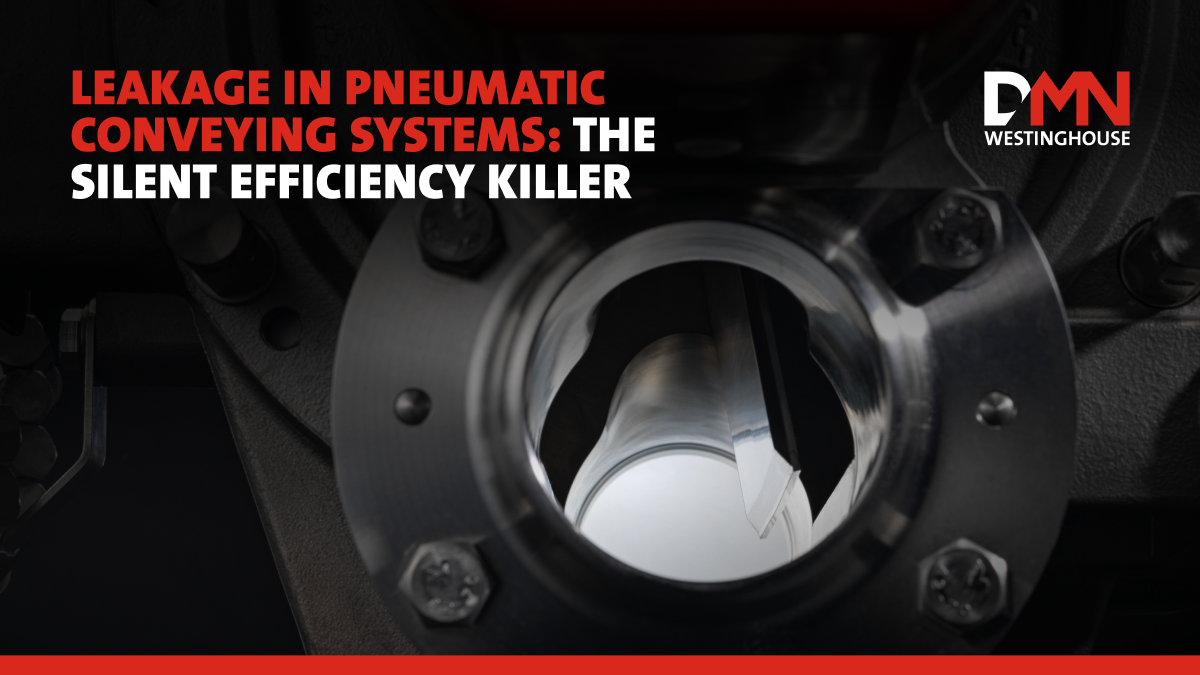
DMN-WESTINGHOUSE is highlighting the impact of air and product leakage in pneumatic conveying systems, explaining how precision-engineered rotary valves, diverter valves and advanced sealing technologies can help manufacturers reduce energy losses, improve reliability and maintain consistent production performance.
While equipment failures and blocked conveying lines are immediately noticeable, smaller leaks can develop gradually without triggering an obvious problem. Over time, these hidden losses can affect system capacity, energy consumption, product quality and maintenance requirements.
For manufacturers handling powders and bulk materials, identifying and controlling leakage is therefore an important part of maintaining efficient pneumatic conveying operations.
How Air Leakage Affects Pneumatic Conveying Systems
Pneumatic conveying relies on controlled airflow and pressure differences to transport materials through pipelines.
When air escapes through valves, seals or connecting components, these operating conditions can be disrupted, potentially reducing conveying efficiency.
Common sources of leakage include:
-
Rotary valve clearances between the rotor and housing, which can increase through wear or temperature changes.
-
Shaft seals that gradually deteriorate during operation.
-
Flanged connections and gaskets where sealing is inadequate.
-
Component interfaces that allow unwanted air or product movement.
Fine powders, including flour, milk powder and pharmaceutical ingredients, can also escape through relatively small gaps, creating material losses and potential dosing inaccuracies.
Although individual leaks may appear minor, their combined effect across a conveying system can become significant.
The Hidden Costs of Air and Product Leakage
According to DMN-WESTINGHOUSE, leakage can affect several aspects of industrial performance.
Increased energy consumption is one of the main concerns. When compressed air escapes, blowers or compressors may need to work harder to maintain the required operating conditions.
Reduced airflow and pressure can also affect conveying capacity, creating bottlenecks and limiting production throughput.
Other consequences can include:
-
Product loss and dosing inaccuracies, affecting batch consistency.
-
Dust emissions, increasing housekeeping requirements and potential safety concerns.
-
Accelerated component wear, leading to additional maintenance.
-
Reduced process reliability, particularly in applications requiring accurate material handling.
These issues can gradually increase operating costs without necessarily causing an immediate system failure.
Why Rotary Valves and Diverter Valves Are Critical
Rotary valves play an important role in pneumatic conveying by allowing material to pass through while maintaining the pressure difference between connected parts of the system.
Achieving effective performance requires carefully controlled clearances between the rotor and housing.
Excessive clearance can increase air leakage, while insufficient clearance may contribute to mechanical wear or operating difficulties.
Diverter valves face similar challenges when directing materials between different conveying routes.
Effective sealing is essential to maintain separation between flow paths, prevent unwanted material transfer and reduce the risk of cross-contamination.
As these valves operate at important points within the conveying system, their design and condition can have a considerable influence on overall efficiency.
Engineering Solutions to Reduce Pneumatic Conveying Leakage
DMN-WESTINGHOUSE takes an engineering-led approach to leakage control, incorporating material selection, precision manufacturing and application-specific sealing technologies.
Key considerations include:
-
Precision-engineered valve clearances matched to the properties of the material being conveyed.
-
Wear-resistant materials and coatings to help maintain performance in demanding applications.
-
Stainless steel construction where corrosion resistance and dimensional stability are required.
-
Controlled airflow shaft sealing systems designed to limit material ingress and reduce seal wear.
-
Inflatable seals for diverter valves, providing adaptable sealing against operating surfaces.
-
Optimised venting, outboard bearings and modular construction to support maintenance and reliable operation.
Different materials require different engineering approaches. Fine powders may demand particularly effective sealing, while abrasive materials require careful consideration of wear and mechanical clearances.
Selecting the appropriate valve configuration can therefore help minimise leakage without compromising material flow or equipment durability.
Identifying Leakage Before Performance Declines
Although leakage is not always immediately visible, changes in system operation can indicate developing problems.
Reduced throughput, rising energy consumption, inconsistent dosing and increased dust accumulation may all suggest that seals or valve clearances require attention.
Monitoring airflow, pressure stability and overall conveying performance can help operators recognise these changes earlier.
This supports a more proactive maintenance approach, allowing potential problems to be investigated before they lead to greater disruption or unplanned downtime.
Improving Industrial Efficiency Through Better Leakage Control
Reducing leakage can provide benefits beyond lower energy consumption.
Maintaining effective sealing can help protect conveying capacity, improve material handling accuracy and reduce unnecessary component wear.
For manufacturers operating high-volume production processes, even relatively small improvements in efficiency can contribute to better output and operating cost control.
DMN-WESTINGHOUSE develops rotary valves, diverter valves and related bulk solids handling solutions, with a focus on precision engineering and application-specific performance.
By considering leakage prevention during equipment design and maintaining appropriate monitoring throughout operation, manufacturers can improve the long-term efficiency and reliability of their pneumatic conveying systems.
For more information on Leakage in Pneumatic Conveying Systems: The Silent Efficiency Killer talk to DMN Westinghouse