 Add My Company


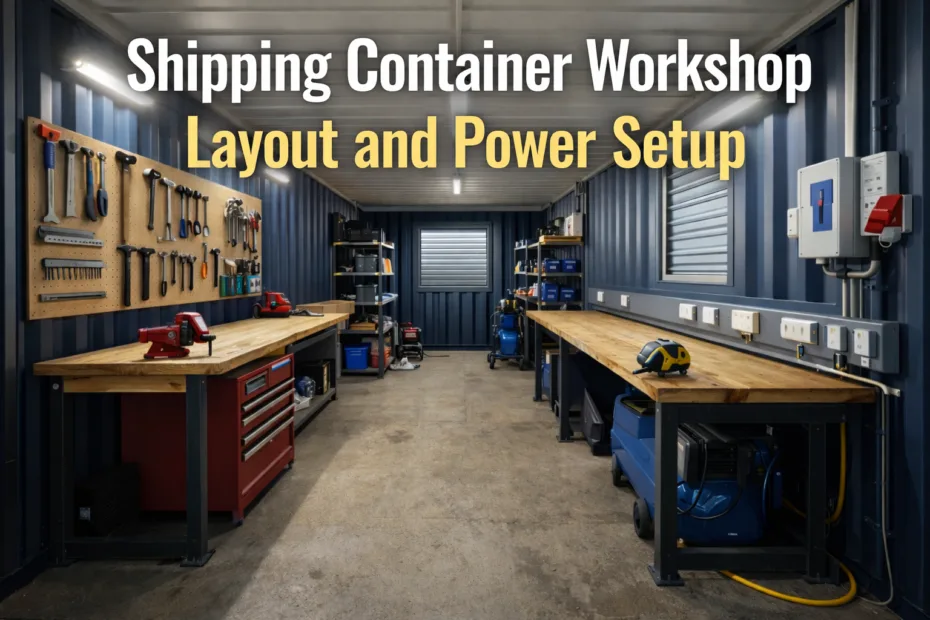
A shipping container workshop requires careful planning around layout, power supply, and electrical safety. Proper zoning, sufficient electrical capacity, and compliant installation ensure the space is safe, practical, and suitable for tools, machinery, and long-term use.
Introduction
Shipping container workshops are increasingly used across the UK for fabrication, mechanics, carpentry, engineering, and trades-based businesses. They offer a secure, durable, and flexible alternative to traditional workshops, especially where space, budget, or planning restrictions apply.
However, a container workshop is only as effective as its layout and power setup. Poor planning can lead to cramped working conditions, overloaded electrics, and costly retrofits later on. Power requirements, electrical specification, and insulation level are among the biggest cost factors when planning a shipping container workshop.
This guide explains how to plan a container workshop properly, with a focus on internal layout, electrical requirements, and practical considerations for safe day-to-day use.
Shipping container workshops are a practical form of container conversion, allowing businesses to customise layout, power supply, insulation, and access to suit specific trades.
What Is a Shipping Container Workshop?
A shipping container workshop is a standard steel container converted into a functional workspace for tools, machinery, and hands-on work.
Most workshops are built from:
- 20ft containers for compact setups
- 40ft containers for larger or multi-zone workshops
- High cube containers where additional headroom is required
Containers are typically fitted with insulation, internal lining, electrics, lighting, ventilation, and personnel access.
Planning the Internal Workshop Layout
Zoning the Space
A well-designed workshop layout separates the container into clear working zones.
Common zones include:
- Machine or tool area
- Workbench and assembly space
- Storage for materials and consumables
- Power distribution and control points
Separating noisy or vibration-heavy equipment from bench work improves safety and efficiency.
Workbench and Tool Placement
Workbenches should be positioned along the container walls to maximise floor space.
Consider:
- Fixed benches bolted to the container structure
- Wall-mounted tool boards
- Clearance for safe movement around equipment
- Door swing and access paths
Heavy equipment should be placed close to the container’s structural beams to distribute load correctly.
Storage and Shelving
Vertical storage is essential in container workshops.
Best practices include:
- Steel racking secured to the walls
- Shelving rated for workshop loads
- Clear walkways to meet safety requirements
High cube containers are particularly useful where tall racking or stacked materials are required.
Power Requirements for Container Workshops
Many of the power, setup, and delivery considerations for container workshops are similar to those involved in shipping container offices, particularly when units are insulated, wired, and delivered ready for use.
Understanding Electrical Load
Power planning is one of the most critical aspects of a container workshop.
You must account for:
- Tool wattage
- Simultaneous equipment use
- Startup load for machinery
- Lighting and heating demand
Underestimating power requirements is one of the most common workshop mistakes.
Single-Phase vs Three-Phase Power
Most small container workshops operate on single-phase power, which is suitable for:
- Hand tools
- Lighting
- Compressors
- Small machinery
Larger workshops may require three-phase power, especially for:
- Welding equipment
- CNC machines
- Industrial saws
- Heavy-duty fabrication tools
Power availability should be confirmed before conversion begins.
Electrical Installation and Compliance
All electrical work must comply with UK regulations.
Typical electrical features include:
- Consumer unit
- Multiple double sockets
- Dedicated circuits for high-load equipment
- LED strip or batten lighting
- External power inlet
Electrical installations should always be carried out by qualified professionals.
Electrical installations in container workshops should comply with UK wiring regulations and be carried out by a qualified electrician to ensure safety and insurance compliance.
Lighting Considerations
Good lighting is essential for safe workshop operation.
Recommended lighting includes:
- High-output LED ceiling lights
- Task lighting above benches
- Natural light via anti-vandal windows where appropriate
Poor lighting leads to fatigue, mistakes, and increased risk of injury.
Ventilation and Heat Management
Workshops generate heat, fumes, and dust.
Ventilation options include:
- Passive vents
- Mechanical extractor fans
- Cross-ventilation via doors and windows
For welding or painting applications, specialist extraction may be required.
Access, Doors, and Security
Workshop access must balance usability with security.
Common features include:
- Personnel doors for daily access
- Original container doors retained for equipment loading
- Anti-vandal windows with shutters
- Lockboxes and high-security padlocks
Containers offer strong inherent security, making them ideal for tool storage.
Customising a Shipping Container Workshop
Shipping container workshops can be customised to suit specific trades, with layouts, power supply, insulation, and fittings tailored to how the space will be used. From simple tool workshops to fully equipped fabrication units, customisation allows businesses to create a workspace that matches productivity, safety, and operational needs.
Common Workshop Container Sizes
The table below shows the most common shipping container sizes used for workshops and what each size is typically best suited for. It helps buyers match the right container length and height to the intended use, whether that is compact tool storage, a single-trade workspace, a larger fabrication setup, or a high cube unit for racking and taller machinery. Choosing the correct size from the start can reduce wasted space, improve workflow, and avoid upgrading later.
Delivery and Site Considerations
Before delivery, check:
- Vehicle access for Hiab lorry
- Level ground and load-bearing surface
- Overhead clearance
- Power connection location
Poor access planning can delay installation or increase costs.
When a Container Workshop May Not Be Suitable
Container workshops may not be ideal if:
- Extremely high ceilings are required
- Noise restrictions apply
- Permanent planning approval is needed
- Heavy industrial loads exceed container limits
In these cases, alternative structures may be more appropriate.
Workshops vs Offices and Other Container Conversions
Shipping container workshops sit alongside shipping container offices and other container conversion types used across the UK. While offices focus on desk space and comfort, workshops prioritise power capacity, layout flexibility, and equipment clearance. Understanding how different container conversions are used helps businesses choose the right specification from the start.
Frequently Asked Questions About Shipping Container Workshops
What size shipping container is best for a workshop?
A 20ft shipping container is suitable for most single-trade workshops, while a 40ft container offers more space for fabrication, multiple work zones, or larger equipment. A 40ft high cube container is often preferred where racking, tall machinery, or additional headroom is required.
Do shipping container workshops need three-phase power?
Not all container workshops require three-phase power. Many operate on single-phase power for lighting, hand tools, and smaller machinery. Three-phase power is usually needed for high-load equipment such as welders, CNC machines, or industrial saws.
Can a shipping container workshop be used year-round in the UK?
Yes, shipping container workshops can be used year-round when properly insulated and ventilated. Insulation, suitable internal lining, and controlled heating help maintain a stable working temperature and reduce condensation during colder months.
Final Thoughts
Shipping container workshops provide a flexible, secure, and cost-effective solution for UK trades and businesses. Success depends on proper layout planning and realistic power provision from the start.
By zoning the workspace correctly and installing suitable electrical infrastructure, a container workshop can perform as efficiently as a traditional unit—without the long build times or high costs.
For more information on Shipping Container Workshops: Layout and Power Considerations talk to Bosh Boxes Ltd