 Add My Company


What is Asset Performance Management (APM)?
Manufacturers are under constant pressure to keep equipment reliable for longer while cutting costs wherever possible. As margins tighten and infrastructure ages, that challenge only grows.
Asset Performance Management (APM) has become a vital framework for tackling these pressures. Yet many manufacturers are unsure what APM actually covers and how to implement it across a whole site. Understanding the basics—and how condition monitoring enables a proactive rather than reactive maintenance culture—is essential.
What is APM?
APM is a holistic approach to monitoring, analysing and optimising the performance of physical assets. It is not simply preventative maintenance. APM blends data capture, advanced analytics and strategic maintenance planning to identify issues before they escalate into failures. The aims are to minimise unplanned downtime, reduce maintenance costs, extend asset life and improve overall business performance. By combining traditional maintenance with modern sensors and software, APM builds a complete picture of asset health and long-term trends.
The business case
Industry data indicates operators spend around 30% of OPEX on unplanned maintenance and 40% on scheduled and unscheduled maintenance across only about 20% of their assets. Many sites also lose 3–5% of production capacity to unplanned downtime—lost output that quickly becomes lost revenue. Improving reliability directly supports availability, throughput and quality, so APM provides a structured route to higher uptime and lower lifecycle cost.
Integration challenges
Several forces are pushing organisations towards more sophisticated asset management: loss of experienced personnel, knowledge gaps, ageing equipment, constrained capital budgets and increasing digitisation. Reactive maintenance alone can’t deliver the required outcomes.
The role of condition monitoring
Condition monitoring underpins effective APM. Using permanently or temporarily installed sensors, it tracks key parameters continuously or at intervals and feeds data to analytics platforms to spot trends, anomalies and false positives. Maintenance teams can then intervene early, reducing downtime and protecting asset life.
Typical parameters include pressure, temperature, flow, corrosion, vibration and fluid properties. Each offers an early warning of emerging faults.
APM-friendly monitoring technologies
-
Temperature transmitters highlight overheating in liquids, motors or other equipment before failure.
-
Flow measurement (e.g., oval gear flow meters) maintains accurate readings regardless of temperature or viscosity changes—ideal for process control and lubrication assurance.
-
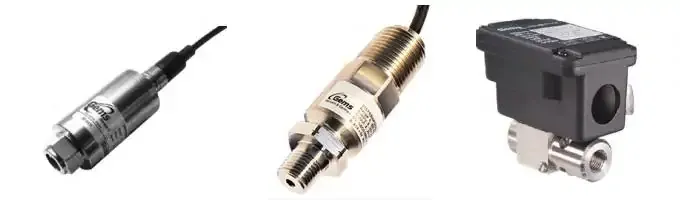
Pressure sensors in heating and refrigeration systems flag deviations that suggest developing faults, enabling planned intervention rather than disruptive breakdown repairs.
Three pillars of APM success
-
Technology: real-time monitoring, data and analytics.
-
Process: decisions, workflows and strategies driven by live information, shifting from reactive to proactive.
-
People: clear objectives, better information and cross-functional collaboration.
Tools enable APM, but people and processes determine its success. APM is not just for large enterprises—sites of any size can benefit from a structured asset strategy.
Quality sensors for your APM programme
Applications Engineering supplies high-quality sensors, transmitters and monitoring equipment that integrate with existing maintenance programmes. Our pressure, temperature and flow solutions provide the core data needed across a wide range of applications and industries, with seamless connectivity across diverse facilities to support reliability and asset life.
If you’re planning APM adoption—or reviewing current practices—speak to Applications Engineering about condition monitoring technology. The need for robust, data-driven maintenance will only grow. Contact us to discuss availability and suitability for your site.
For more information on What is Asset Performance Management (APM)? talk to Applications Engineering Limited