 Get Listed


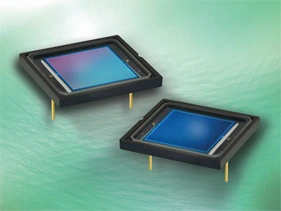
Ultraviolet (UV) detection plays a critical role in many technologies, including industrial laser systems, environmental monitoring, and analytical instruments. However, engineers working with UV sensors often face a major reliability challenge: photodiodes can gradually lose performance when exposed to the very radiation they are designed to measure.
This phenomenon, known as UV photodiode degradation, occurs when high-energy ultraviolet light damages parts of the detector structure over time. If not properly addressed, it can lead to drifting measurements, reduced sensitivity, and eventually complete sensor failure.
The Challenge of High-Energy UV Light
Ultraviolet photons carry far more energy than visible light because photon energy increases as wavelength decreases. This means deep-UV radiation can interact aggressively with semiconductor materials and surface layers.
In many traditional silicon photodiodes, the sensitive detection junction is protected by a thin silicon dioxide (SiO₂) passivation layer. This coating shields the device and stabilises its electrical characteristics. However, when exposed to intense UV radiation for long periods, this protective layer can absorb energy and begin to deteriorate.
The degradation process often causes the surface layer to darken or become less transparent, which prevents incoming ultraviolet light from reaching the active sensing region. As a result, the device gradually loses responsivity and produces inaccurate measurements.
Over time, this effect can significantly compromise the reliability of UV monitoring systems.
Why the Problem Is Becoming More Significant
Although UV-induced degradation has been known for many years, it has become far more problematic with the introduction of modern high-intensity UV sources.
Two major developments have accelerated this issue:
High-power excimer lasers
These systems produce extremely energetic pulses in the deep-UV region. The large radiation dose delivered in a short time can quickly damage conventional photodiodes.
Next-generation UV-C LEDs
Modern LEDs designed for disinfection and analytical instruments are far more efficient than earlier UV emitters. Their improved efficiency means photodiodes receive stronger UV exposure, which can accelerate degradation.
Because of these advances, a device that might once have degraded slowly can now fail much more rapidly when paired with powerful UV sources.
Designing Photodiodes That Resist UV Damage
To address this challenge, specialised UV photodiodes have been developed using materials and structures that tolerate intense ultraviolet radiation.
One key improvement is replacing the standard silicon dioxide protective layer with a radiation-resistant optical window, such as an oxynitride-based surface layer. These materials are designed to maintain transparency and structural stability even after prolonged exposure to deep-UV wavelengths.
Because this protective layer does not darken under UV radiation, the detector continues to allow ultraviolet photons to reach the active region. This helps maintain stable sensitivity over extended operating periods.
Stability Under Extreme UV Exposure
Radiation-hardened UV photodiodes can maintain performance even when exposed to extremely high radiation doses.
Some specialised devices show less than 2% change in responsivity even after exposure to large energy levels from excimer lasers operating at wavelengths such as 193 nm. This level of stability is far superior to that of standard silicon photodiodes, which may rapidly lose sensitivity under similar conditions.
These improvements allow detectors to operate reliably in demanding environments that involve continuous UV illumination or high-energy laser systems.
Spectral Performance of UV-Optimised Photodiodes
Photodiodes designed specifically for ultraviolet sensing are typically optimised to detect wavelengths in the 190 nm to 400 nm range, covering most of the deep-UV and UV-C spectrum.
Many advanced designs also feature extremely high internal quantum efficiency. In practical terms, this means nearly every photon entering the detector contributes to the electrical signal, resulting in highly accurate measurements and improved sensitivity.
Applications That Benefit from UV-Stable Sensors
Photodiodes capable of resisting UV degradation are particularly valuable in systems where measurement accuracy must remain consistent over long periods.
Typical applications include:
-
Laser power monitoring for industrial and research lasers
-
Water quality analysis, such as nitrate detection using UV absorption
-
Gas sensing, including nitric oxide monitoring
-
Analytical spectroscopy used in chemical analysis and laboratory instrumentation
In these environments, maintaining sensor stability is critical because even small shifts in responsivity can lead to incorrect readings or calibration errors.
Building Reliable UV Measurement Systems
When designing a UV sensing system, selecting the correct photodiode technology is essential. Standard photodiodes may perform adequately in low-intensity environments, but they often degrade quickly under strong ultraviolet exposure.
Radiation-resistant UV photodiodes offer a much more reliable alternative. By incorporating specialised protective layers and optimised semiconductor structures, these detectors can maintain their sensitivity even in harsh UV environments.
For engineers working with powerful UV sources or long-term monitoring applications, choosing a UV-hardened photodiode can significantly improve system accuracy, stability, and operational lifetime.
For more information on The Hidden Failure Point in UV Sensing: Photodiode Degradation talk to AP Technologies Ltd