 Get Listed


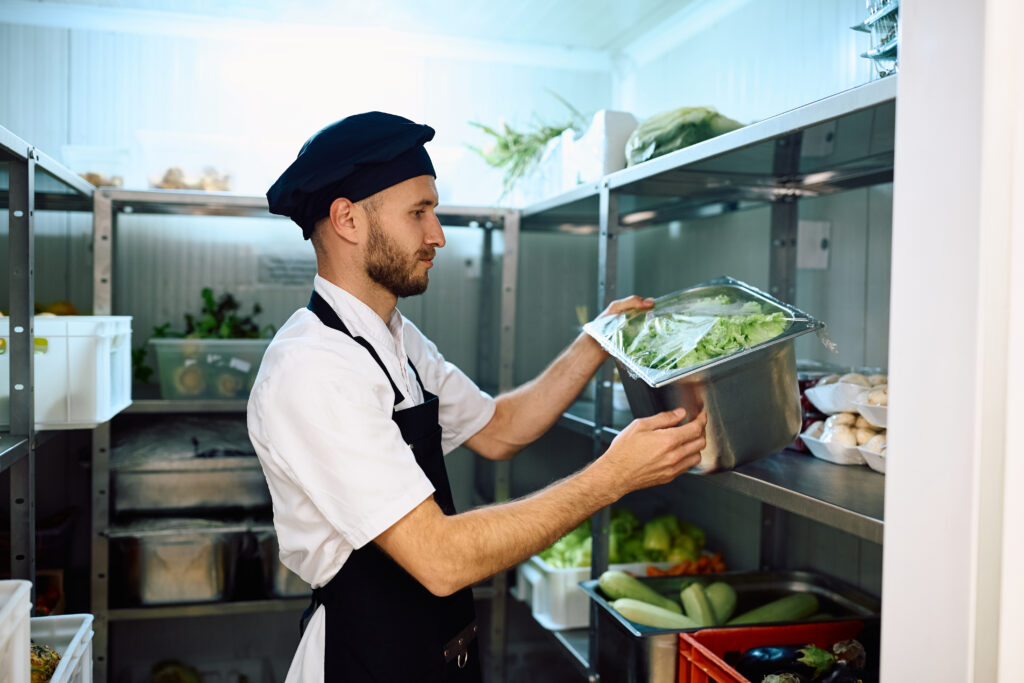
Whether you’re running a school kitchen, a care‑home dining room, a busy restaurant or any other type of catering operation the principles of safe food labelling and storage remain the same. Every commercial setting that prepares or serves food relies on clear communication, strong organisation, and robust safety systems to protect the people they care for, pupils, residents, patients, or customers. This guide explores why food labelling matters, how to implement it effectively, and the wide range of storage solutions that support safe, compliant, and efficient catering operations.
Why Food Labelling Matters in All Catering Environments
Food labelling is far more than a regulatory obligation and should be regarded as a critical food safety tool within any professional kitchen. Accurate and consistent labelling enables teams to clearly identify preparation and opening dates, supporting effective stock rotation and ensuring food is used within safe timeframes. This, in turn, helps monitor shelf life and reduce unnecessary food waste while maintaining quality standards. Clear labelling also plays a vital role in preventing cross contamination by distinguishing between different food types, allergens and preparation areas. From an operational perspective, it ensures that allergen information is communicated accurately and consistently, reducing the risk of human error and protecting customers with food allergies or intolerances.
Effective labelling supports continuity across shifts and staff changes, allowing all team members to work from the same information and procedures regardless of experience or role. Importantly, robust labelling practices enable food businesses to meet legal and regulatory requirements, including those set out in Natasha’s Law and the Food Hygiene Regulations. When implemented correctly, food labelling underpins safe food handling, reinforces accountability and demonstrates a professional commitment to consumer protection and regulatory compliance. In settings like schools and care homes, where vulnerable groups are served, accurate labelling is especially important. In hospitality, where speed and volume are high, it keeps operations running smoothly and safely.
Essential Types of Food Labels for Professional Kitchens
Here at Alliance Online we offer a wide range of labelling solutions suitable for all types of catering environments. Here are the core categories and how we support safe food handling.
Day-of-the-week labels effectively help manage and simplify the food and product rotation in a commercial or domestic environment. This law is designed to place more of an importance on clear allergen labelling following the tragic death of Natasha Ednan-Laperouse in 2016. With these more stringent laws put in place these adhesive stickers are an essential in the modern commercial kitchen. From Monday through to Sunday, the clear day of the week labels are designed to be moisture resistant ensuring that they will cling to your chosen surface for longer.
These ensure food is used within safe timeframes, reducing risk and waste. Shelf-life labels help you display all the information you need for safe food rotation.
Particularly important for:
- Chilled items
- Cook‑chill operations
- High‑volume service environments
These labels dissolve completely during washing, preventing sticky residue on containers. These labels will dissolve completely within seconds when immersed in normal tap water. Clean-up time is reduced and bacteria harbouring adhesive build-up and residue is eliminated.
Perfect for:
- Busy school kitchens
- Care settings with strict hygiene routines
- Hospitality teams looking to speed up clean‑down
Clear allergen communication is essential across all catering environments, but it is particularly critical in specific settings. In schools, where the prevalence of allergies among children is high, accurate information is vital to prevent potentially serious reactions. Care homes require careful dietary management to meet residents’ health needs and restrictions, making transparent allergen labelling indispensable. Takeaways and cafés also demand precise allergen communication, as food is frequently consumed off-site and staff cannot directly monitor its handling or consumption, increasing the risk of accidental exposure. In each context, effective communication safeguards health and ensures compliance with regulatory standards.
Label Guns, Dispensers & Automated Systems
Tools like label guns and digital labelling systems help large teams stay consistent and efficient across multiple shifts.
Natasha’s Law
Natasha’s Law came into force in England in October 2021, introducing significant amendments to the Food Information Regulations 2019. The legislation strengthened allergen labelling requirements by mandating that all food businesses preparing and packaging food on their own premises provide full ingredient lists on pre-packaged items. Crucially, any of the 14 regulated allergens must be clearly emphasised, improving transparency and enhancing consumer safety for individuals with food allergies. The following are the 14 allergies that must be specifically emphasised:
- Celery
- Cereals containing gluten
- Crustaceans
- Eggs
- Fish
- Milk
- Lupin
- Molluscs, including oysters and mussels
- Mustard
- Sesame
- Peanuts
- Soybeans
- Sulphur dioxide and sulphites at concentrations above ten parts per million
- Tree nuts
The legislation is named in memory of Natasha Ednan-Laperouse, who tragically died after consuming a pre-packaged sandwich containing sesame seeds, to which she was severely allergic. The absence of clear allergen labelling on the packaging led her to believe the product was safe. Natasha’s Law was subsequently introduced to address this regulatory gap, with the aim of preventing comparable incidents and strengthening consumer protection against life-threatening allergic reactions.
Food Storage: A Universal Foundation for Safety
Good storage practices are essential in every catering environment. Whether you’re storing ingredients for a school lunch service or preparing meals for a care‑home dining room, the right equipment helps maintain freshness, prevent contamination, and support smooth workflow.
Below is an expanded overview of the main types of food‑storage solutions used across the catering sector.
Key Types of Food Storage Solutions
Food Storage Containers
Available in polycarbonate, polypropylene, and stainless steel, these containers are essential for:
- Prepped vegetables
- Cooked dishes
- Dry goods
- Leftovers
They’re durable, stackable, and easy to label making them ideal for any kitchen.
Gastronorm Pans
Gastronorm pans represent a universal standard in professional catering, offering versatile use across cooking, chilling, storage, and service. Their standardised dimensions allow them to fit seamlessly into fridges, ovens, hot‑holding units, and trolleys, ensuring efficient workflow and consistent portioning. This versatility makes them particularly well-suited to schools, care homes, and hospitality environments, where reliable, adaptable equipment is essential for maintaining food safety, quality, and operational efficiency.
Ingredient Bins & Dispensers
Designed for bulk dry goods such as:
- Flour
- Rice
- Pasta
- Cereals
These bins support hygiene and portion control, especially in high‑volume environments.
Freezer‑Safe Storage
Containers engineered to withstand low temperatures without cracking are essential for a variety of food service operations. In schools or for mass cooking requirements, they support batch cooking by maintaining the integrity of ingredients during freezing. Care homes rely on them for long-term storage, ensuring food remains safe and uncontaminated over extended periods. In hospitality preparation kitchens, these containers facilitate efficient organisation and preservation of ingredients, contributing to consistent quality and operational efficiency.
Foil, Film & Parchment
These wraps create airtight barriers that help prevent contamination and preserve freshness. Modern dispensers make them safer and easier to use.
Transport & Delivery Containers
Insulated boxes and carriers maintain food at safe temperatures during transport, making them essential across a range of catering operations. They play a critical role in meal delivery services, ensuring food arrives hot or cold as required. In hospital settings, they support the safe distribution of meals to wards, protecting patient health. Off-site catering benefits from reliable temperature control during transit, while takeaway operations depend on these systems to preserve food quality and safety until it reaches the customer.
Creating a Safe, Efficient Workflow Across All Settings
When labelling and storage systems are effectively integrated, all types of catering environments experience significant benefits. Food is clearly identified and stored safely, enabling staff to work with greater efficiency and confidence. The risk of allergen exposure is reduced, while waste is minimised through better stock management and rotation. Compliance with regulatory standards is simplified, and the safety and well-being of vulnerable groups are more effectively protected. These outcomes collectively enhance operational effectiveness and support a higher standard of food safety across the catering environment. Whether you’re feeding pupils, residents, patients, or paying customers, the right tools and processes make a measurable difference.
Food labelling and storage is a key facet of kitchen life for all chefs. Here at Alliance Online we use our vast knowledge and experience servicing the catering and hospitality industries. Our range of chef prep products, chef utensils and other cookware is all available for purchase at industry competitive prices. For more information regarding our food labelling options please feel free to call us on 0844 499 4300 or you can email us at hello@allianconline.co.uk.
For more information on A Complete Guide to Food Labelling & Storage for Safe, Efficient Operations talk to Alliance Online Catering Equipment