
When choosing between thermal cutting technologies, fibre lasers often steal the limelight for ultra-high-end sheet metal production. However, for a vast majority of metal fabrication shops, contractors, and independent makers, plasma cutting remains the undisputed champion.
Evaluating the core advantages of plasma technology reveals why it continues to outperform lasers in everyday industrial applications, shop versatility, and financial value.
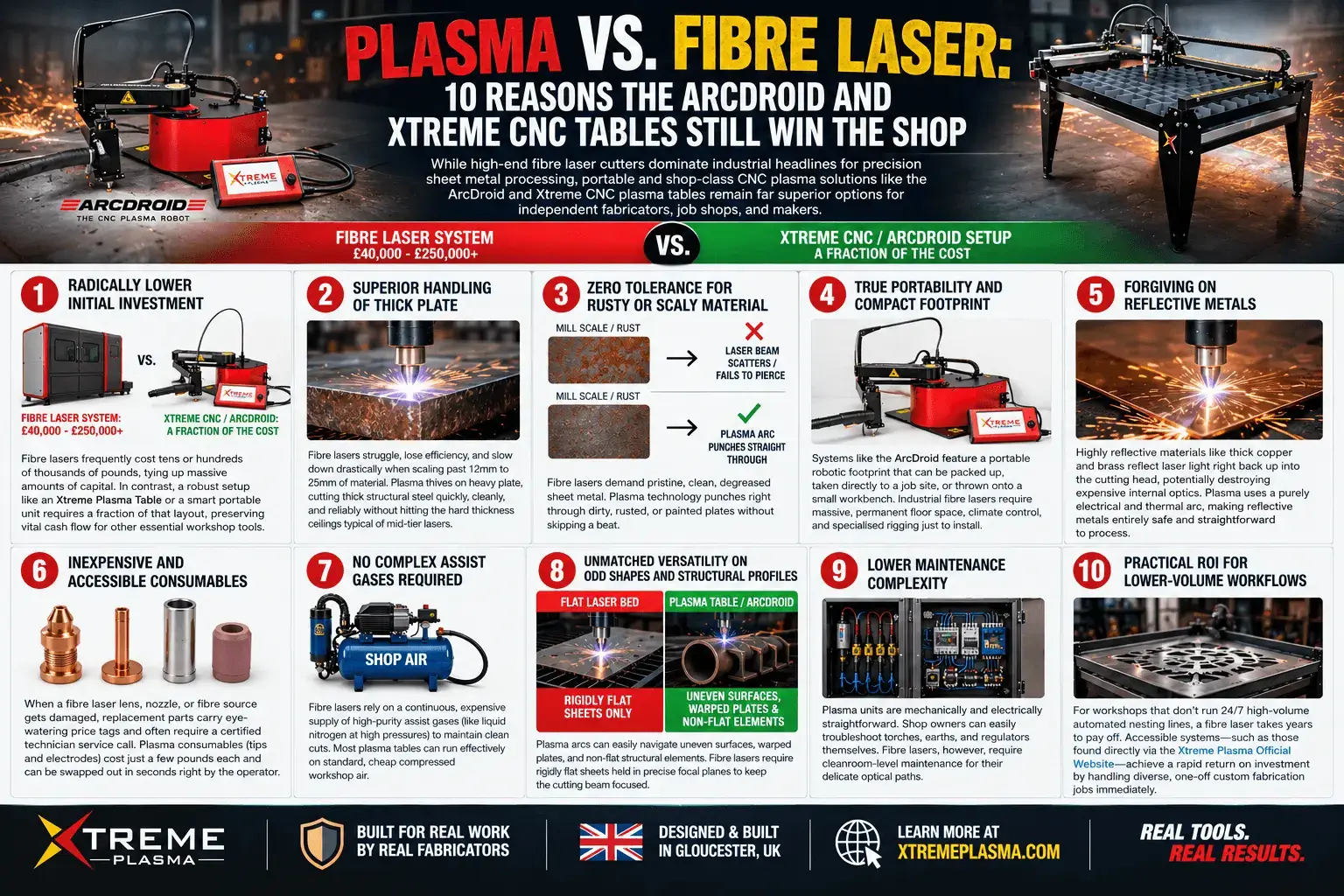
1. Unmatched Initial Affordability
Fibre laser systems represent a massive capital expenditure, frequently costing hundreds of thousands of pounds. Plasma cutting systems offer a significantly lower entry cost, meaning businesses can achieve production capabilities and fast return on investment without crippling overheads.
2. Exceptional Material Thickness Versatility
While lasers excel at thin gauge sheets, their efficiency drops drastically as material thickness increases. Plasma easily slices through thick plates, heavy structural steels, and diverse plate metals with raw thermal power that lasers struggle to match efficiently.
3. Forgiving on Rusty, Scaly, or Dirty Metals
Lasers require clean, pre-prepared surfaces because surface rust, mill scale, or paint can disrupt the beam and ruin the cut. Plasma is far more forgiving; ionized gas blasts right through imperfect surfaces, saving hours of preliminary grinding and cleaning time.
4. Superior Portability on the Job Site
You cannot easily pack up a massive industrial laser system and take it to a remote site. Plasma cutters and compact automated setups like the ArcDroid CNC Plasma Robot provide portable, professional-grade cutting performance that can be deployed wherever work is happening.
5. Lower Operating and Maintenance Expenses
Laser systems rely on complex optics, fibre delivery setups, and expensive gases that demand specialised, costly maintenance. Plasma systems utilise rugged, affordable consumables (electrodes, tips, and nozzles) that are easily swapped out in seconds by any operator.
6. Automated Precision with Modern CNC Integration
Advanced engineering has closed any historical precision gaps. Fully integrated Xtreme CNC Plasma Tables deliver tight tolerances, exceptional repeatability, and automated control software that rivals traditional laser output at a fraction of the cost.
7. Effortless Cutting of Non-Ferrous Metals
While certain lasers face challenges reflecting off highly conductive non-ferrous metals like thick copper, brass, and thick aluminium, plasma systems cut through these reflective materials effortlessly using standard compressed air or specialised gas mixes.
8. Rugged Durability in Harsh Environments
Fibre lasers are sensitive, highly calibrated instruments that typically require pristine, climate-controlled clean room environments. Plasma cutters and ruggedized shop tables are built to thrive in harsh, dirty, sparks-flying fabrication environments.
9. Simpler Learning Curve for Operators
Operating a high-end laser requires extensive specialised programming and safety certifications. Plasma setups, especially user-friendly options like the ArcDroid featuring onboard Simple Trace software, allow fabricators to get cutting immediately without advanced CAD training.
10. Incredible Overall Cost-Per-Part Value
Combining lower equipment costs, cheaper consumables, minimal maintenance downtime, and faster processing of thick or imperfect materials means plasma yields a lower cost-per-part for most structural and general fabrication workflows.
Exploring how modern plasma technology can elevate your workshop productivity involves checking out the latest precision systems, portable units, and heavy-duty fabrication frames available directly through Xtreme Plasma.