 Get Listed

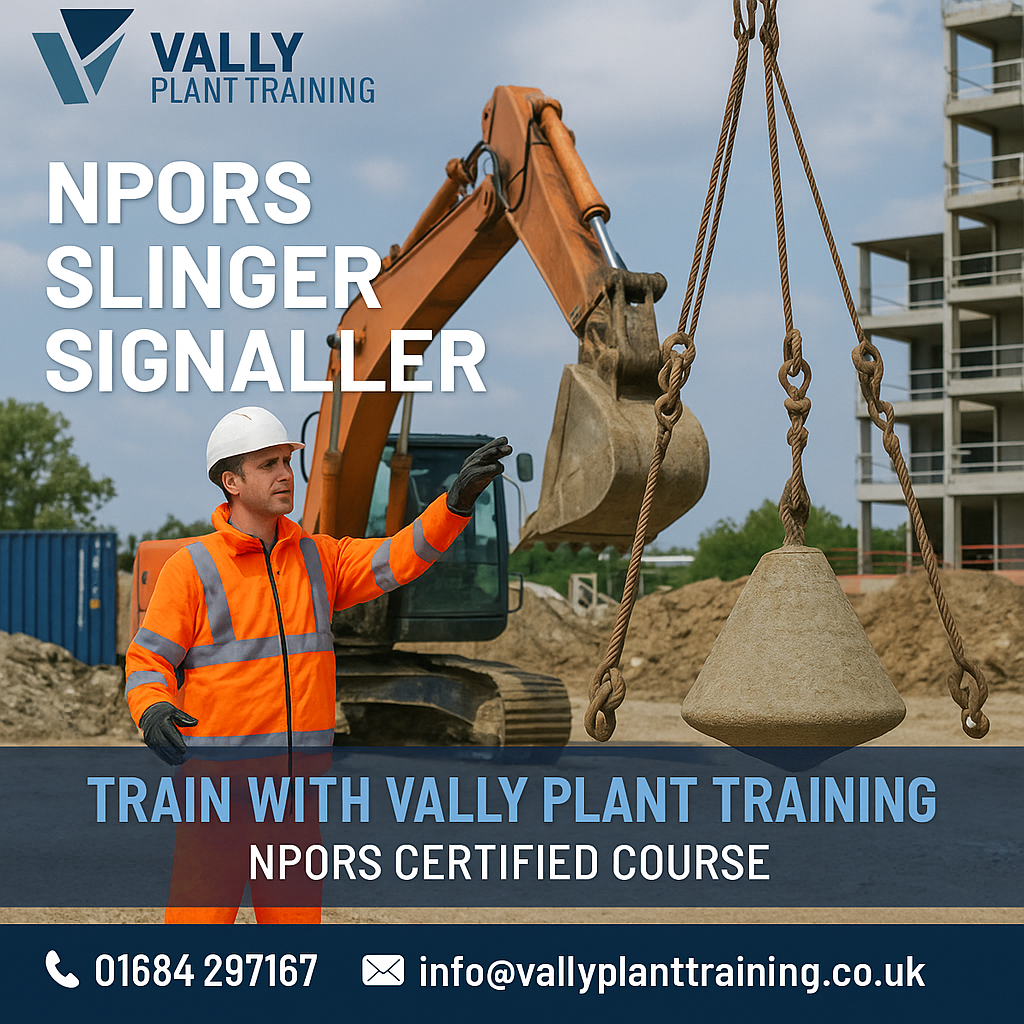
On any busy construction site, the safe and efficient movement of heavy loads rests on the shoulders of one expert professional: the slinger signaller. It's a role of immense responsibility, yet for many aspiring operators, the day-to-day duties, the critical hand signals, and the correct path to certification can seem unclear. This uncertainty, especially when navigating different qualification schemes like NPORS and CPCS, can feel like a major barrier to starting or advancing a career in this essential field, particularly when considering NPORS Slinger Signaller courses. This guide is here to provide complete clarity and build your confidence. We will break down the exact responsibilities of a slinger signaller, provide a clear, easy-to-understand guide to the essential signals that keep a site safe, and lay out the precise, step-by-step process for achieving your accredited NPORS certification. By the end, you'll not only understand the importance of the role but will have a dependable roadmap to becoming a fully qualified, competent, and safe operator in the UK construction industry, especially when it comes to NPORS Slinger Signaller courses.
What is a Slinger Signaller? The Eyes and Ears of Every Lifting Operation
On any construction site or industrial yard where a crane is in operation, the most critical person on the ground is the slinger signaller. This individual is the vital communication link between the crane operator, who is often working 'blind' from a cab with limited visibility, and the ground crew. They are the eyes and ears of the entire lifting operation, responsible for directing the safe movement of heavy loads from pick-up to placement. The role, sometimes referred to as a banksman, carries immense responsibility. In this high-stakes environment, a single miscommunication or lapse in judgement can have catastrophic consequences. Therefore, this position is legally required to be filled by a competent, trained, and certified professional under UK regulations like LOLER 1998.
The Guardian of the Lift: Core Responsibilities
At the heart of their role, a slinger signaller is the guardian of the lift. Their duties are precise and demand constant vigilance to ensure every manoeuvre is executed flawlessly. Key responsibilities include:
- Guiding the Operator: Using a clear, standardised system of hand signals or radio commands to direct the crane operator during lifting, moving, and lowering tasks.
- Safe Slinging: Confirming the load is correctly and securely attached (slung) using the appropriate lifting accessories and techniques.
- Clear Path Management: Ensuring the entire lifting path—from start to finish—is completely clear of personnel, vehicles, and obstructions.
- Single Point of Contact: Acting as the sole, trusted source of instruction for the crane operator to prevent conflicting and dangerous commands.
Why is a Qualified Slinger Signaller Non-Negotiable on UK Sites?
In the United Kingdom, employing a professionally trained and certified slinger signaller isn't just good practice—it's a legal and operational necessity. This commitment to safety and compliance underpins the integrity of any project. A qualified professional is non-negotiable for several key reasons:
- Legal Compliance: It satisfies strict legal duties under the Health and Safety at Work Act 1974 and the Lifting Operations and Lifting Equipment Regulations (LOLER) 1998.
- Risk Reduction: A competent signaller drastically reduces the risk of accidents, life-changing injuries, and costly damage to equipment and materials.
- Improved Efficiency: Clear communication and coordination lead to smoother, faster, and more efficient lifting operations, keeping projects on schedule.
A Day in the Life: The Core Duties and Skills of a Slinger Signaller
Beyond simply giving signals, the role of a slinger signaller is a dynamic blend of technical expertise, clear communication, and unwavering situational awareness. They are the critical link between the crane operator and the lifting operation on the ground, responsible for ensuring every lift is conducted safely and efficiently from start to finish. This pivotal role demands a methodical approach, turning complex plans into precise, real-world actions. A successful lift doesn’t happen by chance; it is the result of meticulous planning, expert execution, and diligent post-lift care. This process ensures the safety of everyone on site and the integrity of the load and equipment.
Pre-Lift Planning and Assessment
Every safe lift begins with a thorough assessment. Before any equipment is attached, the slinger signaller undertakes several critical checks. This is a non-negotiable part of the job that safeguards the entire operation. Key responsibilities include:
- Load Assessment: Accurately identifying the load's weight, centre of gravity, and any sharp edges to determine the safest lifting method.
- Equipment Selection: Choosing the correct, certified lifting accessories—such as slings, shackles, or chains—that are appropriate for the load's weight and characteristics. Pre-use checks for any signs of wear or damage are essential.
- Risk Assessment & Communication: Conducting a task-specific risk assessment, establishing clear exclusion zones, and communicating the detailed lift plan to the crane operator and site supervisor.
Executing the Lift: Precision and Communication
During the lift, the slinger signaller is in complete control on the ground. They must attach the load securely, ensuring it is perfectly balanced. Using a clear, agreed-upon system of hand signals or radio commands, they guide the crane operator with absolute precision. Their focus remains unbroken, constantly monitoring the load's path, the surrounding environment for potential hazards, and the tension on the lifting gear until the load is safely landed in its final position.
Post-Lift Procedures and Equipment Care
The job isn’t over once the load is placed. Professionalism extends to the proper care of equipment. This involves detaching all accessories, inspecting them again for any damage sustained during the lift, and storing them correctly to prevent degradation. Any defects or concerns must be reported immediately to a supervisor to ensure faulty equipment is removed from service, maintaining a safe site for future operations.
Mastering the Language of Lifting: Essential Slinger Signaller Hand Signals
On a busy and noisy construction site, verbal commands are easily lost. This is where hand signals become the primary, universal language between the crane operator and the slinger signaller. To ensure absolute safety and compliance across the industry, these signals are standardised in the UK under the BS 7121 code of practice. Every signal must be precise, deliberate, and given from a safe position where the signaller has a clear, unobstructed view of both the load and the operator. Miscommunication is not an option when safety is on the line. Below are the core hand signals that every competent slinger signaller must know. While this guide is a helpful reference, it is not a substitute for professional, accredited training.
Fundamental Crane Movement Signals
These are the most common signals used for basic lifting operations. Mastering them is the first step towards safe and efficient load management.
- Hoist / Lift: With your forearm held vertically and forefinger pointing up, make small, continuous circles with your hand. This instructs the operator to raise the hook.
- Lower: Extend your arm downwards with your forefinger pointing to the ground, and make small, continuous circles. This tells the operator to lower the hook.
- Slew Left / Right: Extend your arm horizontally out from your shoulder, pointing your finger in the intended direction of the crane's swing (slew).
Jib and Precise Movement Signals
For more complex lifts, you need to control the crane's jib and the speed of movement. These signals provide the operator with specific instructions for accurate placement.
- Jib Up (Luff Up): Extend your arm horizontally with your thumb pointing upwards. This raises the angle of the jib, bringing the load closer to the crane.
- Jib Down (Luff Down): Extend your arm horizontally with your thumb pointing downwards. This lowers the jib's angle, moving the load further away.
- Move Slowly: Place one hand in a stationary position in front of the hand giving the active signal (e.g., Hoist or Lower). This is a crucial modifier, indicating that the action should be performed with extreme care and at a reduced speed.
Critical Safety and Stop Signals
Knowing how to stop an operation is more important than knowing how to start it. These signals must be obeyed instantly by the operator without question.
- Stop: Extend one arm horizontally with the palm facing down and hold it in a rigid, stationary position. This signal is used for a controlled, standard stop.
- Emergency Stop: This is the most critical signal of all. Extend both arms horizontally with palms down and wave them back and forth vigorously. This command overrides all others and signifies an immediate halt to all movement due to an imminent hazard.
- Cease Operations: Clasp both hands together across your chest. This indicates the end of the current lifting operation or the end of the shift.
Mastering these signals is a fundamental component of accredited training. To start your certification journey and ensure you meet the highest UK safety standards, explore our NPORS Slinger Signaller courses today.
How to Become a Certified Slinger Signaller: Your Path to Qualification
In the UK, becoming a professional slinger signaller requires formal, accredited slinger signaller training and certification. This is a mandatory step to ensure you meet the high safety and competency standards demanded on modern construction sites. Choosing the right training path is the first step toward a successful and safe career, and it’s vital to understand your options. The most important decision is choosing your training provider. Working directly with an accredited training company ensures you receive high-quality instruction from experts, with transparent pricing and no hidden fees. Brokers, on the other hand, are simply middlemen who can add unnecessary costs and complexity to your booking.
Choosing Your Certification: NPORS vs. CPCS
Two main accrediting bodies are recognised across the UK construction industry. While both demonstrate competence, they offer different advantages:
- NPORS (National Plant Operators Registration Scheme): Known for its flexibility, NPORS Slinger Signaller Training can often be conducted on your own site using familiar equipment. This makes it a convenient and often more cost-effective choice.
- CPCS (Construction Plant Competence Scheme): Widely recognised and frequently required by major contractors on large-scale construction projects. The CPCS card is seen as a gold standard on many UK sites.
Both qualifications are highly respected. At Vally Plant, we are trusted experts in delivering high-quality, NPORS-accredited courses designed to get you certified efficiently and safely.
What to Expect on a Slinger Signaller Training Course
A typical Slinger Signaller course provides a comprehensive blend of classroom theory and essential hands-on training. You will learn the critical regulations that govern lifting operations, including LOLER, PUWER, and the Health and Safety at Work Act. The practical sessions are where you'll master the core skills: assessing loads, selecting and attaching the correct lifting accessories, and using the official hand signals to guide the crane operator with precision and confidence. The course concludes with a theory and practical test to verify your competence.
The Card Scheme Journey: From Novice to Competent Operator
Once you pass your initial course, your journey follows a clear progression:
- Trained Operator Card (Red Card): This is issued upon successful completion of your training and tests. It is typically valid for two years and is non-renewable. It shows you have the foundation of knowledge and skill.
- Competent Operator Card (Blue Card): To achieve this, you must complete the relevant NVQ or SVQ in Plant Operations within the two years your Red Card is valid. The Blue Card is valid for five years and demonstrates a higher level of experience and competence.
Ready to start your journey and gain a crucial industry qualification? Train Smart. Train Safe. Train direct with Vally Plant, an NPORS accredited provider , not a broker, and build your career on a foundation of expert training.
Start Your Slinger Signaller Career with Confidence
As we've explored, the role of a slinger signaller is absolutely fundamental to the safety and success of any lifting operation on a busy site. From mastering precise hand signals to shouldering the immense responsibility of being the crane operator's eyes and ears, becoming a qualified slinger signaller is an achievable and highly rewarding career goal. This guide has laid out the essential duties, skills, and the clear, structured path to gaining your certification. Choosing the right training is the most critical step in your journey. At Vally Plant Training, a fully accredited NPORS Training Centre, you will learn from expert instructors with years of real-world site experience. Train direct with a trusted, family-run business, not a broker, and ensure you receive the highest standard of professional training to succeed in the construction sector. Ready to become a certified professional? Book your NPORS Slinger Signaller course today and build your future on a foundation of safety and expertise.
Slinger Signaller: Frequently Asked Questions
How long does a slinger signaller qualification (ticket) last?
An NPORS Trained Operator Card (Red Card) is valid for two years. During this period, operators are required to complete the relevant NVQ to upgrade to a Competent Operator Card (Blue Card), which is then valid for five years. This structured system ensures your skills remain current and you stay compliant with industry standards for safety and competence. Always confirm the renewal process for your specific accredited qualification.
Do I need a CSCS card to work as a slinger signaller?
Yes, for the vast majority of UK construction sites, holding a valid CSCS card is a mandatory requirement. Accredited training schemes like NPORS provide a direct route to obtaining a CSCS-logoed card upon successful completion of your course. This demonstrates that you have not only the specialist skills for the job but also the essential, up-to-date health and safety knowledge required to work safely on any major site.
What is the average salary for a qualified slinger signaller in the UK?
In the UK, a qualified slinger signaller can expect to earn an average salary between £32,000 and £45,000 per year. Your exact earnings will depend on factors such as your level of experience, the location of the work, and the complexity of the project. Highly experienced professionals working on major infrastructure projects or in high-demand areas like London can often command significantly higher rates.
What are the entry requirements for a slinger signaller training course?
To enrol on a novice course, you generally need to be at least 18 years old. A good understanding of spoken and written English is essential for safety reasons. To obtain a CSCS-affiliated card, you must have passed the CITB Health, Safety and Environment (HS&E) test for Operatives within the last two years. No prior lifting experience is required to start your journey with a trusted training provider.
Can you fail a slinger signaller course and what happens if you do?
Yes, all accredited slinger signaller courses conclude with a formal assessment that includes both theoretical and practical elements. If you do not meet the required standard, you will not pass. However, our professional instructors provide comprehensive feedback to identify areas for improvement. We are committed to your success and will offer guidance and the opportunity for a re-test, ensuring you are fully prepared and competent.
Is being a slinger signaller a physically demanding job?
Yes, this is a physically active role that requires a good level of fitness. The job involves being on your feet for extended periods, working outdoors in all weather conditions, and maintaining high levels of concentration. Good physical coordination, eyesight, and hearing are critical for communicating clearly with the crane operator and ensuring the safety of everyone on site. It is a rewarding but physically demanding career.
For more information on Slinger Signaller: The Complete Guide to Roles, Signals & Certification talk to Vally Plant Training