 Get Listed


The Benefits of Aluminium Scaffolding Towers
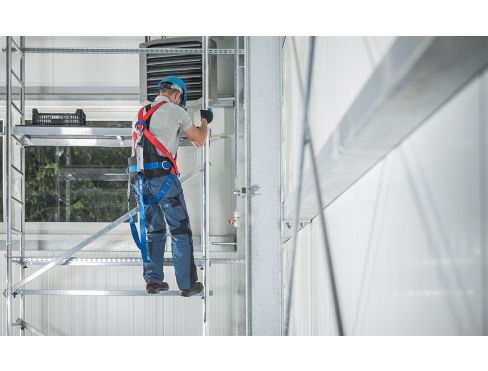
As construction and maintenance practices evolve, so too does the equipment used to support them. Aluminium scaffolding towers have become the preferred choice across construction, maintenance, and facilities management due to the many benefits they offer, but what are these benefits and why should you invest in aluminium scaffolding towers over steel alternatives?
Join TopTower as we dissect this.
Why does scaffolding material matter?
This is a question with a simple answer: the wrong material can make scaffolding structures less safe. They must be:
Strong and sturdy
Lightweight and easy to transport/erect
Weather resistant
Reusable
Long lasting
Aluminium excels in balancing these features because it provides safe working platforms without the weight and maintenance requirements associated with alternative materials. Its engineering characteristics allow manufacturers to design towers that are easy to move and reliable in demanding conditions.
Benefits of aluminium scaffolding
Lightweight construction
Aluminium towers are easy to handle. Components are significantly lighter than steel equivalents, which changes how teams interact with the equipment from the moment it arrives on site.
Instead of requiring heavy lifting or large crews to manoeuvre sections into place, aluminium allows for quicker, more controlled assembly. Installers can position frames accurately without excessive physical effort, which not only speeds up the process but also reduces manual handling risks.
This lighter construction becomes especially valuable when towers need to be relocated frequently, such as during maintenance work or multi area projects.
Resistance to corrosion
Unlike steel, aluminium does not rust. Instead, it forms a natural oxide layer when exposed to air, which protects the material from moisture and environmental contaminants. This built in corrosion resistance helps extend service life and reduces the need for protective treatments or ongoing maintenance.
Steel scaffolding, by contrast, can corrode over time if not properly coated or maintained, which may reduce its lifespan and structural integrity.
Aluminium scaffolding performs exceptionally well in:
Coastal regions with salt laden air
Industrial settings with chemical exposure
Damp or variable weather conditions
Long term external installations
Durability
Aluminium scaffolding towers are designed to remain structurally sound and visually intact over extended periods, even in challenging environments. Their resistance to corrosion and environmental wear means fewer repairs and replacements are required.
Unlike materials such as wood, which may require sealing or treatment to prevent decay, aluminium typically needs only basic cleaning to maintain performance and appearance. This reduced maintenance burden makes aluminium towers particularly attractive for those that rely on dependable, repeat use equipment.
Faster assembly
Time is one of the most valuable resources on any job site. Delays can cause serious disruption to the workflow of contractors and construction teams, as well as the expected timeline of the client so it’s vital that scaffolding structures can be assembled swiftly and efficiently. This is one of the most noticeable strengths of aluminium as compared to other metals such as steel.
Aluminium scaffolding’s lightweight components allow teams to erect and dismantle towers more quickly compared to heavier materials.
Because the sections are easier to lift and manoeuvre:
Installation requires fewer personnel
Assembly is safer and less physically demanding
Projects can progress without unnecessary delays
A more sustainable solution
Sustainability is becoming an increasingly important consideration in construction and facilities management. Aluminium is highly recyclable and can be reused repeatedly without losing its material properties.
Aluminium is also one of the most recyclable construction materials available. It can be reused repeatedly without losing its structural properties, making it an environmentally responsible choice for companies looking to reduce waste and support sustainable practices. Recycling aluminium requires significantly less energy than producing new material, helping reduce environmental impact and emissions.
Its long lifespan further contributes to sustainability by reducing the need for replacement materials over time.
Cost efficiency
While aluminium can sometimes carry a higher upfront material cost than basic steel, its lifecycle value often proves more economical.
They carry:
Reduced labour costs due to faster assembly
Lower maintenance and replacement requirements
Decreased transportation expenses from lighter weight
Longer service life in harsh environments
Versatility
Few materials adapt as well as aluminium. Its ability to be fabricated into modular systems allows towers to be configured for a wide range of uses, from compact indoor maintenance platforms to taller structures for construction access.
This flexibility makes aluminium scaffolding suitable for:
Refurbishment and installation projects
Warehousing and logistics operations
Facilities management tasks
Commercial property maintenance
Industrial servicing environments
Weather resistant
Aluminium’s resistance to moisture, chemicals, and oxidation enables it to maintain integrity in demanding locations.
Unlike untreated steel, which may degrade over time through corrosion, aluminium maintains its strength in rain, wind, snow, and sun.
Aluminium vs steel scaffolding
Steel has traditionally been used in heavy duty construction, but it comes with trade offs that make it less suitable for mobile access solutions. Steel offers high ultimate strength, but it is significantly heavier and more susceptible to corrosion without protective measures.
Aluminium, on the other hand:
Provides sufficient structural performance for access applications
Is far easier to handle due to reduced weight
Requires less ongoing maintenance because it resists rust
Lowers transportation and labour costs thanks to its lighter mass
For more information on The Benefits of Aluminium Scaffolding Towers talk to Toptower Ltd